
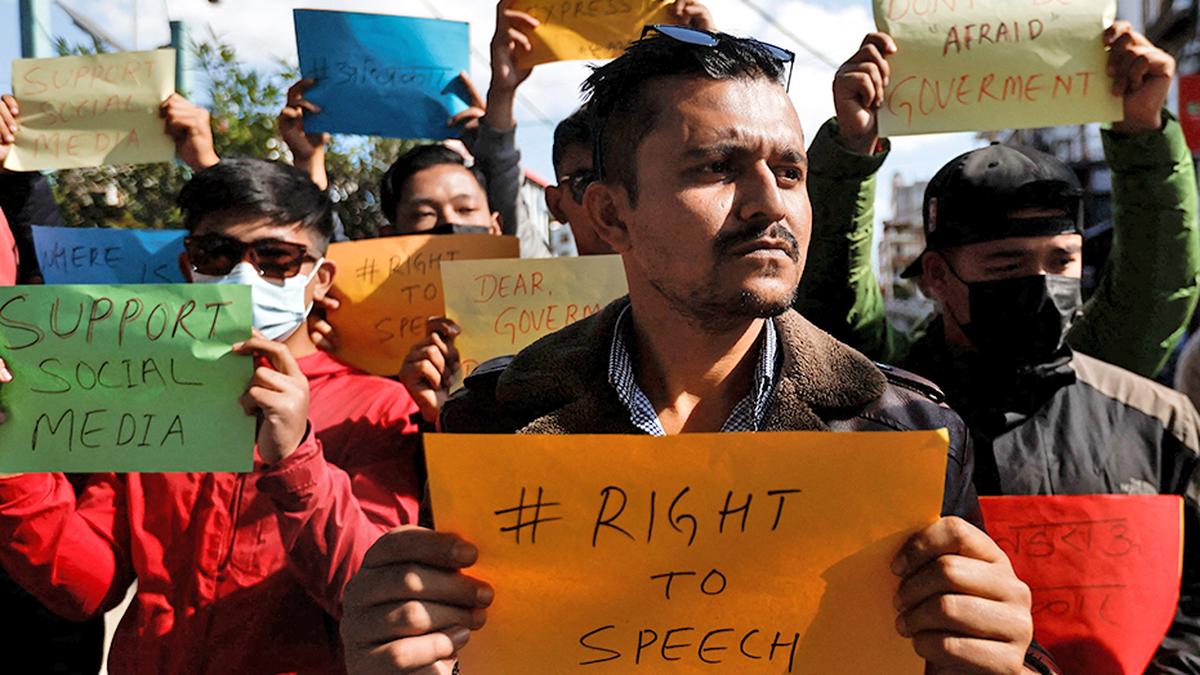
Mon Feb 03 23:30:00 UTC 2025: ## Nepal’s Controversial Social Media Bill Sparks Free Speech Concerns
KATHMANDU, Nepal (February 4, 2025) – A proposed social media regulation bill in Nepal has ignited fierce debate, with critics warning of a severe blow to freedom of expression. Introduced by Communications and Information Technology Minister Prithvi Subba Gurung, the bill aims to create a “disciplined, safe, and systematic” online environment by holding users and operators accountable. The government argues the bill is necessary for social media companies to register in Nepal and improve information safety and privacy.
However, free speech advocates like Tara Nath Dahal of Freedom Forum decry the bill’s vague and convoluted language, fearing its potential for silencing dissent. Dahal argues the bill attempts to control all internet activity, lacking clarity on what constitutes social media versus traditional media. He advocates for a more comprehensive approach addressing broader IT issues, instead of focusing on criminalizing users and media.
Experts acknowledge the need for social media regulation to combat misinformation and hate speech, but criticize the bill’s overly broad provisions. Section 18, for example, prohibits anything deemed harmful to national interests or inciting hatred, punishable by up to five years imprisonment and a hefty fine. Shiva Gaunle of onlinekhabar.com points to the ambiguity of terms like “sovereignty” and “national integrity,” leaving room for arbitrary enforcement.
The bill’s introduction comes amidst growing public frustration with the government, with social media serving as a platform for expressing dissent. This isn’t the first attempt to curb online criticism; a previous ban on TikTok and a failed 2019 Information Technology Management Bill highlight a pattern of attempts to silence dissent.
Ujjwal Acharya of the Centre for Media Research, Nepal, criticizes the bill’s contradictory nature, suggesting it simultaneously over-regulates social media companies while focusing on user control. Concerns are also raised about the bill’s conflation of social media and press content, undermining journalistic standards.
The bill’s potential impact is significant. Analysts fear it will stifle media freedom through self-censorship and create a climate of fear among users. The unusual reference to Bangladeshi law in the bill’s drafting further fuels concerns, given Bangladesh’s history of suppressing free speech through restrictive digital laws.
While some Nepali Congress leaders have suggested revisions, the bill’s current form raises serious concerns about the future of free speech and democratic discourse in Nepal. Critics urge broader consultations before passage, emphasizing the importance of a free press in a democratic society.
 First Piper