
Thu Apr 23 11:55:26 UTC 2026: # Ancient Octopus Species Discovered, Rewriting Cretaceous Food Chain
The Story:
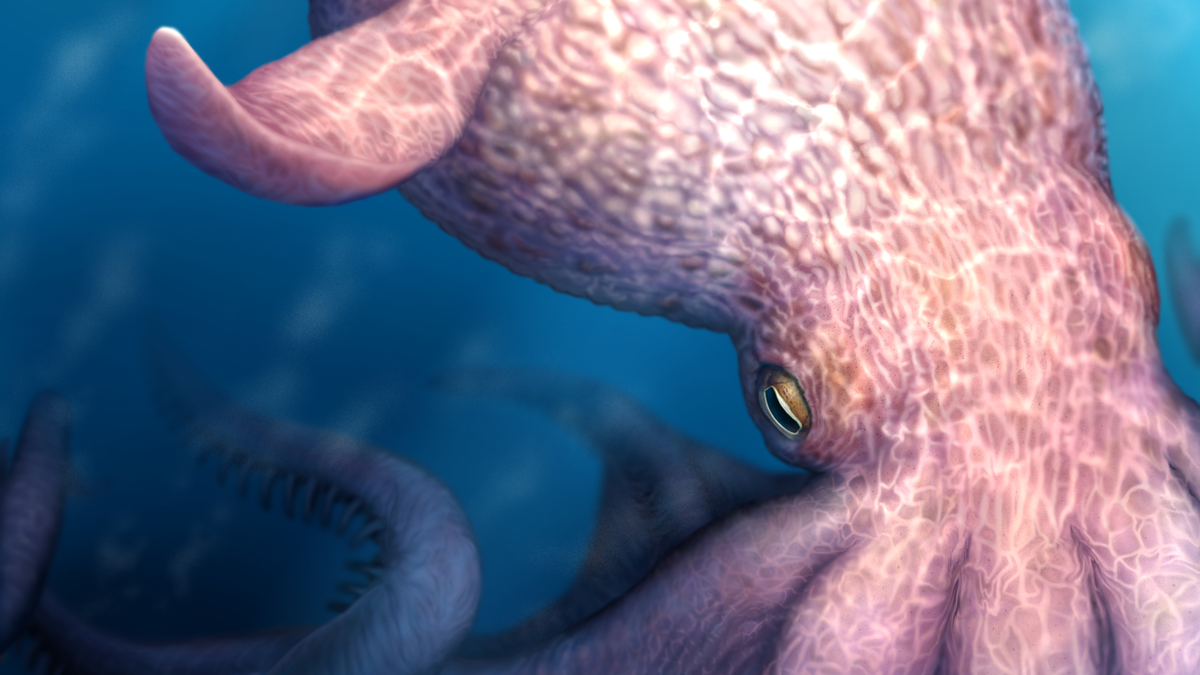
Scientists have unearthed fossil evidence of two previously unknown octopus species, Nanaimoteuthis jeletzkyi and N. haggarti, that roamed the oceans between 100-72 million years ago, during the Cretaceous period. Analysis of their fossilized jaws suggests these cephalopods were apex predators, reaching lengths of 7-19 meters, equivalent to the height of a six-story building. This discovery challenges the long-held belief that vertebrates were the dominant predators in ancient marine ecosystems.
Key Points:
- Two new octopus species, Nanaimoteuthis jeletzkyi and N. haggarti, have been identified from fossils dating back 100-72 million years.
- These octopuses were significantly larger than previously imagined, estimated to be 7-19 meters long.
- Jaw wear indicates they preyed on animals with hard bones.
- Asymmetric jaw wear suggests advanced intelligence.
- The findings indicate that invertebrates, specifically these octopuses, were apex predators during the Cretaceous period.
Key Takeaways:
- Our understanding of Cretaceous marine food chains needs revision.
- Invertebrates played a more significant role in ancient ecosystems than previously thought.
- The discovery highlights the potential for further paleontological finds to reshape our knowledge of prehistoric life.
- The intelligence of ancient cephalopods may have been underestimated.
 First Piper