
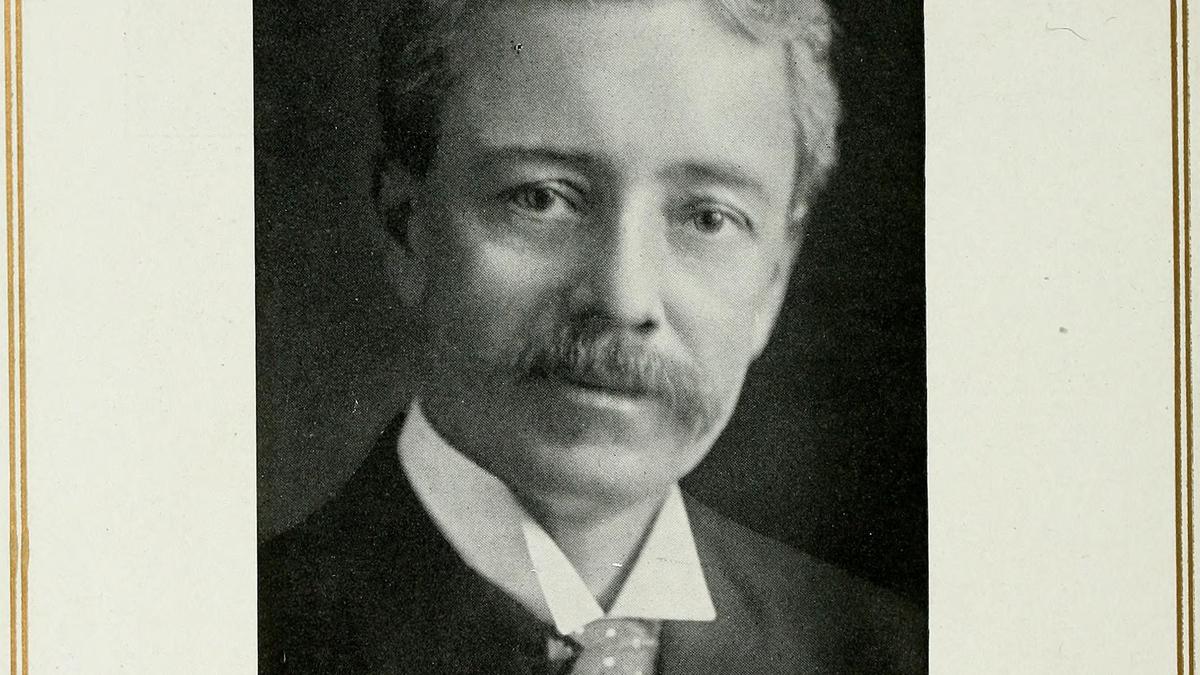
Sat Jan 11 19:21:00 UTC 2025: ## American Professor’s Pioneering Role in Bringing X-Rays to the US
**Greensboro, NC, January 12, 2025** – A little-known story surrounding the introduction of X-ray technology to the United States is gaining attention. Henry Louis Smith, a prominent educator and administrator, played a pivotal role in bringing this groundbreaking medical technology to American shores in 1896.
Born in Greensboro in 1859, Smith’s career spanned decades of academic leadership, including prestigious positions at Davidson College and Washington and Lee University. However, his contributions extend beyond administration. Inspired by Wilhelm Conrad Roentgen’s discovery of X-rays in Germany, Smith, along with his students, constructed an X-ray machine and produced the first X-ray images in the U.S. on January 12, 1896. These early experiments included images of various objects and, controversially, a human finger obtained from a corpse.
Further experimentation led to what is believed to be the first demonstration of X-rays’ ability to reveal both natural and foreign objects within the human body. Smith’s work also had practical implications; he and a medical team used X-rays to locate and remove a swallowed thimble from a child.
Smith’s impact extended beyond scientific breakthroughs. A highly successful administrator, he significantly increased enrollment at both Davidson and Washington and Lee Universities. His contributions to the Allied effort in World War I, including a suggestion that proved crucial in disseminating President Woodrow Wilson’s peace plans to German soldiers, further cemented his legacy. He passed away in 1951, leaving behind a legacy of academic excellence and scientific innovation. This recent rediscovery of his contributions is shedding light on a crucial, yet previously underappreciated, chapter in the history of medical technology in the United States.
 First Piper