
Thu Dec 19 18:46:00 UTC 2024: ## Sri Lanka’s New Government Faces Long-Standing Tamil Issues Despite Close Ties with India
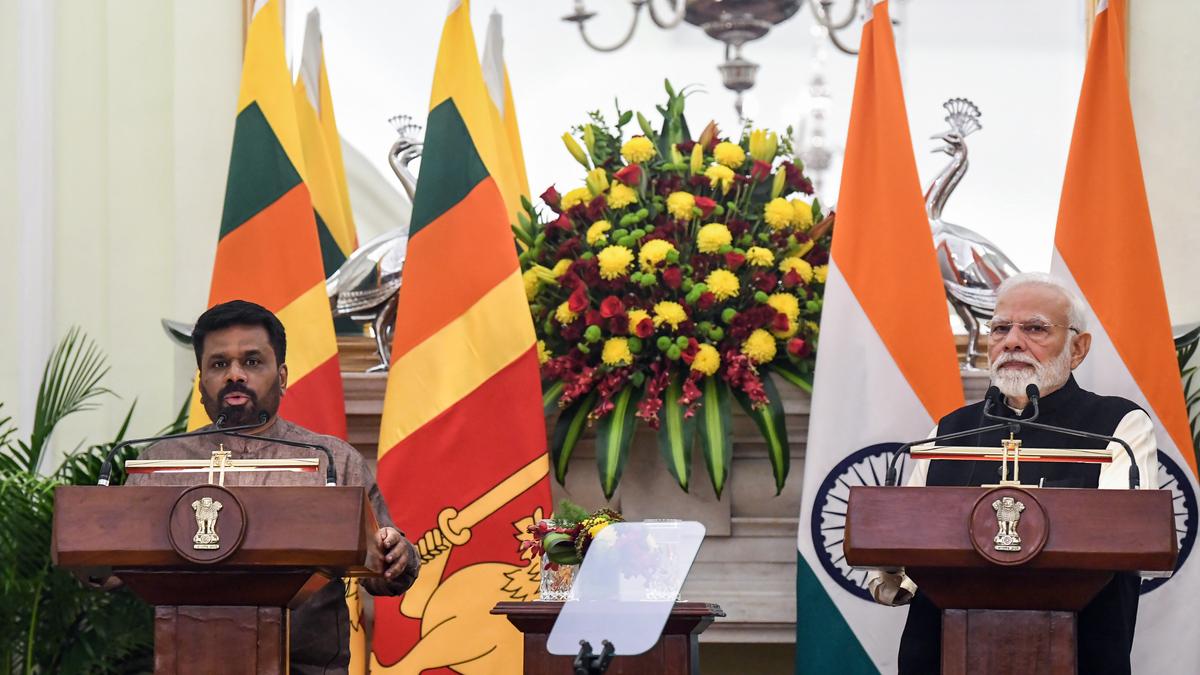
**Colombo, Sri Lanka –** Sri Lanka’s newly elected President, Anura Kumara Dissanayake, concluded his first state visit to India, marked by a ceremonial welcome and a joint statement focusing on economic and strategic cooperation but notably omitting any reference to the country’s long-standing Tamil issue.
Dissanayake’s visit, following the landslide victory of his National People’s Power (NPP) party, highlighted the shifting dynamics in India-Sri Lanka relations. The NPP, a leftist party previously critical of India’s regional influence, now governs with a two-thirds majority, including significant support from Tamil, Muslim, and Malaiyaha Tamil minorities.
While India’s Prime Minister Narendra Modi expressed hope for the fulfillment of Tamil aspirations and the implementation of the Sri Lankan Constitution, the joint statement lacked specific commitments to post-war reconciliation or addressing Tamil concerns. The omission of the 13th Amendment, a key element of previous attempts at power devolution, is particularly significant.
Analysts note the NPP’s avoidance of the “devolution discourse” associated with India and the “liberal peace discourse” promoted by international bodies. The party’s focus is on national integration and a new constitution, without explicitly addressing past grievances, including the unresolved issue of forcibly disappeared loved ones and land reclamation.
The Tamil community, significantly contributing to the NPP’s victory, now seeks clarity on the government’s plans. Their traditional reliance on international pressure, including India’s engagement and support from Western powers, has yielded limited results. The recent election results have forced a re-evaluation of this strategy, prompting calls for the Tamil polity to prioritize the needs of its own people.
The article concludes that while the new government has a unique opportunity to address the Tamil question within the context of post-war realities, the old issues remain, and the Tamil community’s future hinges on its ability to redefine its political strategy.
 First Piper