
Mon Nov 24 02:17:19 UTC 2025: News Article:
Northeast India Teems with Hidden Amphibian Life: 13 New Bush Frog Species Discovered
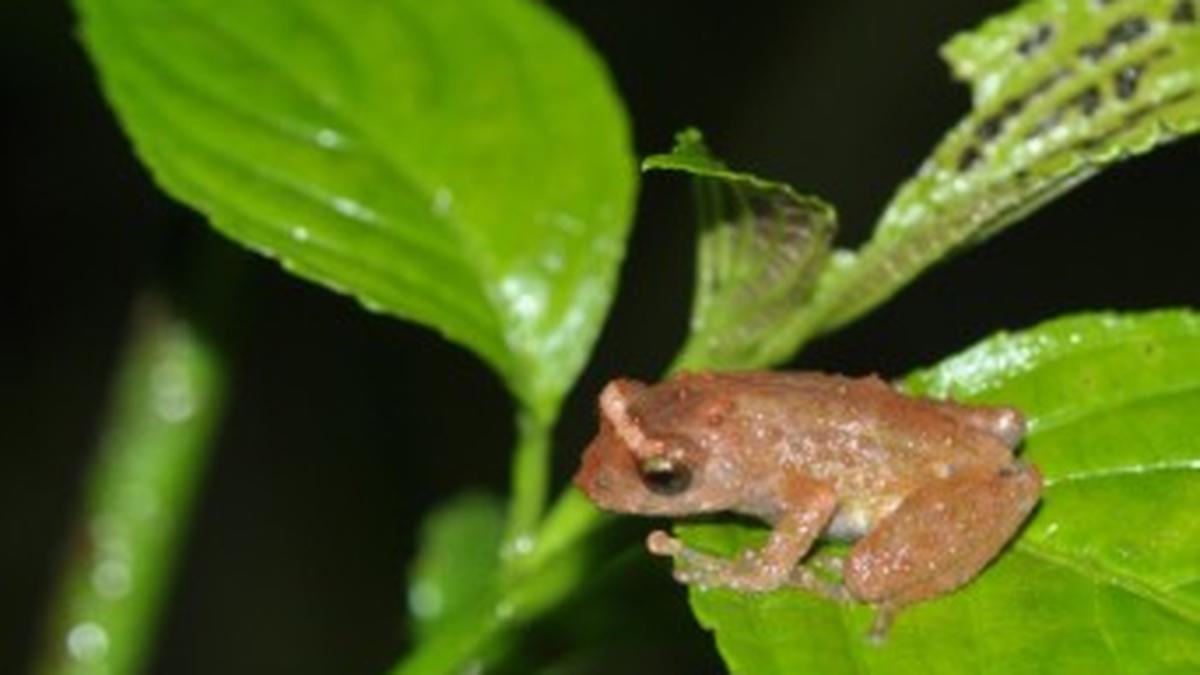
Guwahati – November 24, 2025 – A groundbreaking study by the Wildlife Institute of India (WII) has revealed a remarkable diversity of amphibian life in northeastern India, with the identification of 13 new species of bush frogs. Published in the latest issue of Vertebrate Zoology, the research marks the highest number of vertebrate species described in a single publication from India in over a decade.
The discovery, spearheaded by Bitupan Boruah and Abhijit Das of the WII, along with V. Deepak, associated with museums in Germany and the United Kingdom, significantly expands the known range of bush frog species in the region. Previously, only 15 of India’s 82 known bush frog species were documented in the Northeast.
The new species were found across several states: six in Arunachal Pradesh, three in Meghalaya, and one each in Assam, Mizoram, Nagaland, and Manipur. Notably, seven of the species were located within protected areas, highlighting the importance of these reserves for biodiversity conservation.
The newly discovered bush frogs include the Eaglenest bush frog, Arunachal bush frog, and Dibang Valley bush frog, among others, from Arunachal Pradesh. Meghalaya’s additions include the Narpuh bush frog, found in the Narpuh Wildlife Sanctuary, and the Mawsynram bush frog, named after the notoriously rainy region.
Researchers emphasized the importance of this discovery in addressing conservation shortfalls by naming species before they are lost, understanding their distribution, and providing evolutionary relationships. The study involved extensive sampling across 81 locations and utilized an integrated approach of acoustics, genetics, and morphology, revisiting even century-old museum collections. The researchers said the study revises the distribution of known species in India.
The discovery not only underscores the rich biodiversity of northeastern India but also highlights the need for continued research and conservation efforts in this vital region.
 First Piper