
Sun Nov 16 04:42:36 UTC 2025: ## ISRO Announces Ambitious Launch Schedule and Long-Term Space Goals
Kolkata – November 16, 2025 – The Indian Space Research Organisation (ISRO) is preparing for a period of rapid expansion, with seven more launches planned before the end of the current financial year and ambitious long-term goals that include a lunar sample return mission and an Indian space station.
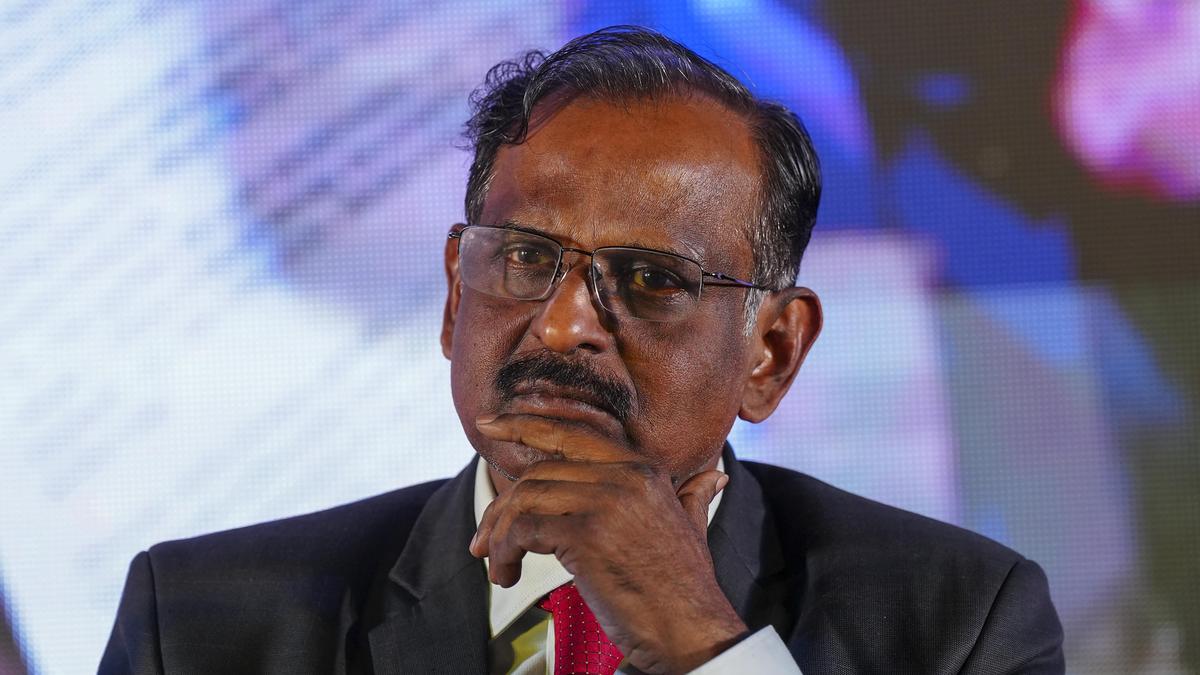
ISRO Chairman V. Narayanan announced the agency’s plans in an interview, emphasizing the focus on scaling both scientific and industrial capacity. Among the upcoming launches are a commercial communication satellite and multiple missions utilizing the PSLV (Polar Satellite Launch Vehicle) and GSLV (Geosynchronous Satellite Launch Vehicle). A significant milestone will be the launch of the first PSLV entirely manufactured by the Indian industry.
Looking further ahead, the government has approved the Chandrayaan-4 mission, a lunar sample-return endeavor targeted for 2028. This complex mission aims to bring back samples from the moon, a feat only achieved by the US, Russia, and China. ISRO is also collaborating with JAXA (Japan Aerospace Exploration Agency) on LUPEX, a joint lunar polar exploration program to study water ice at the lunar south pole.
To meet the increasing demand for space missions, ISRO plans to triple its annual spacecraft production within the next three years. Furthermore, the agency is embarking on the development of an Indian Space Station, aiming for completion by 2035, with the first of five modules scheduled to be placed in orbit by 2028.
Addressing concerns about the timeline for India’s first human spaceflight mission, Gaganyaan, Narayanan clarified that the crewed mission remains on track for 2027. Three uncrewed test missions will precede the first flight with Indian astronauts.
Prime Minister Narendra Modi has further tasked ISRO with the ambitious goal of sending Indian astronauts to the lunar surface and bringing them back safely by 2040, aligning India’s long-term human-spaceflight plan with other leading space powers.
These developments are expected to significantly boost India’s share in the global space economy, with ISRO aiming to increase it from the current 2% to 8% by 2030. The Indian space economy, currently valued at around USD 8.2 billion, is projected to reach USD 44 billion by 2033.
The private sector is playing an increasingly important role in India’s space program, with over 450 industries and 330 startups now active in the space ecosystem. These positive developments follows the regulatory reforms in 2020, enabling private rocket development, satellite manufacture and commercial launch services.
 First Piper