
Thu Jun 19 17:23:26 UTC 2025: **Summary:**
Indian Commerce and Industry Minister Piyush Goyal, speaking at the India Global Forum in London, announced a shift in India’s trade strategy. He emphasized the government’s focus on securing trade deals with wealthy, democratic nations, contrasting this with previous strategies of pursuing agreements with countries considered economic competitors. He criticized past deals like the Regional Comprehensive Economic Partnership (RCEP), implying ASEAN countries were becoming overly influenced by China. Goyal highlighted successful trade deals with countries where products complement each other, such as the UK and Australia. He also subtly suggested India could offer medical treatment solutions to alleviate pressure on the UK’s National Health Service (NHS), framing it as a complementary measure that could benefit British citizens.
**News Article:**
**India Shifts Trade Focus to Developed, Democratic Nations, Minister Goyal Says**
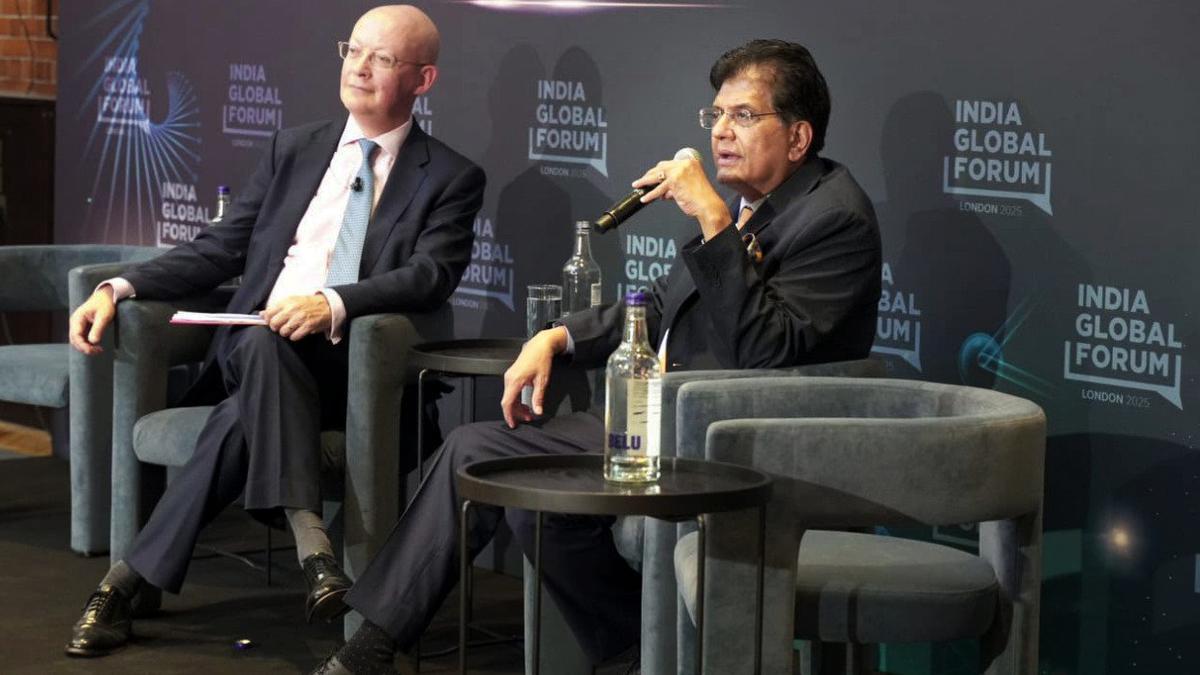
**LONDON (June 19, 2025)** – India is prioritizing trade agreements with wealthy, democratic nations as part of a new strategy to boost its economy and foster innovation, according to Commerce and Industry Minister Piyush Goyal. Speaking at the India Global Forum in London, Goyal distanced his government from previous trade policies, stating that India is now focused on “entering into robust trade agreements with the developed world.”
Goyal specifically criticized past agreements with countries he deemed economic competitors, referencing the Regional Comprehensive Economic Partnership (RCEP) and implying concerns about the growing influence of China within ASEAN.
He highlighted successful trade deals and negotiations with countries like the U.K., Australia, Peru, the United Arab Emirates (UAE), and the European Free Trade Association (EFTA), emphasizing the complementary nature of products traded between India and these nations.
In a conversation with Ian Blatchford, Director & Chief Executive of the Science Museum Group, Goyal also addressed potential solutions to the challenges facing the UK’s National Health Service (NHS). While acknowledging the political sensitivity of the issue, he suggested that India could potentially offer medical treatments to UK citizens, supplementing existing services and improving health outcomes.
 First Piper