
Thu Apr 17 03:16:44 UTC 2025: ## James Webb Telescope Detects Potential Biosignatures on Exoplanet K2-18b
**Washington, April 17, 2025** – Scientists using the James Webb Space Telescope (JWST) have announced the strongest evidence yet for potential life beyond our solar system. Observations of the exoplanet K2-18b, located 124 light-years from Earth, have revealed the presence of dimethyl sulfide (DMS) and dimethyl disulfide (DMDS) in its atmosphere. On Earth, these gases are primarily produced by biological processes, specifically microbial life like marine phytoplankton.
While researchers emphasize that this is not a definitive discovery of life, the detection of these potential biosignatures represents a significant step forward in the search for extraterrestrial life. Lead author Nikku Madhusudhan of the University of Cambridge described the findings as “a transformational moment,” marking the entry into “the era of observational astrobiology.”
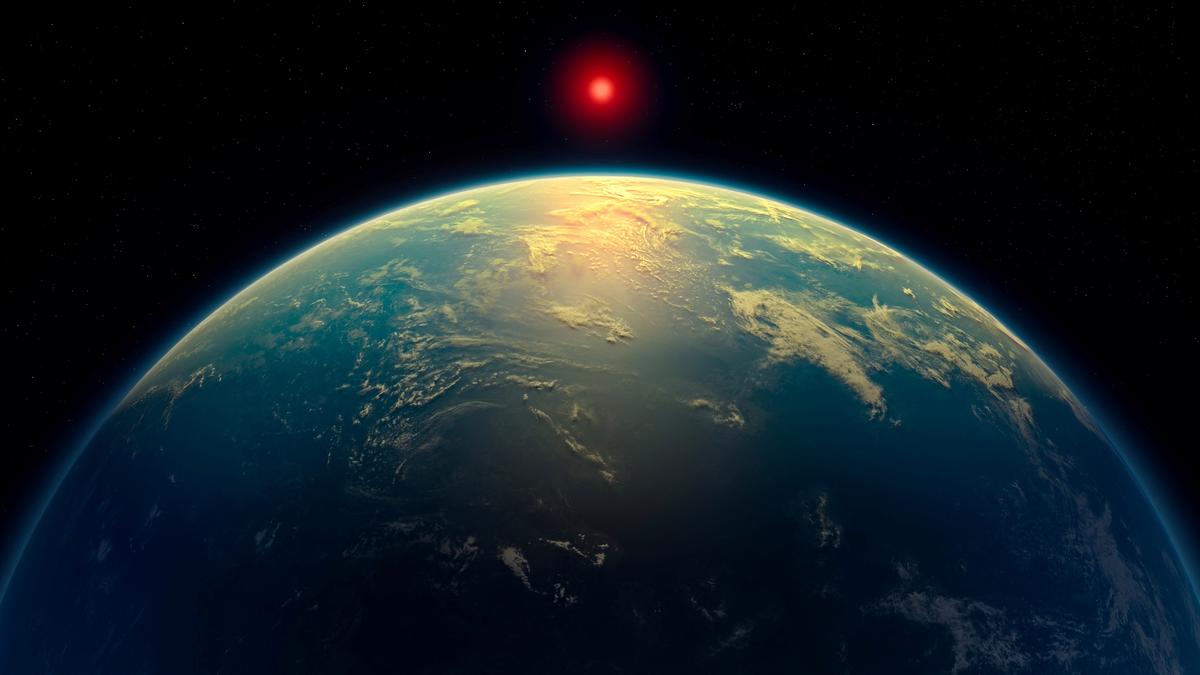
K2-18b, a sub-Neptune planet roughly 8.6 times Earth’s mass, orbits within the habitable zone of a red dwarf star. Previous JWST observations already identified methane and carbon dioxide in its atmosphere. The current findings, published in the Astrophysical Journal Letters, show DMS and DMDS present at concentrations thousands of times higher than in Earth’s atmosphere, making a biological explanation the most likely scenario.
The study’s conclusions, however, are not universally accepted. Other scientists have urged caution, emphasizing the need for further independent analysis and investigation into alternative explanations. Further observations are planned to confirm the findings and rule out the possibility of a statistical fluke or non-biological processes producing these gases.
Dr. Madhusudhan acknowledges the need for repeated observations and further research to definitively confirm the biological origin of these gases. He stresses that the current findings indicate potential microbial life, not multicellular or intelligent life. The discovery, nonetheless, ignites renewed excitement and further investigation into the possibility of life on exoplanets, particularly those categorized as “hycean worlds”—planets with liquid water oceans under hydrogen-rich atmospheres.
 First Piper