
Fri Apr 04 07:38:28 UTC 2025: ## Trump’s Tariffs: Not-So-Reciprocal Retaliation Sparks International Concern
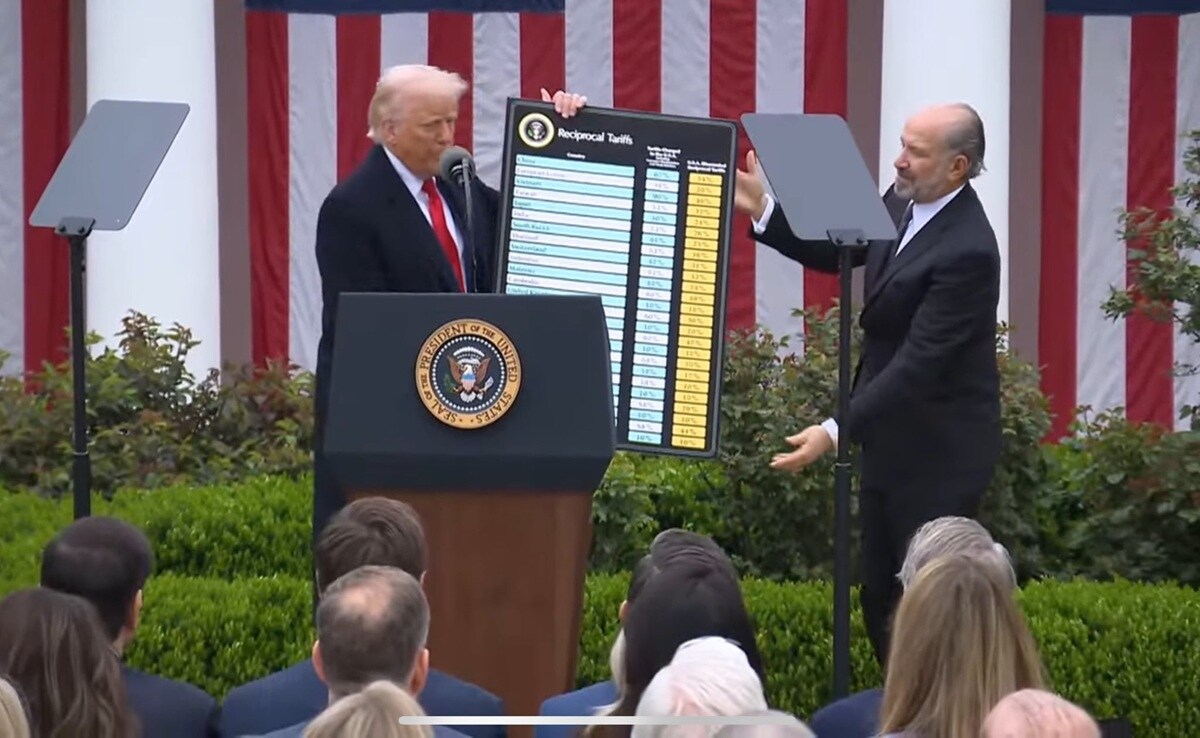
**Washington D.C.** – President Trump’s newly implemented tariffs, while presented as reciprocal, have revealed a more complex and arguably discriminatory calculation method, sparking international concern. Reports from the *Wall Street Journal* and *CNN* detail a system where a base 10% tariff was applied to most countries, but additional levies were imposed based on a formula targeting nations with large trade surpluses.
According to sources, the additional tariffs were calculated by dividing a country’s trade deficit with the U.S. by its exports to the U.S., then halving the result. This approach effectively prioritizes the size of the surplus relative to the export volume, rather than simply mirroring existing tariffs.
Mike O’Rourke, chief marketing strategist at Jones Trading, described the strategy as “surplus targeting,” arguing that existing tariffs played no role in the calculation. The administration further imposed significantly higher tariffs on countries deemed to be treating the U.S. “badly.” China faces a 54% tariff, while the European Union and Japan face 20% and 24% respectively.
India, initially facing a 27% tariff, saw it slightly reduced to 26%, effective April 9th. Despite a significant trade surplus with the U.S. ($35.32 billion in 2023-24), India’s main exports to the U.S. include pharmaceuticals, telecom equipment, precious stones, and petroleum products. Key imports from the U.S. consist of crude oil, petroleum products, coal, and diamonds. The U.S. accounts for roughly 18% of India’s total goods exports.
The lack of true reciprocity in the tariff structure is raising questions about the fairness and effectiveness of the administration’s trade policy, and is likely to further strain already tense international relations.
 First Piper