
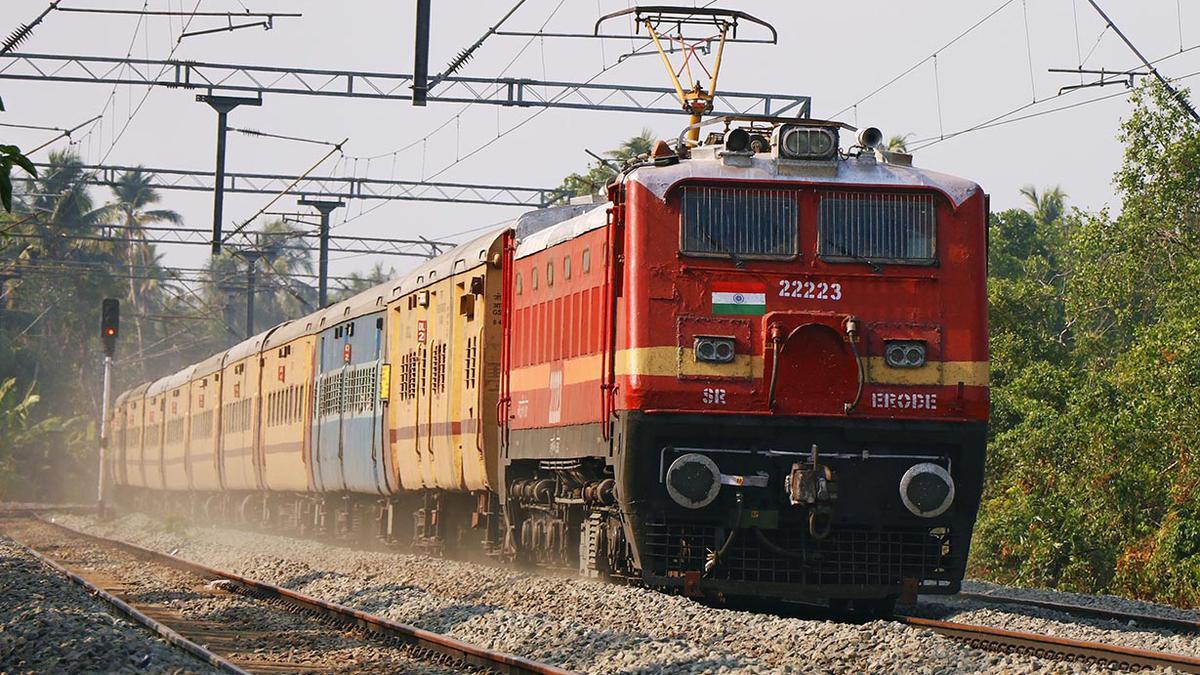
Sat Feb 01 15:17:11 UTC 2025: ## Indian Railways Budget Remains Stagnant at ₹2.65 Lakh Crore
**New Delhi, February 1, 2025** – The Indian Railways received a flat budget allocation of ₹2.65 lakh crore for the fiscal year 2025-26, matching the previous year’s figure. While the overall allocation remains unchanged, the budget reveals significant cuts in several key areas.
According to Union Railways Minister Ashwini Vaishnaw, the capital expenditure (CAPEX) for the Railways stands at ₹2.52 lakh crore, which includes Public-Private Partnership investments. Despite the stagnant overall allocation, Mr. Vaishnaw emphasized that the continued CAPEX signifies ongoing investment in railway infrastructure. He further highlighted new projects totaling ₹4.6 lakh crore under consideration, encompassing track expansion, upgrades, and station redevelopment.
However, the budget reveals a decline in funding for customer amenities, dropping from ₹15,510 crore (budget estimate) in FY 2024-25 to ₹12,118 crore in FY 2025-26. Similarly, investment in Public Sector Units (PSUs) and Joint Ventures (JVs) has been reduced from ₹27,570 crore (revised estimate) in FY 2024-25 to ₹22,444 crore in the upcoming fiscal year. Allocation to the Dedicated Freight Corridor Corporation of India also saw a significant decrease, from ₹5,499 crore to ₹500 crore.
Despite these cuts, the minister announced several ambitious goals for the coming year, including the achievement of 100% rail network electrification and a passenger revenue target of ₹3 lakh crore. He also highlighted the progress of indigenous high-speed train development in collaboration with the Japanese government, aiming for 280 kmph speeds. The budget includes provisions for the manufacturing of 100 non-AC Amrit Bharat trains, 50 NAMO Bharat trains, and 200 Vande Bharat trains. The production of 17,500 general coaches is also planned, with 1,200 already manufactured. Mr. Vaishnaw concluded by stating that Indian Railways will achieve a cargo carrying capacity of 1.6 billion tonnes by March 2025, making it the second largest cargo carrier globally.
 First Piper