
Thu Jan 09 11:34:25 UTC 2025: ## Quantum Leap: 2025 Brings Hope for Powerful New Computers
**Chennai, January 9, 2025** – The race to build the world’s first full-scale quantum computer is accelerating, with significant advancements reported in 2024 and 2025 designated as the International Year of Quantum Science and Technology by the United Nations. While still in its nascent stages, quantum computing promises a revolution across medicine, materials science, and numerous other fields by offering exponentially greater data processing power than classical computers.
The core challenge lies in creating stable and scalable quantum processors. Unlike classical computers using bits representing 0 or 1, quantum computers utilize qubits capable of representing 0, 1, or a superposition of both. This allows for vastly faster processing of large datasets. However, qubits are highly susceptible to errors, a factor impacting their “fidelity” and hindering performance.
Major players like IBM, Google, and QueRa are investing heavily in scaling up quantum processors, with targets set for significant increases in qubit count by 2030. Different approaches to qubit creation – using superconducting devices, semiconductors, or photonics – are being pursued. The number of qubits is less critical than their quality; high-fidelity qubits are crucial for stable, complex computations.
Recent breakthroughs focus on “logical qubits,” theoretical constructs that combine multiple imperfect qubits to achieve higher fidelity and error correction. Companies like Google and QueRa have made significant progress in this area, with chips exceeding 100 qubits already available for research. While single logical qubits have been created, integrating multiple logical qubits for practical applications remains a future goal.
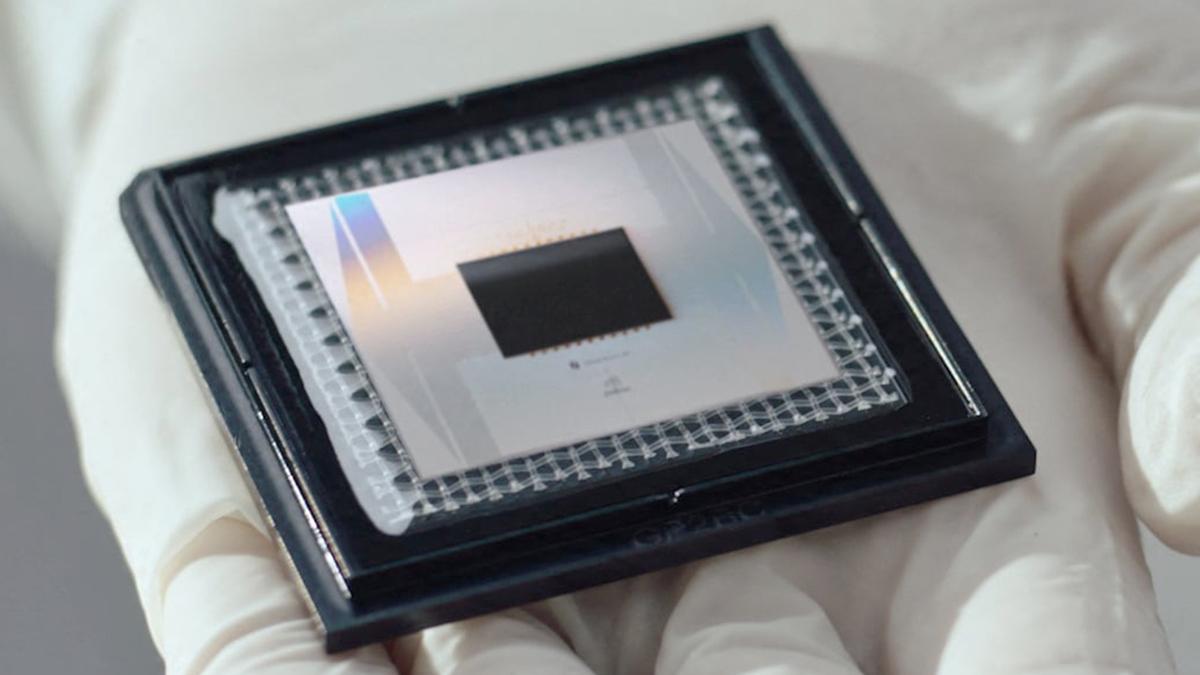
Google’s Willow chip recently demonstrated “quantum supremacy” for a specific task, marking a significant milestone despite not yet solving real-world problems. Further advancements are anticipated in scaling up quantum processors, improving qubit fidelity, and developing quantum software and algorithms. The path to a fully functional quantum computer requires parallel progress in multiple areas, but 2025 holds promise for significant breakthroughs in this rapidly evolving field.
 First Piper