
Mon Dec 02 20:05:50 UTC 2024: ## Biden’s Late-Term Africa Trip Aims to Counter China’s Influence
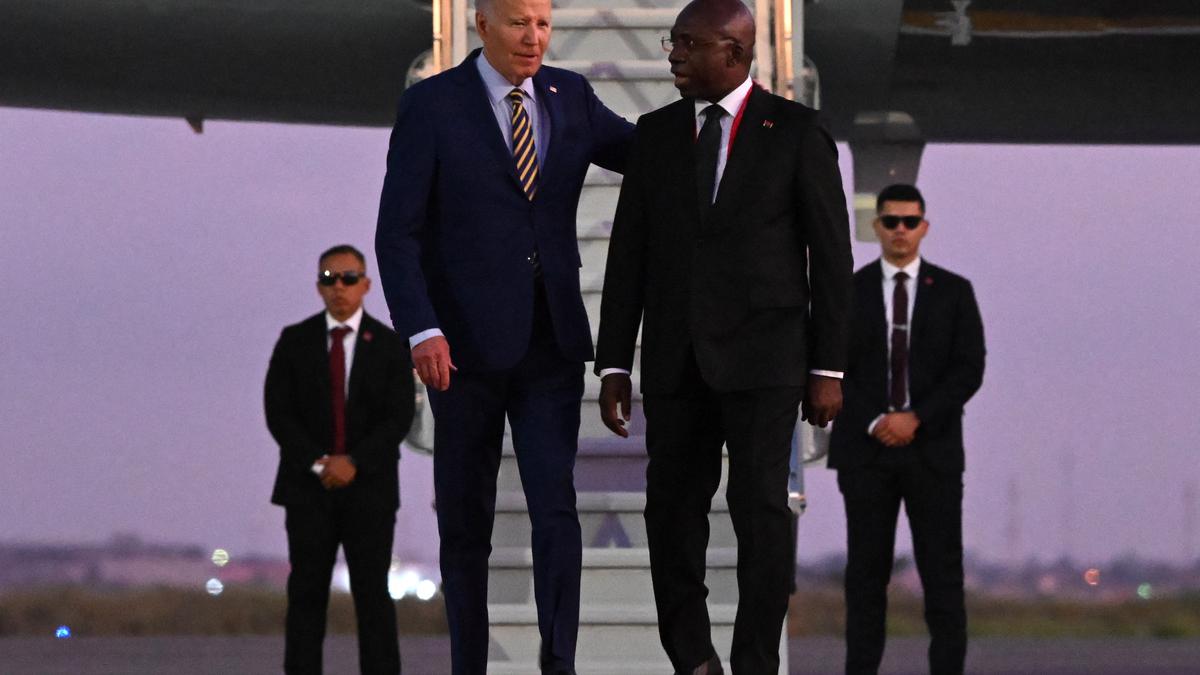
**Luanda, Angola** – President Joe Biden concluded a three-day visit to sub-Saharan Africa, his first as president, focusing on countering China’s growing influence in the region. The trip, initially planned for last year but delayed several times, culminated in Angola, where Biden highlighted the $3 billion Lobito Corridor railway project, a key initiative aimed at improving infrastructure and access to critical minerals.
The ambitious railway redevelopment project, spanning Zambia, Congo, and Angola, seeks to provide a western route for the transport of critical minerals essential for electric vehicles and clean energy technologies. This initiative directly challenges China’s Belt and Road Initiative, which has already established a significant presence in the region.
Thousands welcomed Biden in Luanda, but his late-term visit has drawn criticism, with some suggesting it prioritizes damage control rather than long-term engagement. This sentiment is amplified by the upcoming presidential transition, with Donald Trump set to assume office in January 2025.
While administration officials emphasize Biden’s long-standing commitment to Africa, analysts point out that the focus is shifting towards the incoming administration and its priorities. The success of the Lobito Corridor, and indeed the future of U.S. engagement in Africa, now hinges heavily on President-elect Trump’s stance on the project.
Despite the political uncertainty, many remain optimistic about the Lobito Corridor’s potential to withstand any administrative changes. The project, a collaborative effort involving the U.S., the European Union, the G7, and African banks, has bipartisan support and is considered vital in countering China’s dominance in the African mining sector.
However, the project represents only a beginning for U.S. engagement in Africa, where China holds a significant advantage in mining operations, particularly in Congo, a major source of cobalt. The trip also highlights a tension between the U.S.’s values-based diplomacy and the human rights concerns surrounding the Angolan government’s authoritarian policies.
 First Piper