
Tue Nov 05 02:10:06 UTC 2024: ## Russia Launches Iranian Satellites Amid Growing Cooperation
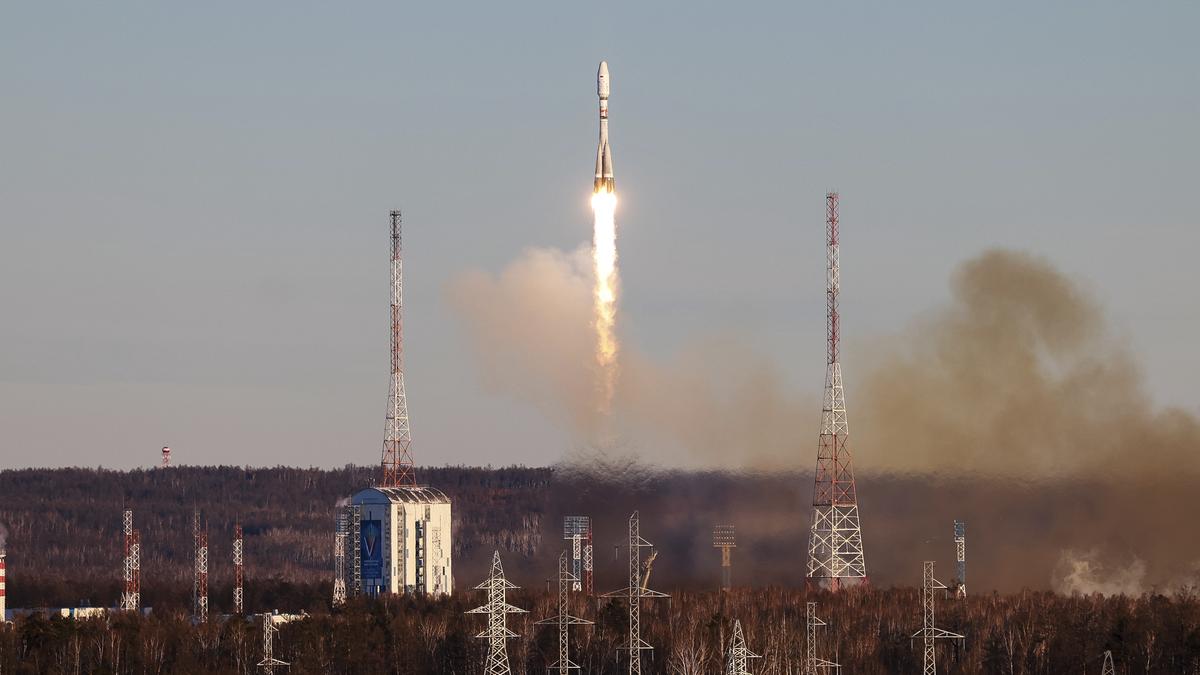
**MOSCOW, November 5, 2024** – A Russian Soyuz rocket successfully launched two Iranian satellites into orbit on Tuesday, marking a significant milestone in the growing partnership between Moscow and Tehran. The launch, which took place from the Vostochny launchpad in Russia’s far east, also carried two Russian Ionosphere-M Earth observation satellites and several smaller satellites.
The Iranian satellites, named Kowsar and Hodhod, represent the first launch for Iran’s private space sector. This follows previous launches of Iranian satellites, Khayyam and Pars-1, in 2022 and 2024, respectively.
The launch comes amidst heightened collaboration between Russia and Iran, who have expanded ties across various fields. Ukraine and Western nations have accused Tehran of providing Moscow with hundreds of drones for use in the Ukraine conflict and aiding in their production in Russia. While both Moscow and Tehran have denied these allegations, the drone deliveries have significantly impacted the battlefield.
Furthermore, Russia and Iran are planning to solidify their relationship through a “comprehensive strategic partnership” to be signed during Iranian President Masoud Pezeshkian’s planned visit to Russia. Although the date for this visit remains unspecified, the Kremlin has suggested its imminent arrival.
The successful launch of the Iranian satellites follows a series of setbacks in Iran’s civilian space program, which has seen five consecutive failed launches of its Simorgh satellite-carrying rocket. In 2019, a fire at the Imam Khomeini Spaceport resulted in the death of three researchers, and a subsequent rocket explosion drew attention from then-President Donald Trump.
While Iran’s civilian space program faces challenges, the country’s paramilitary Revolutionary Guard has successfully launched satellites from a military base outside of Shahroud. However, satellite images suggest that this base was targeted in an October 26 retaliatory strike by Israel.
The U.S. intelligence community has expressed concerns over Iran’s satellite launch vehicle development, citing its potential for shortening the timeline for developing intercontinental ballistic missiles (ICBMs). ICBMs can be used to deliver nuclear weapons, and Iran has been producing uranium close to weapons-grade levels, raising concerns about its nuclear ambitions.
Iran, however, maintains that its space program and nuclear activities are solely for civilian purposes. Despite this, U.S. intelligence agencies and the International Atomic Energy Agency have previously confirmed the existence of an organized Iranian military nuclear program until 2003.
 First Piper