
Fri Sep 20 08:39:00 UTC 2024: ## Starlink’s Expanding Network Threatens Astronomical Research
**Amsterdam, Netherlands** – The rapid expansion of satellite internet networks like Starlink, while bringing connectivity to remote communities, is posing a significant threat to astronomical research, according to a new study published in Astronomy & Astrophysics.
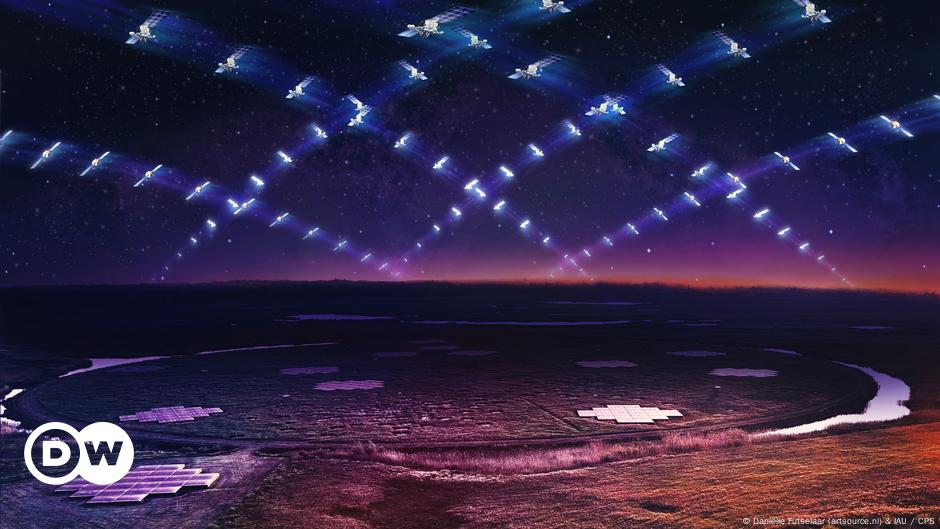
The study, led by the Netherlands Institute for Radio Astronomy (ASTRON), found that Starlink’s second-generation satellites emit radio waves at levels 32 times brighter than their earlier models. This “unintended electromagnetic radiation” (UEMR) is interfering with radio telescopes, potentially blurring images and hindering scientific observations.
“It’s like your eyes being blinded by too much light,” explains Benjamin Winkel, a scientist at the Max Planck Institute for Radio Astronomy. “Our radio telescopes are getting saturated by the signal from these satellites.”
While Starlink has previously taken steps to reduce radio emissions from its first-generation satellites, the new generation appears to be even brighter, raising concerns for the future of astronomical research.
With the number of satellites in orbit expected to reach 100,000 by 2030, astronomers fear that the interference from these networks will only worsen. “My colleagues are really frightened of the future,” says Winkel. “There should be some improvements if they really want to observe in a good manner.”
While ground-based radio pollution is regulated, there are few regulations for satellites, leaving the research community reliant on cooperation from satellite operators. SpaceX, the company behind Starlink, has made efforts to reduce radio noise, including implementing a “telescope boresight avoidance method” to steer emissions away from telescopes.
However, the study highlights the urgent need for stricter regulations and continued efforts by satellite companies to minimize radio emissions. “There is no way to make any electrical or electronic apparatus without this kind of leakage,” says Winkel. “The question is always: how much is leaked?”
The astronomical community is calling for increased collaboration and proactive measures from all satellite operators to ensure the future of astronomical research in an increasingly crowded space.
 First Piper