
Sun May 04 05:03:33 UTC 2025: ## India’s Crowding Crisis: A Recurring Tragedy
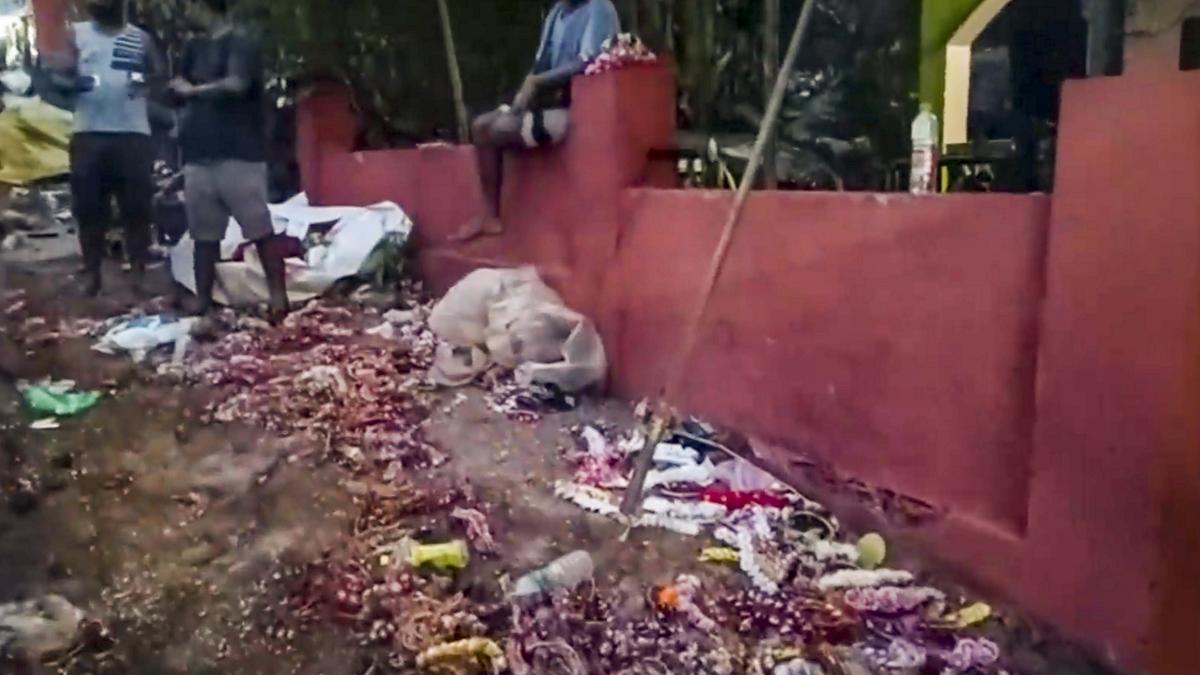
**New Delhi, May 4, 2025** – A series of deadly crowd crushes across India has highlighted a critical flaw in public infrastructure and event management, raising concerns about safety and the need for improved planning. Recent incidents, including a temple festival stampede in Goa that killed seven and injured 80, underscore a recurring pattern of tragic events linked to overcrowding.
The problem is not new. Historian Ranajit Guha’s work on Mahatma Gandhi highlighted the early recognition of the dangers of uncontrolled crowds. Since then, India has witnessed numerous fatal crowd crushes, including: a spiritual gathering in Uttar Pradesh (121 dead), a film premiere in Hyderabad (one dead, one critically injured), and the Maha Kumbh Mela in Prayagraj (at least 50 dead). Even the 2025 Kumbh Mela, monitored by 2,700 AI-equipped cameras, experienced a significant incident. A stampede at New Delhi Railway Station further exacerbated the situation, resulting in 18 deaths.
Experts argue that the term “stampede” misplaces blame, shifting it from inadequate infrastructure and planning to the victims. Crowd crushes and collapses occur when the number of people in a confined space exceeds safe limits (five people per square meter). When people fall in a densely packed crowd, a domino effect occurs, leading to injuries and deaths. Panic, experts say, is a consequence of the crush, not its cause.
The Maha Kumbh Mela in Prayagraj, while having a large designated area (40 sq km), still saw overcrowding in specific locations. The event’s VIP arrangements highlight the disparity in safety provisions between the elite and the general public.
The issue is intricately tied to the socio-economic realities of India. Access to safe, uncrowded public spaces correlates strongly with socioeconomic status. Wealthier areas boast better ventilation, wider roads, and readily available healthcare, while poorer neighborhoods suffer from overcrowding, poor air quality, and limited access to essential services. This disparity was exacerbated during the COVID-19 pandemic, where social distancing measures were virtually impossible to implement in crowded public spaces.
While technological solutions like AI crowd monitoring are being explored, the underlying problem lies in inadequate infrastructure, poor planning, and a lack of inclusive policymaking. Studies on crowd behavior suggest that strategic placement of obstacles near exits and the provision of multiple, strategically located exits can significantly reduce evacuation times and improve safety. However, these solutions are only effective when coupled with better planning and infrastructure. The repeated occurrence of these tragedies underscores the urgent need for systemic change. The government’s response has primarily been reactive, with inquiries commissioned after each incident, rather than proactive, with comprehensive safety measures implemented before large gatherings.
 First Piper