
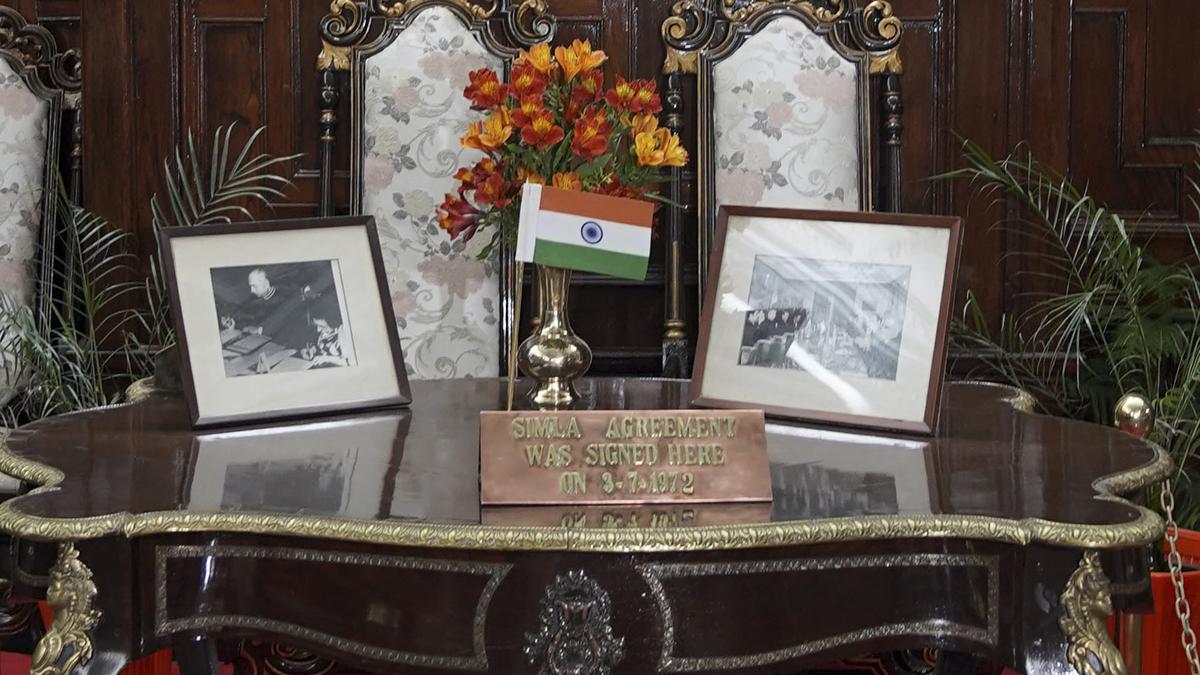
Sat Apr 26 21:05:00 UTC 2025: ## Pakistan Suspends 1972 Simla Agreement with India Following Indus Waters Treaty Dispute
**Shimla, India –** In a significant escalation of tensions, Pakistan has suspended the 1972 Simla Agreement with India, a landmark accord that normalized relations after the 1971 Bangladesh War. The move follows India’s suspension of the 1960 Indus Waters Treaty in response to a recent terror attack in Pahalgam.
While Pakistan’s announcement stated it would hold “all bilateral agreements” with India in abeyance, it remains unclear if formal notification has been issued. India confirms it has received no such letter. The Simla Agreement, signed by then-Prime Ministers Indira Gandhi and Zulfikar Ali Bhutto, addressed the return of Pakistani prisoners of war and the resolution of the Jammu and Kashmir dispute through peaceful means. However, the agreement has been repeatedly violated by Pakistan over the years, including through support for terrorist groups in Kashmir.
Experts like former diplomat Avtar Singh Bhasin suggest the impact of the suspension may be minimal, arguing that many provisions of the Simla Agreement were intended for immediate implementation. However, the suspension raises concerns about the future of the Line of Control (LoC), first defined in the agreement, and the status of other bilateral accords.
The suspension casts uncertainty on several agreements, including the Nehru-Liaquat Pact on minority rights, the religious pilgrimage protocol, and confidence-building measures related to nuclear installations and missile testing. While the Kartarpur corridor agreement appears unaffected for now, the ceasefire agreement in place since 2003 is vulnerable, especially considering India’s potential military response to terrorism emanating from Pakistan.
The Indus Waters Treaty suspension further complicates matters, with Pakistan potentially pursuing international legal action. This situation highlights the precarious state of India-Pakistan relations and raises concerns about the potential for further escalation in the region. The implications for all three riparian states – India, Pakistan, and China – regarding water sharing on the Indus and other rivers remains to be seen.
 First Piper