
Tue Apr 22 17:07:58 UTC 2025: ## EU’s Far-Right Faces Legal Reckoning, Sparking Democratic Debate
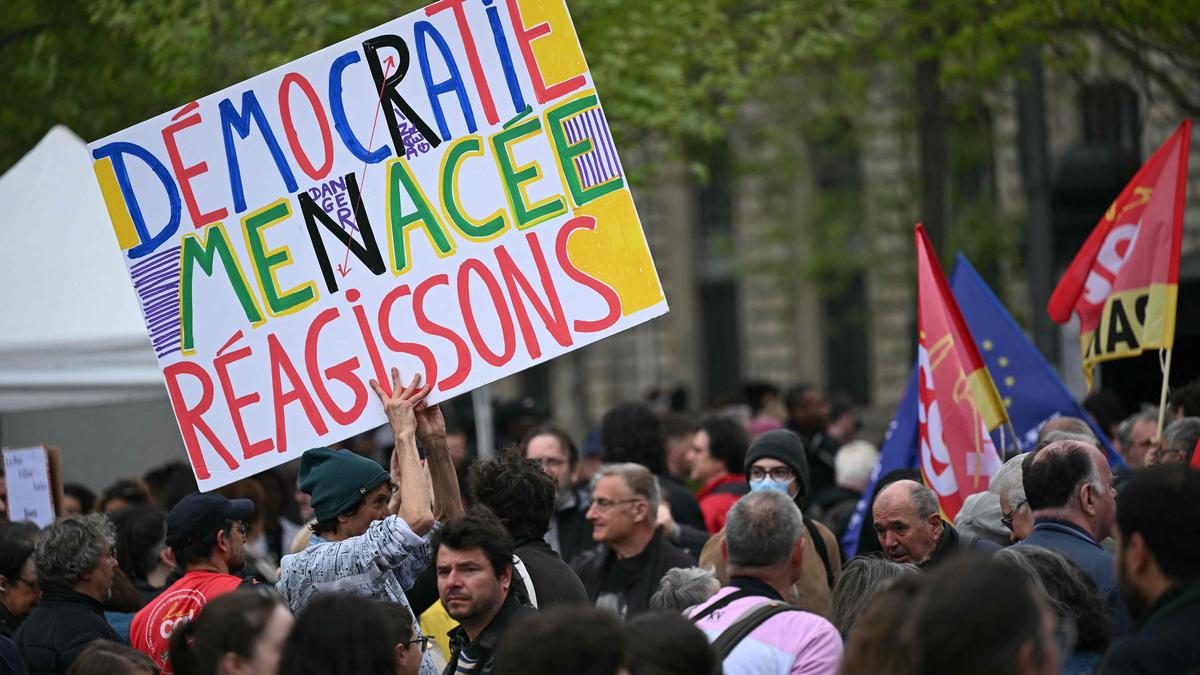
**Brussels, April 22, 2025** – A major clash is brewing within the European Union between ascendant right-wing nationalist parties and the judicial systems of member states. Recent court rulings against prominent far-right figures have ignited a firestorm of accusations of political persecution and protests, raising fundamental questions about judicial independence, the rule of law, and the future of European democracy.
The conflict centers on several high-profile cases. In France, Marine Le Pen, leader of the National Rally party, was sentenced to a four-year prison term (two years suspended) and banned from holding public office for embezzlement of EU funds. In Romania, far-right presidential candidate Călin Georgescu was barred from the election due to alleged anti-democratic behavior and suspected links to Russian subversion. Meanwhile, Germany’s domestic intelligence agency has classified the Alternative for Germany (AfD) party as a threat to democracy.
These rulings have been met with fierce resistance from the targeted parties and their supporters, who claim the actions are politically motivated “witch hunts” aimed at silencing opposition. Hungarian Prime Minister Viktor Orbán and Italian Deputy Prime Minister Matteo Salvini have publicly voiced their support for Le Pen. The AfD, while facing scrutiny, has taken steps to improve its image.
The far-right narrative frames these legal actions as an attempt by the “establishment” to suppress popular, electorally successful movements. This resonates with a segment of the population disillusioned with traditional politics. They allege a biased application of the law, favoring mainstream figures while targeting conservative-nationalists.
Conversely, EU institutions and liberal forces emphasize the rule of law and judicial independence as crucial to democratic governance. They see attacks on the judiciary as a direct threat to democracy. Concerns about Russian interference, including disinformation and financial support for extremist parties, further complicate the issue.
The conflict raises serious concerns about the erosion of trust in democratic institutions. When significant portions of the electorate see the judiciary as a political actor, rather than an impartial arbiter, the foundations of democracy are weakened. This is particularly concerning given the historical context of authoritarian regimes in parts of Europe and the influence of populist rhetoric echoing calls to “drain the swamp.” Experts warn that the ongoing struggle poses a long-term threat to the stability of European democracies.
 First Piper