
Thu Apr 17 02:19:34 UTC 2025: ## IIT Bombay Scientists Develop Breakthrough Material for Efficient Water Desalination
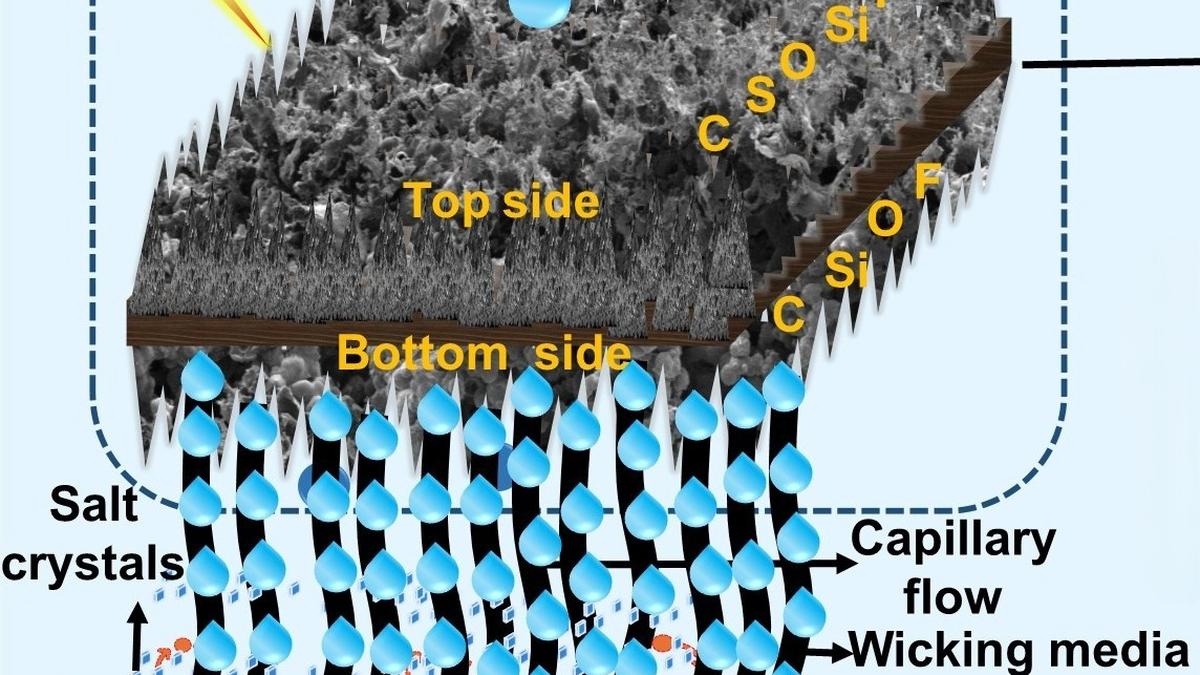
**Mumbai, April 17, 2025** – Scientists at the Indian Institute of Technology Bombay have developed a revolutionary material that promises to significantly improve water desalination efficiency, offering a potential solution to global freshwater scarcity. The new material, called Dual-Sided Superhydrophobic Laser-Induced Graphene (DSLIG) evaporator, overcomes limitations of previous desalination technologies.
Professor Swatantra Pratap Singh and Aiswarya C. L. led the research, focusing on interfacial evaporation systems powered by solar energy. These systems heat a thin layer of water, minimizing energy loss. However, traditional methods suffer from inconsistencies due to fluctuating sunlight and salt build-up on the evaporator surface, hindering efficiency.
DSLIG addresses these issues. Its superhydrophobic properties, mimicking the lotus leaf effect, prevent salt deposition. Furthermore, it can utilize both solar and electric heating (Joule heating), ensuring consistent performance even on cloudy days or at night. The material’s dual-sided design, combining polyvinylidene fluoride (PVDF) and poly (ether sulfone) (PES), achieves both hydrophobicity and structural stability.
Laboratory tests demonstrate DSLIG’s high efficiency in desalination, even with highly concentrated salt solutions, making it suitable for treating wastewater from other desalination plants and industries. Stacking multiple DSLIG evaporators further enhances performance. The low carbon footprint, low toxicity, and cost-effectiveness make DSLIG a strong candidate for large-scale sustainable desalination.
While promising, Professor Singh acknowledges the need for further field testing and securing funding to achieve industrial-scale application. The team plans to develop even more efficient superhydrophobic materials that can harness solar and electric energy. This breakthrough offers a significant step towards addressing the global water crisis.
 First Piper