
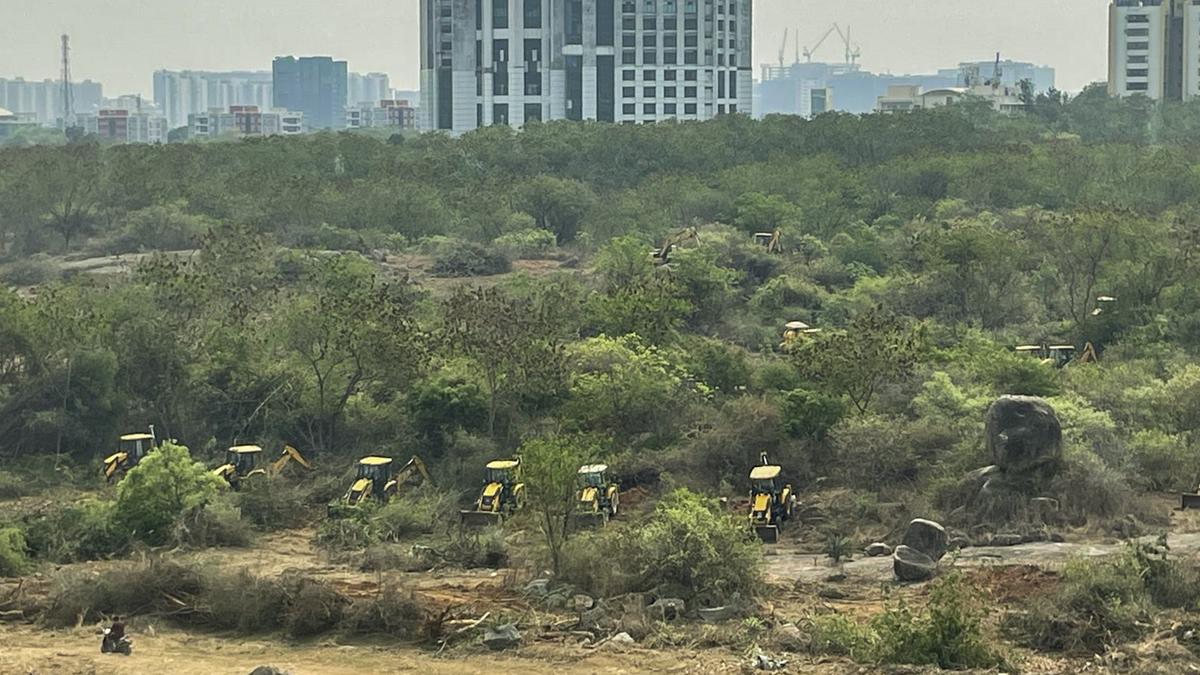
Mon Apr 14 19:48:30 UTC 2025: ## Hyderabad’s Kancha Gachibowli Land Auction Sparks Environmental Outcry
**Hyderabad, April 15, 2025** – A proposed auction of 400 acres of ecologically rich land in Kancha Gachibowli, Hyderabad, has ignited a fierce controversy, pitting the Telangana government against environmental activists, students, and political parties. While the state government views the land as a valuable resource for revenue generation and urban development, opponents argue the auction represents a disregard for environmental sustainability and community interests.
The land in question, a biodiversity hotspot containing ancient rock formations and seasonal water bodies, is crucial for Hyderabad’s ecological balance, particularly in mitigating the effects of rising temperatures. Critics contend that the government’s decision ignores the land’s ecological significance and the need for sustainable urban planning. They accuse the government of prioritizing short-term economic gains over long-term environmental stewardship.
Despite the government’s legal right to the land, opponents argue that the auction lacks legitimacy, highlighting the absence of substantive legal safeguards for ecologically responsible land use. They point to the inadequacy of environmental assessments and the silencing of protesting students as evidence of a flawed approach to urban development.
The controversy exposes a broader issue of institutionalized shortsightedness in urban planning, where sustainable development principles are often overridden by commercial interests. The author, Navya Jannu, an advocate at the Supreme Court of India, argues that the situation reveals a “Great Derangement,” a failure to acknowledge the obvious ecological consequences of the government’s actions. She calls for leadership guided by ecological foresight and a commitment to inclusive, sustainable urban development. The future of the 400 acres, she concludes, will be a test of Hyderabad’s civic imagination and its willingness to prioritize long-term sustainability over short-term gains.
 First Piper