
Sat Mar 01 18:52:43 UTC 2025: ## Twenty Years of NREGA: Successes and Challenges in Tamil Nadu
**Chennai, March 2, 2025** – The Mahatma Gandhi National Rural Employment Guarantee Scheme (MGNREGS), also known as NREGA or “Nooru Naal Velai Thittam,” celebrated its 20th anniversary on February 2nd. A recent investigation across five Tamil Nadu districts reveals both the scheme’s successes and the challenges it faces.
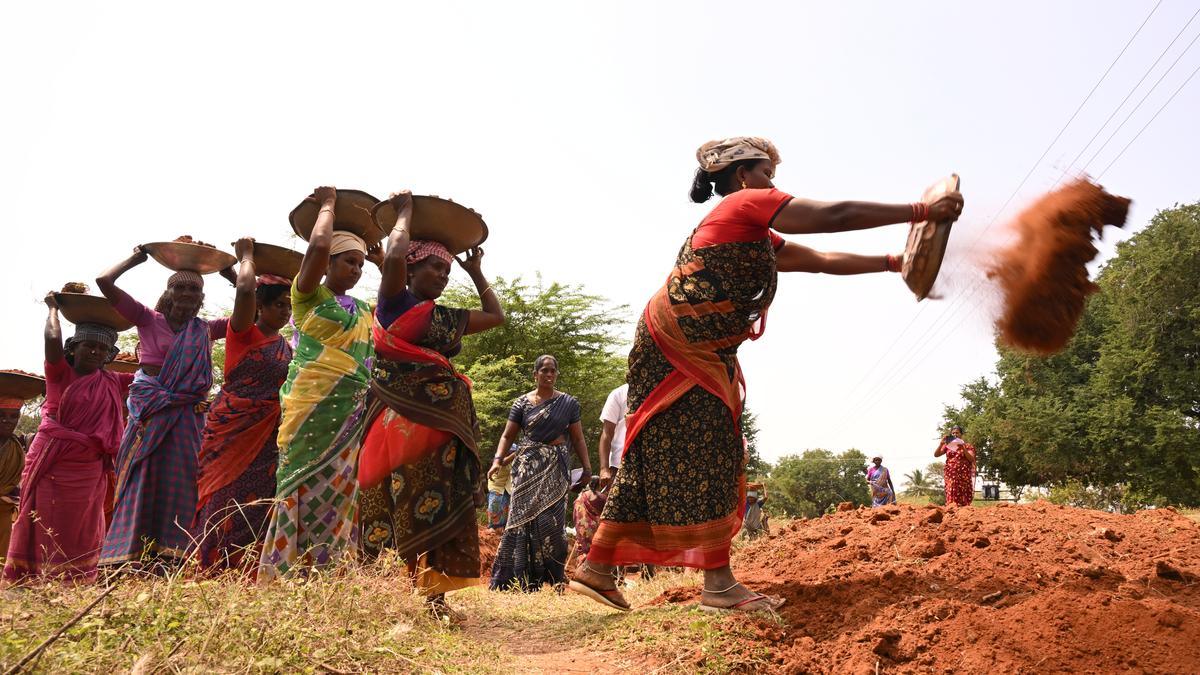
The report highlights the scheme’s positive impact. Beneficiary-workers, like Anthoniammal and Sonia, proudly showcased their contributions to infrastructure projects, refuting claims that the scheme pays for unproductive work. The NMMS app ensures transparency with real-time worker attendance tracking. Projects range from water harvesting structures built by persons with disabilities to widespread tree plantation efforts. The scheme provides 100 days of work annually to rural families, primarily those from weaker sections. While unskilled manual labor is central, material costs can comprise up to 40% of total expenditure. The flexibility of the scheme has allowed for its crucial role in mitigating the impact of the COVID-19 pandemic.
However, the report also acknowledges concerns. Landowning agriculturists complain about labor shortages attributed to high NREGA wages (₹319 per day). Farmer Samba Vaidyanathan cited this as a reason for difficulties in finding farm workers. This criticism is countered by beneficiaries like Jayanthi and Vanitha, who explained how the scheme’s work can be integrated with farming operations, particularly for small and marginal landowners. The Tamil Nadu government has issued advisories to panchayats to avoid scheduling labor-intensive MREGA projects during peak farming seasons.
The scheme’s convergence with other central and state initiatives, including housing schemes (PMAY-G, Kalaignarin Kanavu Illam) and rural development programs, is expanding its scope. While this increases the impact, it also highlights the issue of wage arrears, which have reached ₹2,400 crore, causing anxiety among beneficiaries.
Further, while officials emphasize community benefits from projects like well-digging on private land, concerns remain about potential discrepancies in project costs and the need for deeper social audits to combat corruption. The merging of rural and urban local bodies also raises concerns for beneficiaries. Despite these challenges, officials remain optimistic about the scheme’s potential for further innovation and contribution to rural development in Tamil Nadu.
 First Piper