
Mon Feb 17 10:40:17 UTC 2025: ## Ancient Egyptian Mummies Surprise Researchers with Pleasant Scent
**Cairo, Egypt – February 17, 2025** – A new study published in the Journal of the American Chemical Society reveals a surprising finding: ancient Egyptian mummies, contrary to popular imagination, don’t smell bad. In fact, researchers describe the aroma as “pleasant,” with notes of woodiness, spiciness, sweetness, and even floral hints possibly from embalming resins.
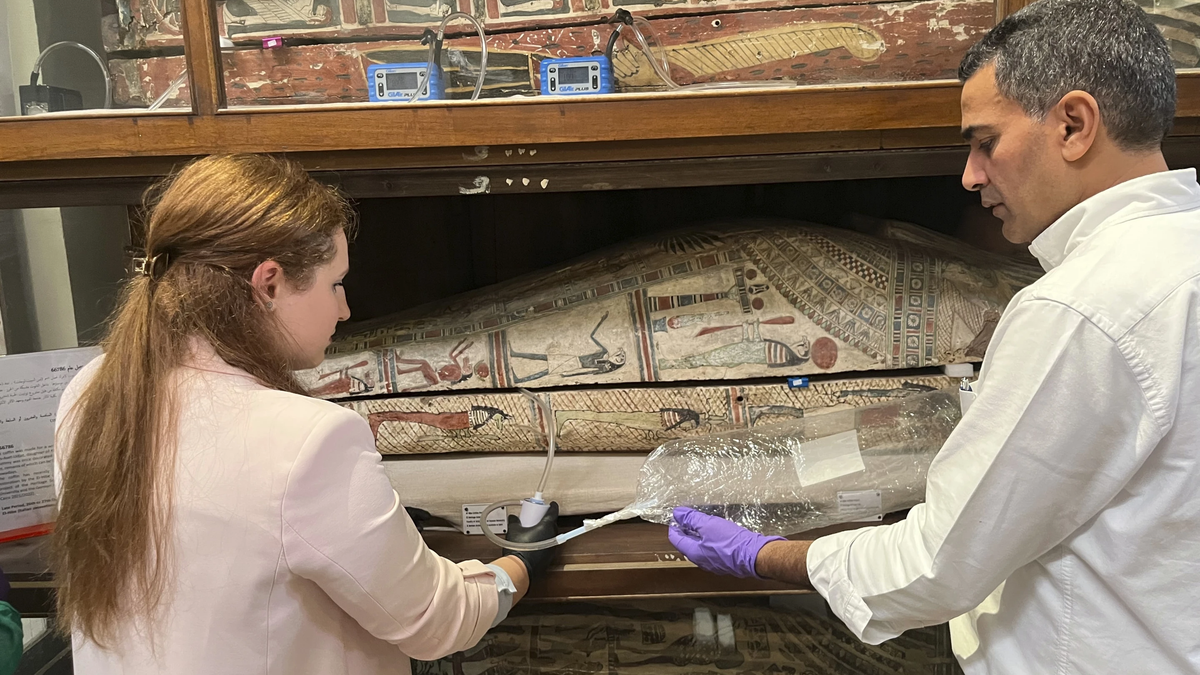
The research team, from University College London and the University of Ljubljana, used a combination of chemical analysis and a human “sniff test” on nine mummies, some dating back 5,000 years. The mummies, housed at the Egyptian Museum in Cairo, were analyzed without direct contact, using a non-invasive method to measure emitted air molecules. This allowed researchers to determine the aroma originated from the mummies themselves, not from preservation methods or decay.
Lead researcher Cecilia Bembibre of UCL stated that the pleasant scents are likely due to the embalming process, which utilized oils, waxes, and balms. These substances, associated with purity and divinity in ancient Egyptian culture, contributed to the unexpected aroma profile.
The study also highlighted the importance of scent in understanding mummification techniques and the social status of the deceased. The aroma profile could potentially reveal information about the individual’s social class and the materials used in their preservation.
While the findings are fascinating, Barbara Huber, a researcher from the Max Planck Institute (not involved in the study) cautions that the detected smells are not necessarily the original embalming scents. Years of environmental factors have altered the aroma profile.
Despite this, the researchers hope to use their findings to create “smellscapes” – artificially recreating the mummy aromas for a more immersive museum experience. This innovative approach aims to enrich visitors’ understanding of ancient Egyptian culture and the mummification process.
 First Piper