
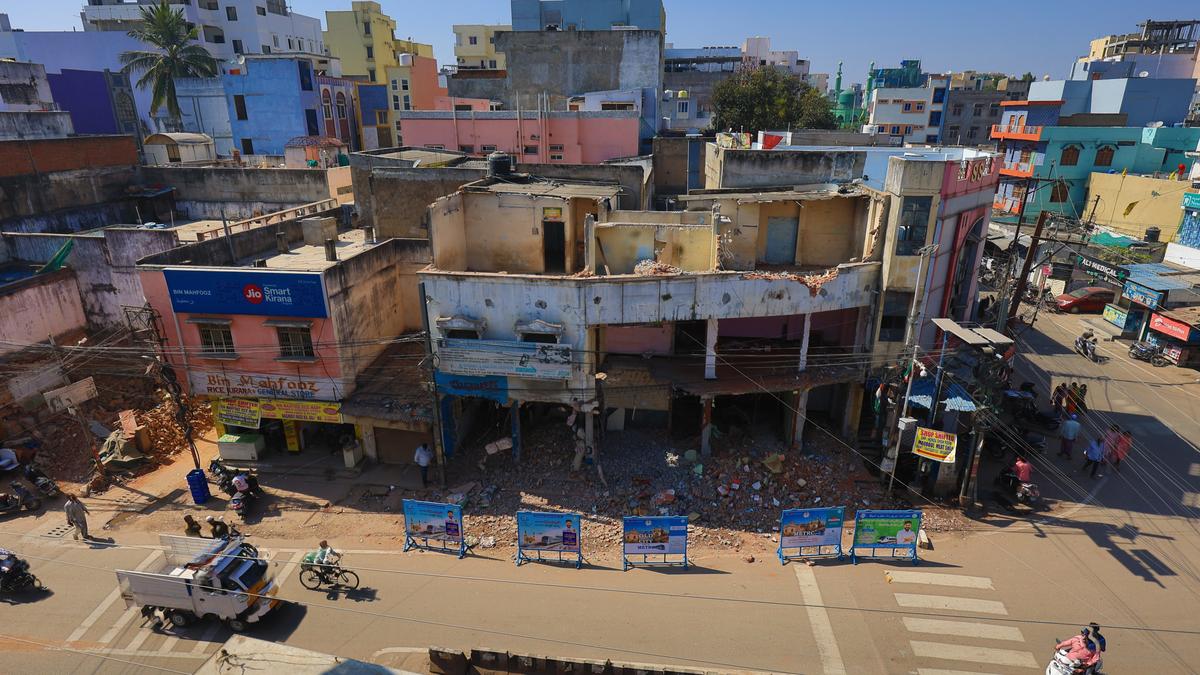
Fri Jan 24 08:10:09 IST 2025: ## Hyderabad’s Metro Rail Project: A Clash Between Progress and Preservation
**Hyderabad, India (January 24, 2025)** – The construction of Hyderabad’s metro rail is causing significant disruption and controversy in the city’s historic Old City. While proponents hail the project as a much-needed catalyst for progress and improved mobility, residents and heritage preservationists are fiercely opposing the demolition of centuries-old buildings and the potential damage to the area’s rich cultural fabric.
The five-kilometer stretch of the metro line slicing through Moghalpura and surrounding areas is particularly contentious. Hundreds of homes and businesses, including the 145-year-old Mufeed Ul Anam School and a 120-year-old house designed by a prominent Hyderabad architect, face partial or complete demolition. Residents lament the loss of their homes and the severing of deep-rooted connections to their heritage, citing the annual Muharram procession that traditionally passes through the area.
The Hyderabad Metro Rail Limited (HMRL) has issued demolition notices to approximately 800 property owners, rejecting appeals based on the perceived necessity of the project and the claim that alternative routes are not feasible. While some residents, like milk seller Jaffar bin Mubarak, recognize the benefits of improved transportation, many others, like octogenarian Syed Abid Husain, are fighting legal battles to save their homes.
The project’s impact extends beyond individual properties, threatening historically significant sites like the graves of influential figures in Hyderabad’s history and the Princess Esin Girls High School. Concerns have been raised about the lack of pedestrian infrastructure and the potential destruction of ancient trees.
The political landscape surrounding the project is complex. While initial opposition from groups like the Majlis Ittehadul Muslimeen (MIM) has subsided due to public pressure and the city’s worsening traffic congestion, the project’s impact on heritage sites has been a source of ongoing debate. Experts like architect Shankar Narayan advocate for alternative routes and pedestrian-friendly infrastructure to mitigate the negative consequences.
The high cost of underground metro lines and the challenges of preserving centuries-old structures in densely populated areas are significant hurdles. The current elevated line, while cheaper, has sparked widespread controversy, highlighting the complex balancing act between progress and preservation in rapidly developing cities like Hyderabad. The project serves as a stark example of the challenges faced when modern development clashes with historical preservation in densely populated urban areas.
 First Piper