
Thu Jan 23 06:10:00 UTC 2025: ## Space Junk Crisis Looms as Satellite Launches Soar
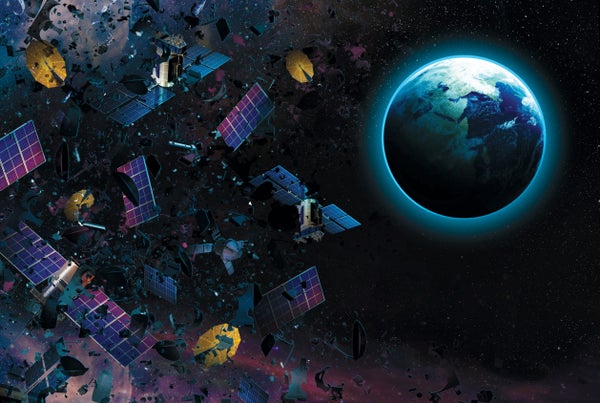
**Austin, TX** – The rapid increase in satellite launches is creating a critical space junk problem, warns Moriba Jah, a professor of aerospace engineering at the University of Texas at Austin. What was once a manageable 200 objects launched annually a decade ago has exploded to over 2,600, with no sign of slowing. This surge has filled Earth’s orbit with debris, posing a significant threat to operational satellites and even the International Space Station.
Currently, over 25,000 pieces of trackable debris larger than 10 centimeters orbit Earth. These fragments, traveling at incredibly high speeds, risk catastrophic collisions, creating even more debris in a dangerous chain reaction. The 2009 collision between a Russian satellite and an operational Iridium satellite produced nearly 2,000 new pieces of debris, highlighting the severity of the issue.
Companies like SpaceX, OneWeb, and Amazon’s Project Kuiper are major contributors, with plans to launch tens of thousands more satellites for broadband internet services. This uncontrolled expansion threatens to render low Earth orbit (LEO), a crucial region for communication, GPS, and Earth observation, unusable.
Jah advocates for a shift from a “linear space economy” of use and abandonment to a “circular space economy” emphasizing reuse, recycling, and responsible resource management. This includes designing satellites for easier repair and recycling, developing in-orbit servicing technologies to extend satellite lifespans, and creating methods to retrieve and reprocess space debris.
While some progress is being made, such as SpaceX’s reusable rocket technology and Northrop Grumman’s in-orbit satellite servicing, more is needed. Technological innovations, like improved electric propulsion systems and debris removal techniques (inspired by fishing technologies), are crucial. However, legal reform is equally important. Current space policies are fragmented and often lag behind technological advancements, hindering international cooperation and sustainable practices.
Jah emphasizes the need for international collaboration, stronger regulations incentivizing sustainable practices (like extended producer responsibility laws), and the development of international treaties. He also highlights the ethical implications of space resource extraction, urging responsible stewardship of the space environment for future generations. Without immediate action, the space junk crisis could render vital space-based services inaccessible and jeopardize future space exploration.
 First Piper