
Fri Dec 13 02:53:51 UTC 2024: ## University of Hyderabad’s Miyawaki Plantation Condemned for Destroying Unique Grassland Ecosystem
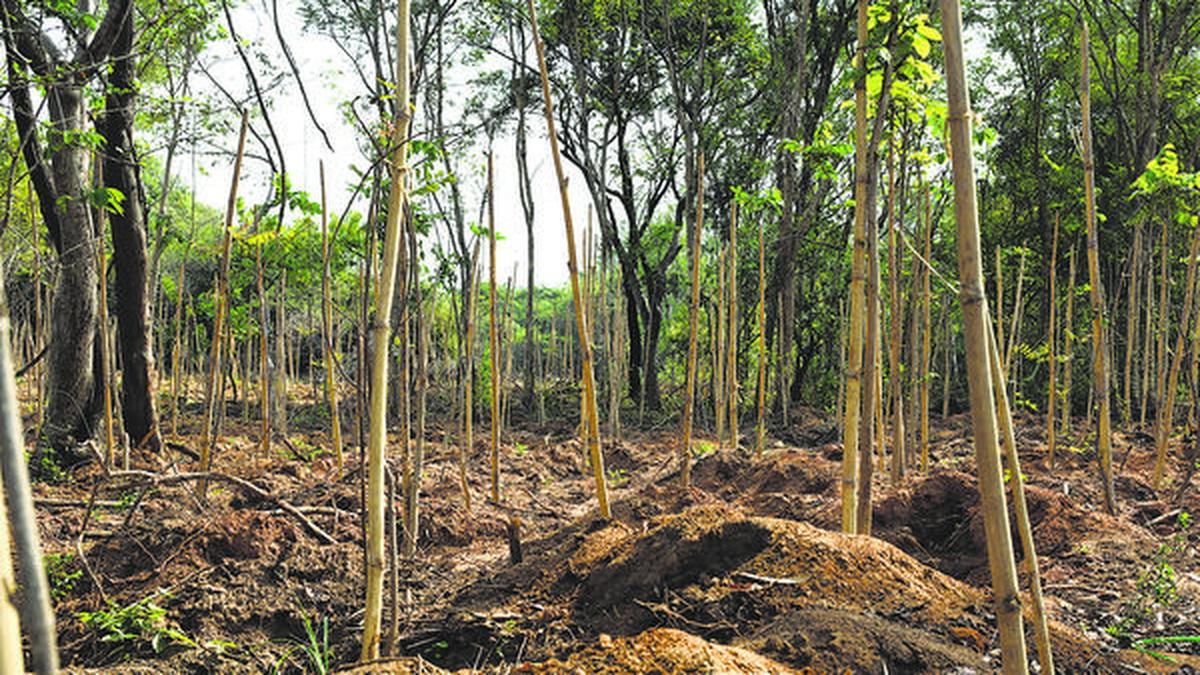
**Hyderabad, December 13, 2024** – The University of Hyderabad (UoH) is facing criticism for the destruction of a unique grassland ecosystem on its campus to make way for a Miyawaki forest plantation. The project, undertaken in collaboration with the Hyderabad Metropolitan Development Authority (HMDA), has eradicated a thriving habitat teeming with endemic plant species, including the rare and vulnerable *Ceropegia spiralis*.
The alarm was raised by UoH botany professor Siddharthan Surveswaran and MSc student Aparna Sankaran, who discovered the *Ceropegia spiralis* in August. This deceptive plant, known for its unique pollination strategy, was found to be thriving in the grassland area before it was destroyed. Its disappearance highlights the broader concern over the loss of Telangana’s rich grassland biodiversity, which is often overlooked in favor of forest conservation efforts.
Experts warn that the Miyawaki method, while promoting rapid tree growth, is detrimental to existing savanna ecosystems. The dense planting technique disrupts the natural low-tree-density characteristic of these grasslands, leading to the displacement of numerous endemic plant and animal species. Researchers point to a 2021 study that revealed a surprisingly high number of endemic plant species in Indian savannas, contradicting the long-held assumption that they lack unique biodiversity.
UoH’s actions are particularly concerning given the previous cataloging of 734 flowering plant species on campus, much of which has been lost with the destruction of the grassland. The university’s administration claims no trees were uprooted and that the plantation used indigenous species. However, this statement is refuted by photos and eyewitness accounts documenting extensive land clearing. Furthermore, internal consultations within the university seem to have been lacking, with the project seemingly not being discussed in relevant internal meetings.
The destruction has not only impacted plant life but also the rich avian biodiversity of the campus, a noted hotspot for birdwatchers. Concerns have been raised about the loss of several bird species dependent on the grassland habitat.
While the HMDA maintains that the plantation continues with the university’s consent, the permission letter appears more like an invitation than a formal agreement. Professor Surveswaran, a vocal critic of the project, emphasizes the long-term negative consequences of unplanned Miyawaki plantations on the region’s biodiversity. The incident underscores the need for more careful consideration of conservation efforts and a reevaluation of policies that prioritize afforestation at the expense of existing, unique ecosystems.
 First Piper