
Tue Nov 19 07:10:53 UTC 2024: ## Earth May Have Once Sported a Saturn-Like Ring System, Study Suggests
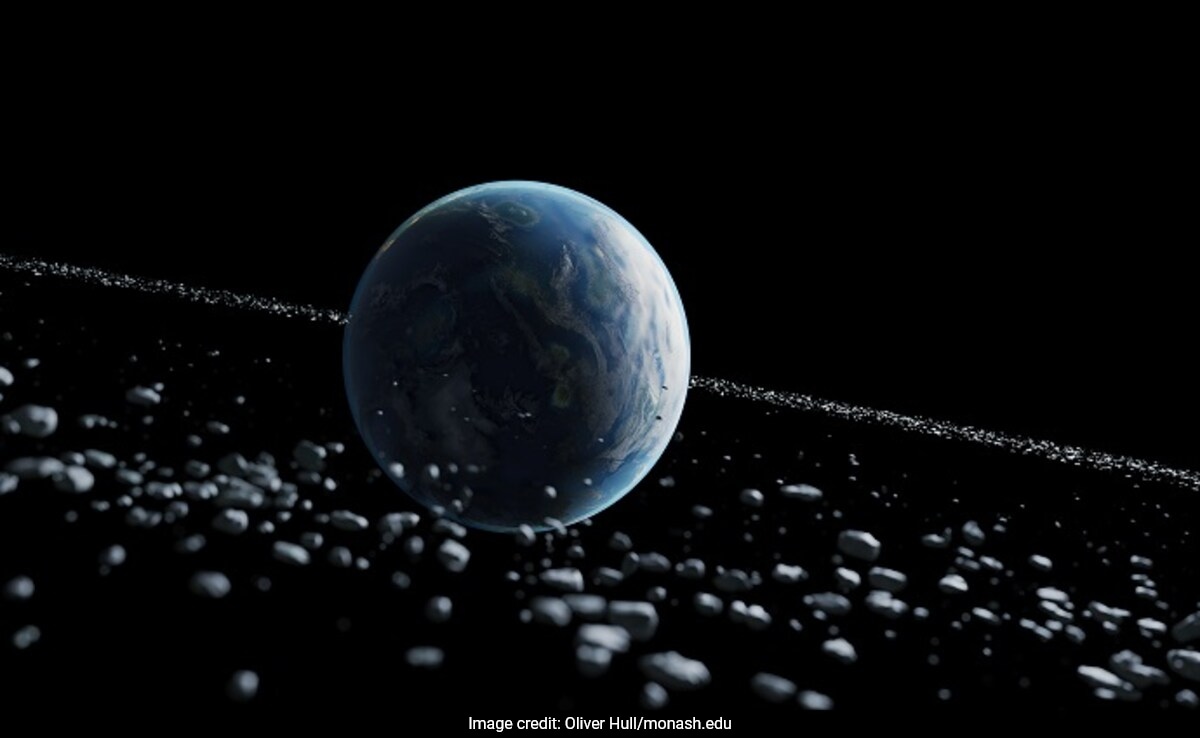
**Melbourne, Australia** – A new study published in *Earth and Planetary Science Letters* proposes a radical theory: Earth may have possessed a ring system similar to Saturn’s around 466 million years ago, during the Ordovician Period. This hypothesis is based on the unusual clustering of nearly two dozen impact craters near the Earth’s equator.
Lead author Andrew Tomkins, a geologist at Monash University, highlighted the statistical improbability of such a concentrated distribution. He argues that these craters, rather than resulting from randomly scattered asteroid impacts, are more likely evidence of meteoroids raining down from a rocky ring encircling the planet.
This proposed ring system could offer explanations for two significant Ordovician events: a surge in meteorite impacts and a dramatic global cooling known as the late Ordovician glaciation. The researchers suggest the ring’s shadow may have blocked sunlight, leading to a significant drop in global temperatures.
The study posits that a large asteroid, approximately 7.5 miles in diameter, approached Earth and fragmented within its Roche limit – the distance at which tidal forces overcome the asteroid’s self-gravity. The resulting debris then formed a ring concentrated along the Earth’s equator due to the planet’s equatorial bulge, a phenomenon also observed in other ringed planets like Saturn, Jupiter, Uranus, and Neptune.
This theory challenges previous explanations that attributed the Ordovician meteorite impacts to a single large asteroid breaking apart further out in the solar system. Tomkins argues that such an event would have resulted in a more random distribution of impact craters, unlike the equatorial clustering observed. The discovery offers a fresh perspective on Earth’s ancient history and the forces that shaped its climate and geological features.
 First Piper