
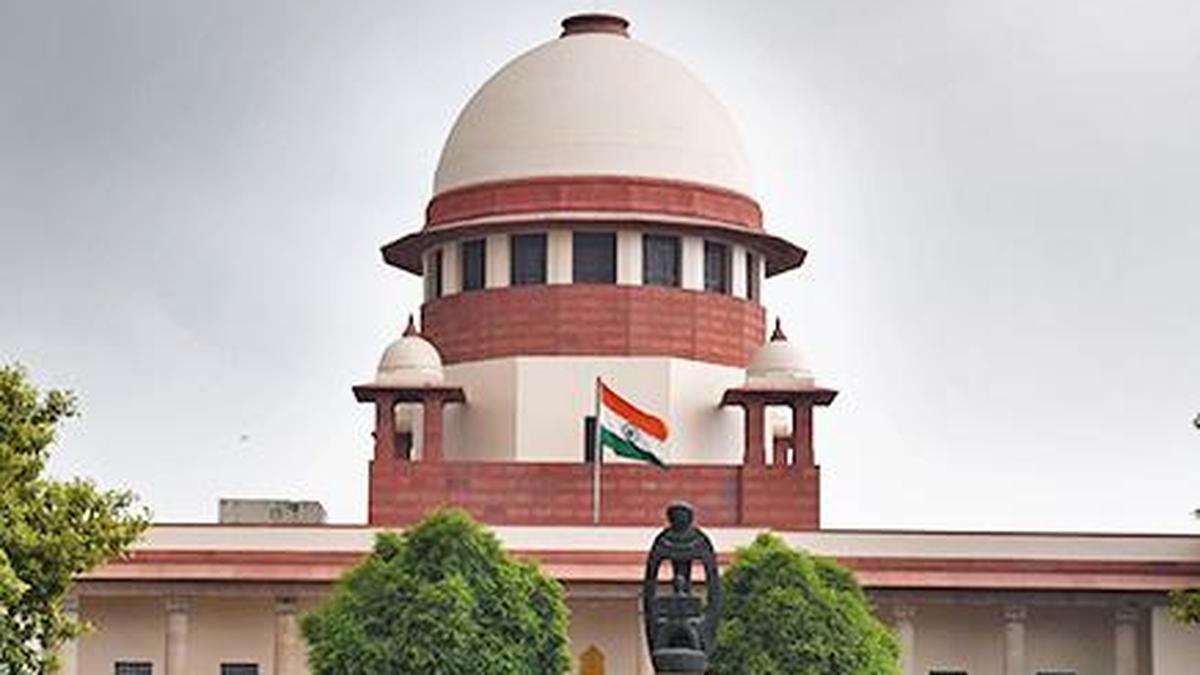
Sat Nov 09 18:27:55 UTC 2024: ## Supreme Court Upholds Right to Accessibility for Disabled Persons
**New Delhi, November 9, 2024** – The Supreme Court of India has delivered a landmark judgment reaffirming that the right to access environments, services, and opportunities for disabled persons is a fundamental human right. The court emphasized that accessibility is not just a convenience but an essential prerequisite for disabled individuals to fully exercise their rights and live with dignity.
Chief Justice of India D.Y. Chandrachud, in his ruling, highlighted the stark reality of accessibility gaps across the country. While Delhi boasts 3,775 wheelchair-accessible buses, Tamil Nadu lags behind with only 1,917 such buses. The court noted that even in Mumbai, while newer facilities like the Andheri Metro Station meet accessibility standards, older buildings like the Bombay Art Gallery lack basic features like accessible restrooms.
The judgment, based on a report by the Centre for Disability Studies, NALSAR University of Law, found that the existing Rights of Persons with Disabilities Rules, lacking mandatory accessibility standards, have led to “dismal” compliance on the ground. The court has directed the government to issue new Rules with mandatory accessibility standards within the next three months.
Chief Justice Chandrachud stressed that disability is not inherent to the individual but is created by societal barriers. He emphasized the “social model of disability” concept, urging the government to focus on removing these barriers rather than trying to “fix” individuals.
The court also highlighted the lack of attention to the emotional and relational needs of disabled persons. “The emotional and relational challenges faced by PWDs, particularly regarding access to love, desire, and intimacy… Emotional needs, such as privacy and self-pleasure, are often overlooked, leaving disabled individuals, especially those living with families, without private spaces to express these needs,” said Chief Justice Chandrachud.
The court called for the creation of “universal design” in public and private spaces, services, and products, which would be accessible to everyone regardless of their ability, age, or status. “Inclusion should be integrated into the design process from the very beginning, rather than as an afterthought,” the Chief Justice emphasized.
This judgment underscores the urgent need for comprehensive action by the government to ensure accessibility for disabled persons and create a truly inclusive society.
 First Piper