
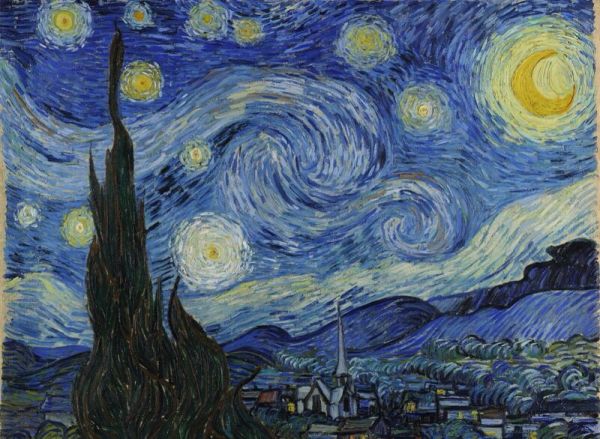
Wed Sep 18 01:32:01 UTC 2024: ## Van Gogh’s “Starry Night” Holds Hidden Secrets of Fluid Dynamics
Vincent van Gogh’s iconic painting “The Starry Night,” created in 1889 during his stay in a mental asylum, has long been admired for its depiction of turbulent skies, often interpreted as reflecting the artist’s own inner turmoil. But a new study published in *Physics of Fluids* reveals an even deeper layer of complexity: the painting’s swirling sky is not just symbolic, it also accurately portrays the unseen dynamics of fluid flow.
Researchers analyzing Van Gogh’s distinctive brushstrokes, applied with a knife and fingers rather than brushes, have discovered a hidden level of turbulence beyond the obvious eddies and swirls. These strokes, they believe, reveal a shimmering effect created by the contrast in light reflection from different shades of paint and the size of the strokes.
While some believe Van Gogh intuitively understood fluid dynamics, others suggest he simply possessed a keen eye for observing the natural world and spent countless hours outdoors. Regardless of the source, it’s clear that Van Gogh’s “The Starry Night” is more than just a beautiful painting – it’s a remarkable depiction of the intricate workings of nature, capturing not just the visible, but also the invisible, forces of fluid dynamics.
 First Piper