
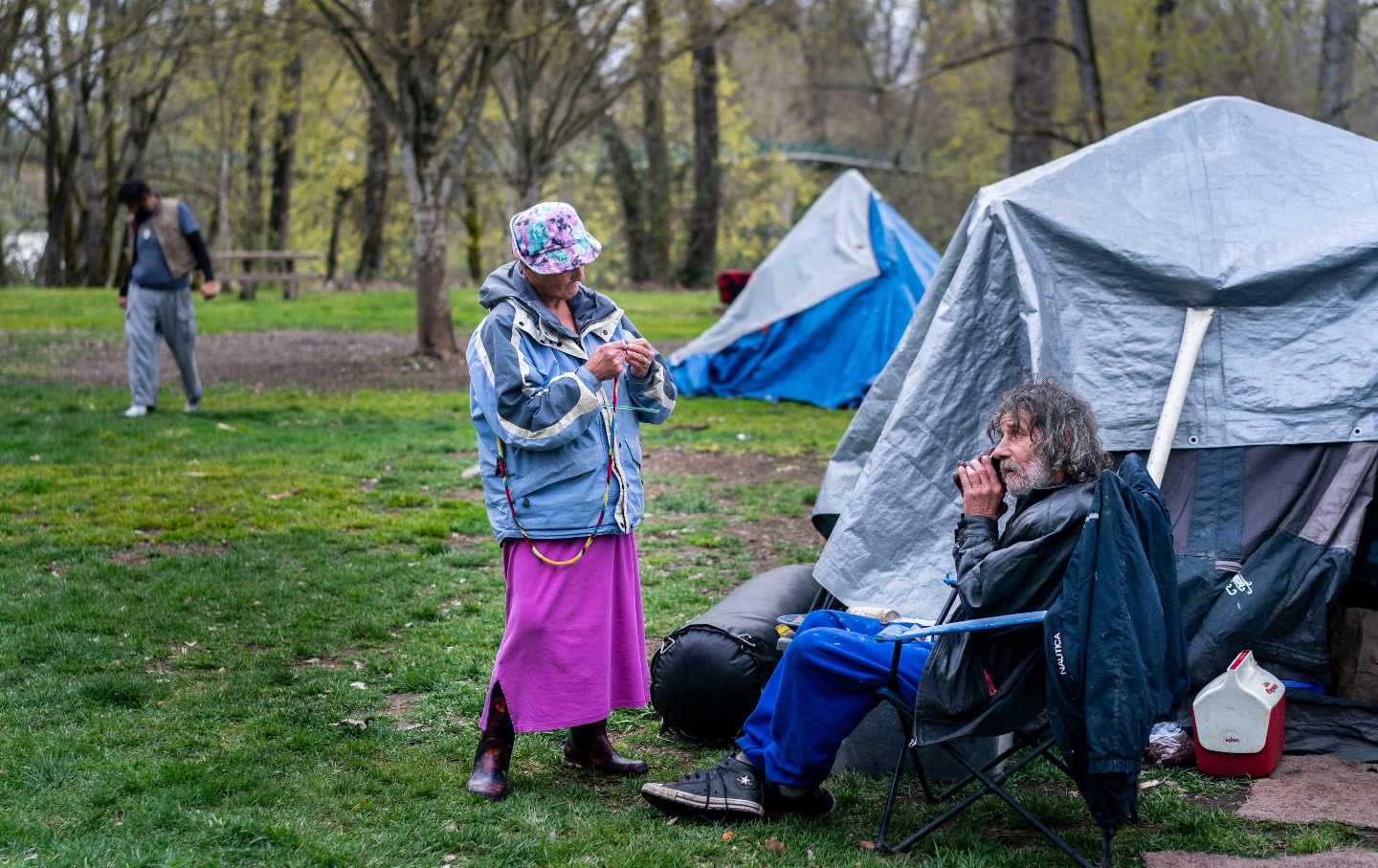
Mon Sep 09 14:43:01 UTC 2024: ## Supreme Court Ruling Opens Door to Increased Homelessness, Leaving Cities to Push the Issue Down the Road
A recent Supreme Court ruling, overturning the precedent set in *Martin v. Boise*, has paved the way for cities across the United States to criminalize homelessness and force individuals experiencing homelessness to move from place to place. The court ruled that punishing homeless people with fines and jail time does not constitute “cruel and unusual punishment,” arguing that such practices are commonplace.
This decision has sparked a surge in evictions and displacement of homeless individuals. In California, where homelessness is already a significant issue, Governor Gavin Newsom has directed local officials to demolish encampments. Cities like Palm Springs and Sacramento have been quick to follow, forcing residents out of shelters and onto the streets.
The decision has drawn criticism from faith organizations, legal advocates, and homeless individuals themselves. They argue that the Supreme Court’s ruling overlooks the lack of adequate shelter options and the harsh reality that many individuals experience homelessness due to poverty and lack of affordable housing.
The ruling has been particularly damaging to homeless individuals in cities like Grants Pass, Oregon, where the lack of sufficient shelter options means many are left with no alternative but to live on the streets. Despite this, the court sided with cities and police associations, essentially giving them the green light to criminalize homelessness and force individuals out of their communities.
This ruling is not just about homelessness; it is a reflection of a broader trend of inequality and the lack of adequate social safety nets in the United States. While the country boasts immense wealth, its generosity has been lacking, leading to a housing crisis and widespread poverty.
The article argues that the Supreme Court’s decision is short-sighted and ignores the potential consequences of pushing homelessness down the road. It calls for a more comprehensive approach to address the issue, focusing on affordable housing and a more equitable distribution of resources. Ultimately, the authors suggest that the 8 to 11 million individuals currently experiencing homelessness in the United States have the power to change the tide, organizing and fighting for a future where housing is a fundamental right and not a privilege.
 First Piper