
Mon Sep 09 15:40:03 UTC 2024: ## Scientists Prove 50-Year-Old Theory About Amplifying Waves with Rotation
**Southampton, UK** – Physicists at the University of Southampton have achieved a breakthrough by experimentally proving a 50-year-old theory known as the Zel’dovich effect. This theory, developed by Soviet physicist Yakov Zel’dovich in the 1970s, posits that the energy of waves with angular momentum can be amplified by bouncing them off a rotating object.
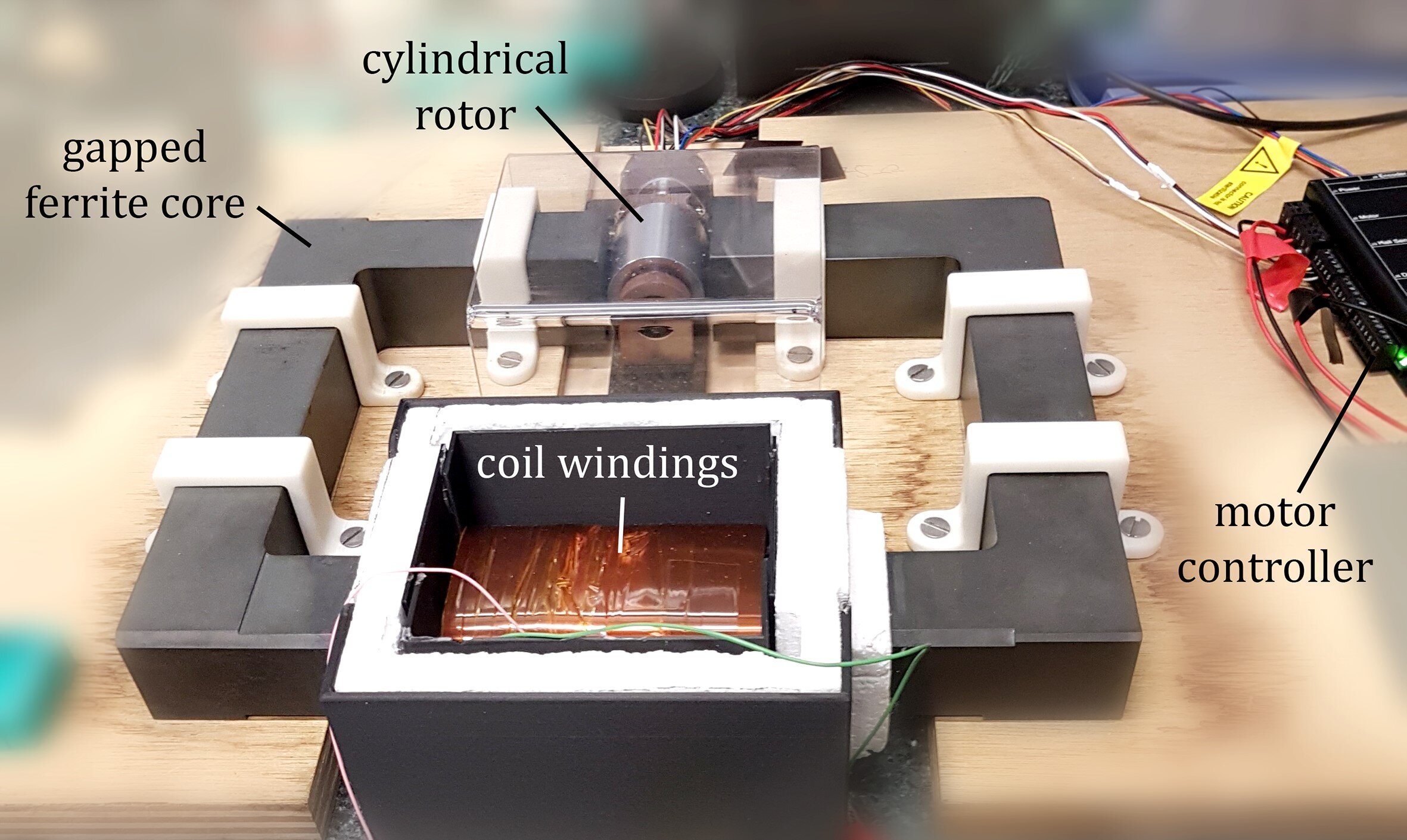
Previous attempts to observe the Zel’dovich effect with electromagnetic fields were unsuccessful. However, researchers at Southampton have now successfully demonstrated the phenomenon using a simple setup: a rotating aluminum cylinder and a resonant circuit. By creating specific conditions, they were able to manipulate twisted electromagnetic waves to achieve amplification.
The study, published in *Nature Communications*, sheds light on the complex interplay between wave properties and rotating objects. The researchers explain that the Zel’dovich effect is closely related to the well-known Doppler effect, which we experience daily when a siren’s pitch changes as it moves towards or away from us.
“The key is that the metal cylinder needs to rotate fast enough that from its perspective, it sees a twisted wave shift in angular frequency, so much that it actually goes to a negative frequency,” explains Dr. Marion Cromb, a research fellow at the University of Southampton. “This changes the way the wave interacts with the cylinder. Usually, the metal would absorb the wave, but when the wave frequency goes negative, the wave is amplified—reflecting off the cylinder with more energy than when it approached.”
This breakthrough opens doors to further research into the quantum realm, where the Zel’dovich effect could potentially be used to amplify quantum vacuum fluctuations. The findings also hold potential for electrical engineering applications, with implications for the development of more efficient induction generators used in wind turbines.
“I am very pleased that we now have experimental proof of the electromagnetic Zel’dovich effect,” said Professor Hendrik Ulbricht, supervisor on the project. “In electromagnetic settings, it will be more straightforward to go for the next big challenge, which is the quantum version of the effect.”
 First Piper