
Sun Apr 05 10:41:29 UTC 2026: # Ancient Marine Life Unearthed in Dwarka Basin Could Unlock Secrets of Western India’s Past
The Story:
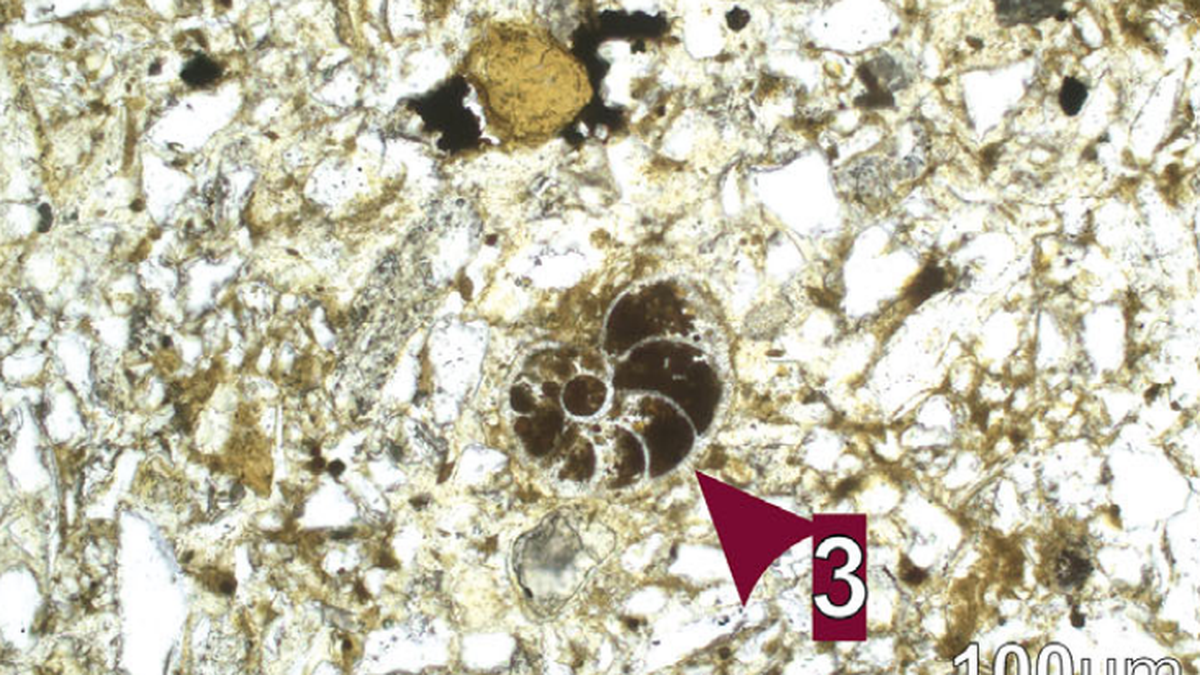
Researchers from IIT-Bombay, the Indian Statistical Institute, and IISER-Kolkata have announced findings that fossil beds in the Dwarka Basin date back to the early Miocene epoch. The team identified 42 species of snails, including four new to science, indicating the area was once a warm, nutrient-rich marine environment. These discoveries are expected to provide valuable insights into the ancient marine environments and biodiversity of western India. The basin is also of interest to energy companies exploring for oil and gas deposits.
Key Points:
- Fossil beds in the Dwarka Basin have been dated to the early Miocene epoch (23 million to 5.3 million years ago).
- 42 species of snails were identified, with four being new to science.
- The findings suggest the area was once a warm and nutrient-rich marine environment.
- Marine archaeologists discovered submerged pillars and over 120 stone anchors in the 1980s.
- The Gujarat government plans to launch submarine tourism to showcase the underwater structures.
Key Takeaways:
- The Dwarka Basin holds significant geological and archaeological value, offering a window into Earth’s history and ancient marine life.
- The discovery of new snail species highlights the potential for further biodiversity finds in the region.
- The area’s dual interest for both scientific research and energy exploration could lead to complex resource management challenges.
- The Gujarat government’s plan for submarine tourism indicates a focus on leveraging the basin’s historical significance for economic development.
Impact Analysis:
The discoveries in the Dwarka Basin have potentially long-term implications:
- Scientific Advancement: The findings will contribute to a better understanding of the Miocene epoch, marine environments, and the evolution of biodiversity in western India. This knowledge can inform modern conservation efforts and climate change modeling.
- Economic Opportunities: Submarine tourism could generate revenue and create jobs in the region, boosting the local economy. However, sustainable tourism practices will be crucial to protect the fragile underwater environment.
- Energy Exploration: The potential for oil and gas deposits in the basin could lead to further exploration and extraction activities. This could have significant economic benefits but also raises environmental concerns that must be carefully addressed.
- Archaeological Preservation: Continued research and mapping of submerged structures will enhance our understanding of ancient civilizations and maritime history. Protecting these sites from damage due to tourism or industrial activities is paramount.
 First Piper
Princely State of Tajpuri was a small yet historically significant political entity located in western India, within the present-day Sabarkantha district of Gujarat. Though modest in size and influence compared to larger princely states, Tajpuri offers valuable insight into the administrative, social, and economic structures that characterized many minor states during the colonial period. Its history reflects the layered hierarchy of princely governance under British paramountcy. https://www.indianetzone.com/princely_state_tajpuri
LikeLike
Digvir Niwas Palace remains an important heritage structure in Gujarat, admired for its historical significance and architectural elegance. From its riverside setting to its European-inspired design, the palace reflects the grandeur of Vansda’s royal legacy. Even today, it continues to stand as a symbol of artistic excellence, royal sophistication, and cultural heritage in the region. https://www.indianetzone.com/digvir_niwas_palace
LikeLike
Princely State of Rupal was one of the non-salute princely states that existed during the period of British rule in India. Although relatively small in size and political influence, the state formed part of the broader princely order established under the indirect administrative system of the British Empire. During the early nineteenth century, Rupal was recognized as one of the princely territories governed under British paramountcy. https://www.indianetzone.com/princely_state_rupal
LikeLike