
Mon Feb 02 12:27:54 UTC 2026: Headline: Mamata Banerjee Protests Electoral Roll Revision in Delhi, Citing “SIR-Affected” Families
The Story:
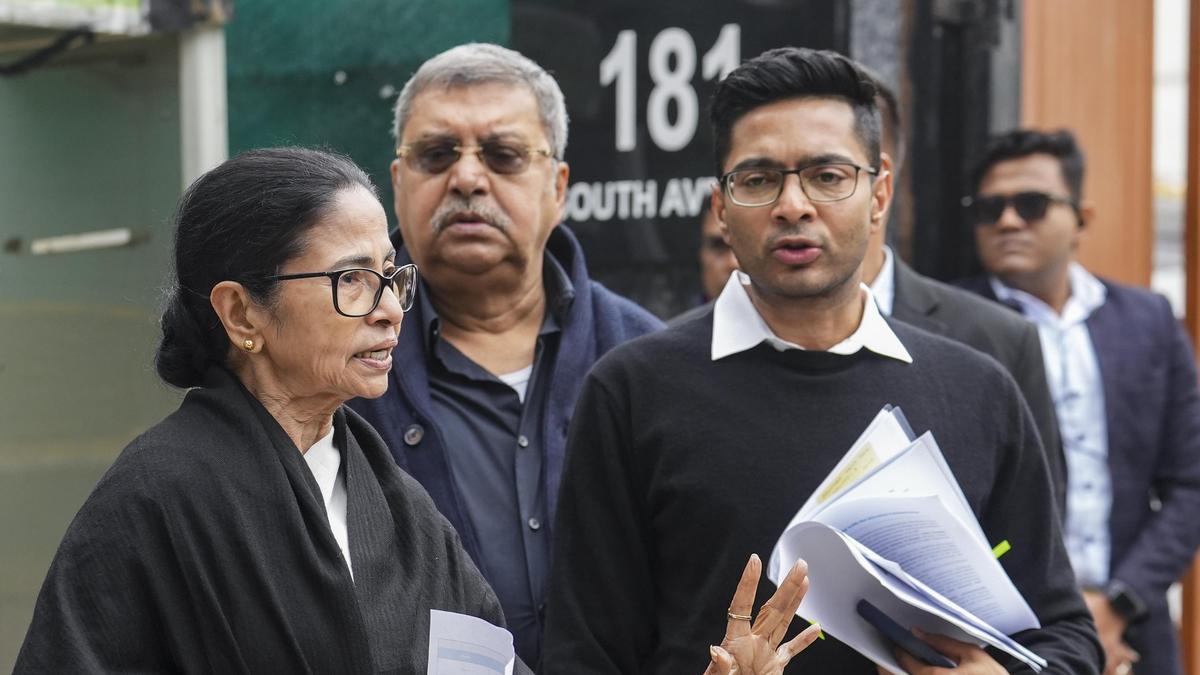
West Bengal Chief Minister Mamata Banerjee, accompanied by Trinamool Congress (TMC) MPs including Abhishek Banerjee, met with Chief Election Commissioner Gyanesh Kumar in New Delhi on February 2, 2026, to demand a halt to the Special Intensive Revision (SIR) of electoral rolls in West Bengal. Banerjee brought approximately 50 families allegedly impacted by the SIR, claiming they were being “threatened” and raising concerns over heavy police presence outside Banga Bhawan. TMC leaders stated that 12 representatives from these families, including those wrongly declared dead or relatives of those allegedly deceased “due to SIR,” met with election officials.
Key Points:
- Mamata Banerjee met with Chief Election Commissioner Gyanesh Kumar on February 2, 2026, to protest the Special Intensive Revision (SIR) of electoral rolls in West Bengal.
- Banerjee was accompanied by TMC MPs Abhishek Banerjee and Kalyan Banerjee.
- Approximately 50 “SIR-affected” families were brought to New Delhi to voice their concerns.
- TMC leaders claim 12 representatives from these families met with Election Commission officials, alleging wrongful declarations of death and deaths “due to SIR.”
- Banerjee questioned the heavy police deployment outside Banga Bhawan, claiming the families were being “threatened.”
Critical Analysis:
The event series suggests a concerted effort by Mamata Banerjee to challenge the legitimacy of the ongoing Special Intensive Revision (SIR) of electoral rolls in West Bengal ahead of upcoming elections. The “Torture Of Bengalis In Delhi” claim, the confrontation with police, and the bringing of “SIR-affected” families to Delhi all indicate a strategy to publicly highlight alleged injustices and exert pressure on the Election Commission. Furthermore, the claim that the Union Budget 2026 falls short of expectations in poll-bound West Bengal suggests underlying political tensions that are being exacerbated by the SIR process.
Key Takeaways:
- The TMC is actively contesting the electoral roll revision process in West Bengal.
- The party is attempting to frame the SIR as a source of hardship and injustice for the people of West Bengal.
- The timing of the protests, coinciding with the run-up to elections, suggests a strategic political motivation.
- The events highlight a potential conflict between the state government and the Election Commission regarding electoral processes.
Impact Analysis:
The events have the potential to significantly impact the upcoming elections in West Bengal. If Banerjee’s allegations gain traction, it could erode public trust in the electoral process and potentially lead to legal challenges or even civil unrest. The Election Commission’s response will be crucial in maintaining the integrity and perceived fairness of the elections. The long-term implications may include heightened political polarization and increased scrutiny of electoral roll revisions in the future.
 First Piper