
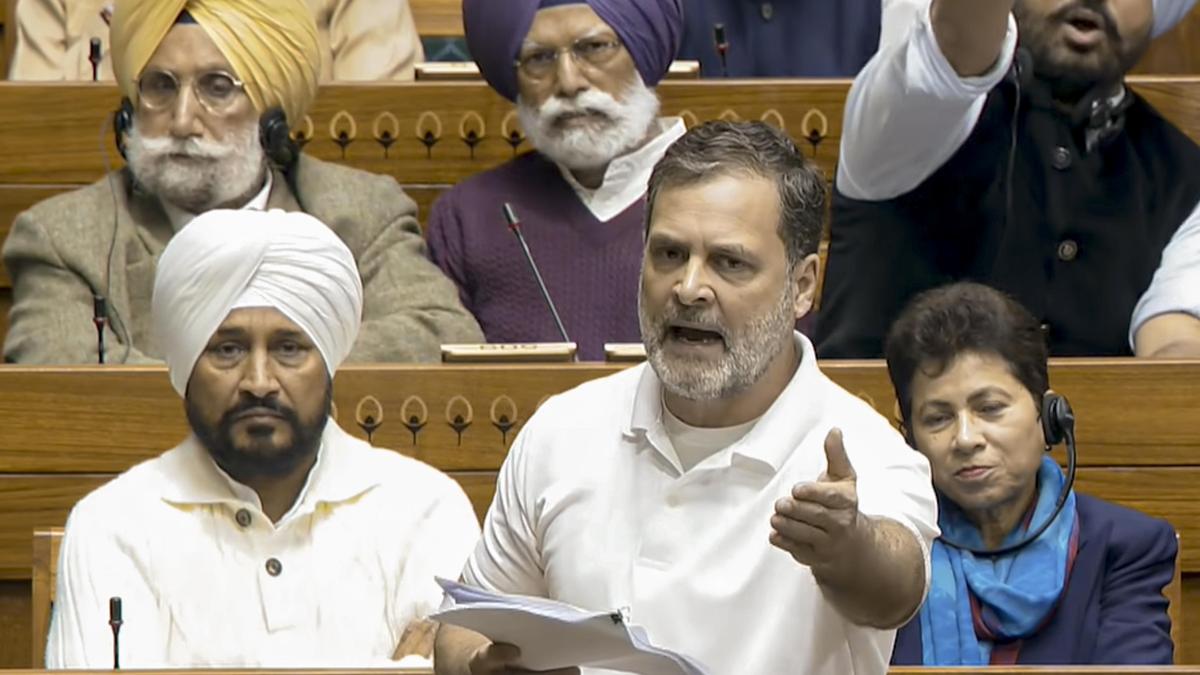
Mon Feb 02 09:45:06 UTC 2026: ### Gandhi’s Attempt to Quote Unpublished Memoir Disrupts Lok Sabha
The Story:
The Lok Sabha was thrown into turmoil on February 2, 2026, when Leader of the Opposition Rahul Gandhi attempted to quote from the unpublished memoir of former Army chief Gen. (retd) M.M. Naravane during a session addressing the President’s address. Defence Minister Rajnath Singh and other BJP members vehemently objected, accusing Gandhi of misleading the House and violating parliamentary procedure. The Speaker, Om Birla, repeatedly ruled against the use of unpublished materials, leading to repeated adjournments and heated exchanges between the treasury and opposition benches.
The disruption unfolded as Gandhi sought to respond to accusations of a lack of patriotism leveled against the Congress party by BJP MP Tejasvi Surya. The attempt to introduce potentially sensitive information from the memoir, particularly concerning the Agnipath scheme and alleged Chinese aggression, fueled the uproar.
Key Points:
- Rahul Gandhi attempted to quote from Gen. (retd) M.M. Naravane’s unpublished memoir.
- Defence Minister Rajnath Singh strongly opposed the move, alleging Gandhi was misleading the House.
- Speaker Om Birla ruled against quoting from unpublished material not related to the proceedings.
- The session was adjourned until 3 PM due to the unrelenting standoffs between the treasury and opposition.
- The content in question seemingly relates to the Agnipath scheme and potentially Chinese aggression in Ladakh, as suggested by the article’s related headline: “Agnipath scheme surprised Army; it was a ‘bolt out of the blue’ for Navy and Air Force, former Army chief writes in forthcoming memoir” and “Rahul Gandhi Raises Ladakh Stand-Off In Lok Sabha, Rajnath Singh Intervenes”.
- Akhilesh Yadav, leader of the Samajwadi Party, supported Gandhi‘s right to speak.
- Parliamentary Affairs Minister Kiren Rijiju threatened action against Gandhi for repeatedly ignoring the Speaker’s rulings.
Key Takeaways:
- The incident highlights the heightened political tensions surrounding national security issues and military policies.
- The controversy underscores the strict rules of parliamentary procedure and the Speaker’s authority to maintain order.
- The event suggests a potential attempt by the opposition to leverage sensitive information from a former military leader to criticize government policies.
- The government’s strong reaction indicates a desire to control the narrative around sensitive issues like the Agnipath scheme and border security.
- The involvement of multiple parties suggests broad political interest and potential ramifications for future parliamentary debates.
 First Piper