
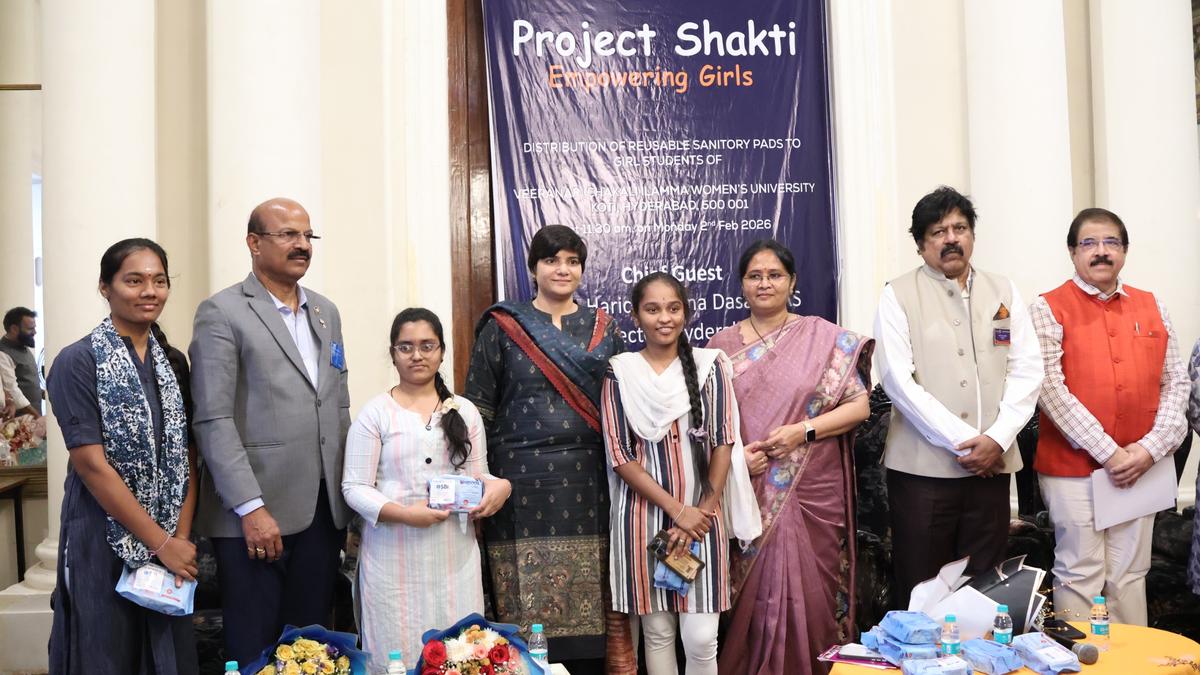
Mon Feb 02 14:55:01 UTC 2026: ### Project Shakti Empowers Telangana Students with Reusable Sanitary Pads
The Story:
On February 2, 2026, Project Shakti was inaugurated at Veeranari Chakali Ilamma Women’s University in Koti, Telangana. This initiative, backed by Rotarians, State Bank of India, and Unipads Foundation, aims to distribute reusable sanitary pad kits to 60,000 girl students across the state. Hyderabad District Collector Hari Chandana Dasari spearheaded the launch, emphasizing menstrual independence and dignity.
Key Points:
- Project Shakti aims to distribute reusable sanitary pads to 60,000 girl students in Telangana.
- The project’s total outlay is ₹2.5 crore.
- Each kit contains three reusable pads, lasting 12-16 months with proper care.
- 7,000 kits, worth ₹35 lakh, were distributed during the inaugural event.
- Collector Hari Chandana Dasari highlighted the Supreme Court’s recognition of menstrual hygiene as a Right to Life under Article 21.
Critical Analysis:
The launch of Project Shakti aligns with a broader context of initiatives focused on social welfare and community development in Telangana, evident from the news snippets of the same day. Specifically, the “Balya Vivaha Vimukti Rath Yatra” to combat child marriage demonstrates a focus on women’s well-being and rights. Project Shakti fits into this pattern of state and organizational efforts to address the needs of marginalized communities.
Key Takeaways:
- Project Shakti directly addresses menstrual hygiene, a critical aspect of women’s health and dignity.
- The initiative’s focus on reusable pads promotes sustainability and environmental consciousness.
- The collaboration between government, NGOs, and the private sector highlights a multi-faceted approach to social issues.
- The Collector’s emphasis on menstrual independence underscores the importance of empowering women to manage their health and well-being.
Impact Analysis:
Project Shakti has significant long-term implications for the health, education, and empowerment of girls in Telangana. Providing access to reusable sanitary pads can reduce school absenteeism during menstruation, allowing girls to continue their education without interruption. Moreover, promoting menstrual independence can help break the stigma associated with menstruation and foster a more equitable and inclusive society. The project could serve as a model for similar initiatives in other states and countries.
 First Piper