
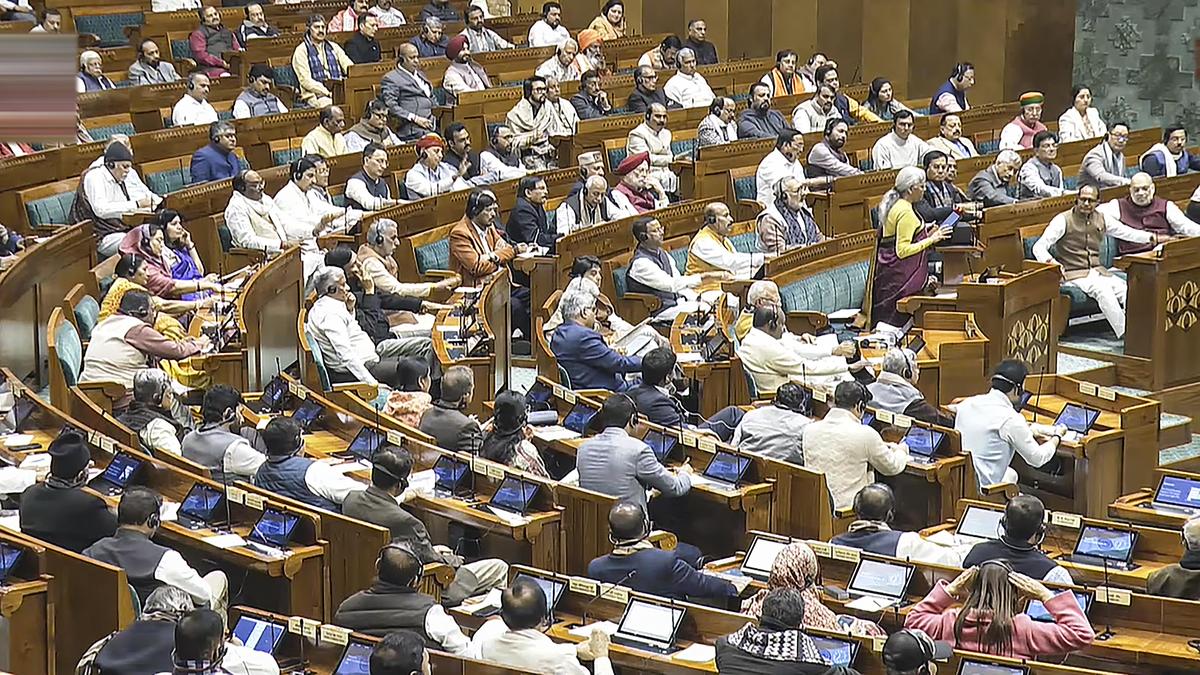
Mon Feb 02 07:01:43 UTC 2026: ### Parliament Debates Budget 2026 and President’s Address Amidst Contentious Issues
The Story:
On February 2, 2026, both houses of the Indian Parliament commenced discussions on the motion of thanks to President Murmu’s address, following the presentation of the Union Budget 2026-27. The budget session, which began on January 28, 2026, saw President Murmu urging MPs to unite on issues of national security, ‘Viksit Bharat,’ and ‘swadeshi.’ However, the proceedings have been marked by disagreements on several fronts, including water contamination, coal block auctions, regional development disparities, and the digital divide. Opposition parties have voiced concerns over specific allocations, policies, and the lack of transparent data.
Key Points:
* Parliament is debating the motion of thanks to President Murmu’s address, following the February 1, 2026 Union Budget presentation.
* Leader of Opposition Rahul Gandhi and other Congress MPs are participating in the discussion. Finance Minister Nirmala Sitharaman is expected to reply on February 11.
* Discussions in the Rajya Sabha included contentious exchanges on water contamination, with the Jal Shakthi Minister citing a WHO report claiming significant cost savings due to tap water provision, while opposition members raised concerns about water pollution and misleading global rankings.
* The auctioning of coal blocks and lack of prioritization for State governments was questioned.
* Members raised concerns over digital divide affecting access to education, government services, and cybersecurity vulnerabilities.
* Concerns were voiced regarding the lack of transparent national data on citizenships granted under the Citizenship Amendment Act and the outflow of Indian citizens.
Key Takeaways:
- The Budget session is characterized by a blend of national unity appeals and sharp political disagreements.
- Water management and digital equity remain critical areas of concern and debate.
- Regional disparities and social justice issues, including caste-based discrimination, continue to be significant points of contention.
- The discussions highlight the ongoing tension between the central government and state governments on resource allocation and policy implementation.
 First Piper