
Mon Feb 02 13:46:18 UTC 2026: # Urdu-Medium Schools in Old Delhi Struggle with Understaffing and Declining Enrollment
The Story:
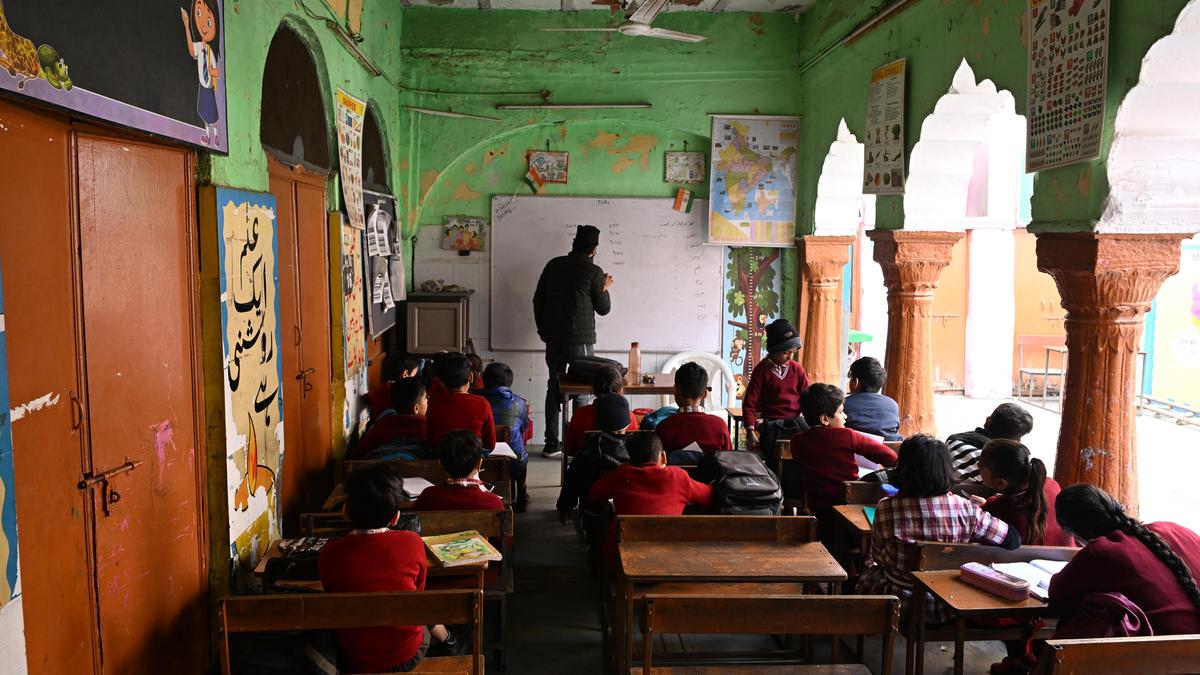
A report published in The Hindu on February 2, 2026, highlights the struggles faced by Urdu-medium Municipal Corporation of Delhi (MCD) primary schools in Old Delhi. These schools, often operating out of dilapidated buildings, suffer from severe understaffing, declining enrollment, and a lack of resources. The report paints a picture of overcrowded classrooms where multiple grades are taught together by a single teacher, impacting the quality of education provided to children from predominantly Urdu-speaking neighborhoods. Parents express concerns over the lack of qualified teachers, inadequate facilities, and the difficulty in supporting their children’s education at home due to language barriers and limited resources.
Key Points:
- 40 out of 1,185 primary schools run by the MCD use Urdu as the medium of instruction.
- Over 15,000 children, including 275 with special needs, are enrolled in Urdu-medium primary schools.
- Between 2009 and 2024, only 48 Urdu teachers were appointed through specific recruitment drives, and many have since retired.
- Recruitment rules do not mandate that primary teachers in Urdu-medium schools have studied Urdu up to Class 10.
- In some schools, a single teacher manages nearly 100 nursery students.
- 6 of 11 Urdu-medium schools in the Sitaram Bazar ward were closed before 2022 due to low enrollment and building concerns.
- Only 134 MCD schools are English-medium, leaving Urdu-speaking families with limited options.
Key Takeaways:
- Urdu-medium primary schools in Delhi face significant challenges due to understaffing, inadequate resources, and declining infrastructure.
- The lack of qualified Urdu teachers and the failure to prioritize Urdu proficiency in recruitment exacerbate the problem.
- Parents in predominantly Urdu-speaking neighborhoods have limited educational choices, often relying on under-resourced MCD schools despite concerns about the quality of education.
- The report highlights the need for greater investment in Urdu-medium education, including improved infrastructure, increased staffing, and better teacher training.
- The situation reflects a broader issue of educational inequality and the need to address the specific needs of minority language communities.
 First Piper