
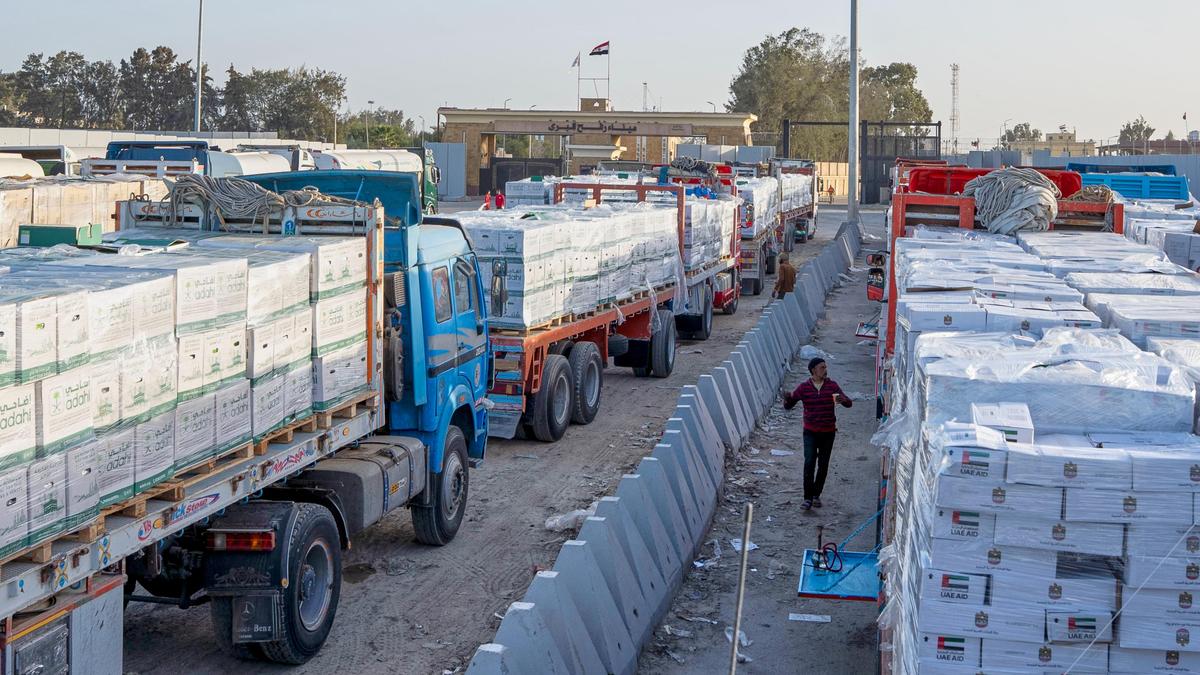
Mon Feb 02 12:58:41 UTC 2026: ### Rafah Crossing Partially Reopens After Nearly Two Years, Humanitarian Crisis Persists
The Story:
The Rafah border crossing between Gaza and Egypt partially reopened on February 2, 2026, after being largely shut since Israeli forces seized control in May 2024 during the war with Hamas. The initial reopening allows a limited number of Palestinians to cross, primarily patients needing medical treatment unavailable in Gaza, along with their companions. While Egyptian authorities have prepared facilities to receive patients, and the EU Border Assistance Mission (EUBAM) is involved, the reopening does not currently include the passage of goods, exacerbating the dire humanitarian situation within Gaza. The limited access comes amid ongoing tensions and reports of Israeli military actions in the region.
Key Points:
- The Rafah crossing reopened on February 2, 2026, after being closed since May 2024.
- 150 Palestinians are expected to enter Egypt, primarily 50 patients accompanied by two companions each.
- Another 50 Palestinians are expected to enter Gaza.
- The reopening is a “tightly restricted pilot phase” that does not involve the passage of goods.
- The crossing will be open for approximately six hours daily.
- Egypt has prepared 150 hospitals and 300 ambulances to receive Palestinian patients.
- The leaders of Egypt and Jordan reiterated their rejection of any attempts to displace Palestinians from Gaza.
- Israel tied Rafah’s reopening to the return of the remains of Ran Gvili, the last Israeli hostage held in Gaza.
Critical Analysis:
The reopening, occurring after a prolonged closure and only allowing the movement of individuals, not goods, suggests a calculated approach aimed at managing the humanitarian crisis without fully relinquishing control. The limited scope, coupled with continued Israeli military actions, indicates a desire to maintain security control while addressing international pressure to alleviate suffering. The involvement of EUBAM reflects the international community’s interest in monitoring and potentially facilitating a more comprehensive reopening in the future. The article also states the border reopening was tied to the return of the remains of Ran Gvili, suggesting the partial opening was, in part, a negotiation tactic.
Key Takeaways:
- The Rafah crossing’s reopening is a limited and controlled measure, not a full restoration of normal operations.
- The humanitarian situation in Gaza remains critical, as the flow of essential goods is still restricted.
- International pressure and security concerns are shaping the dynamics of the Rafah crossing.
- The opening of the crossing came too late for some, as noted in the historical context, highlighting the urgency of the situation.
- The coded annexation message from Israel regarding the new border site, as mentioned in historical context, indicates a long-term Israeli strategy.
Impact Analysis:
The limited reopening of the Rafah crossing, while providing some relief for medical patients, is unlikely to significantly alleviate the overall humanitarian crisis in Gaza. The continued restriction on goods will perpetuate the scarcity of essential supplies. The event underscores the fragile and volatile nature of the region, where any progress can be easily reversed by renewed conflict or political maneuvering. Future developments will depend on a complex interplay of factors, including Israeli security policies, Hamas’s influence, Egyptian mediation, and international pressure. A full and sustainable resolution of the situation will require a comprehensive approach that addresses both security and humanitarian needs.
 First Piper