
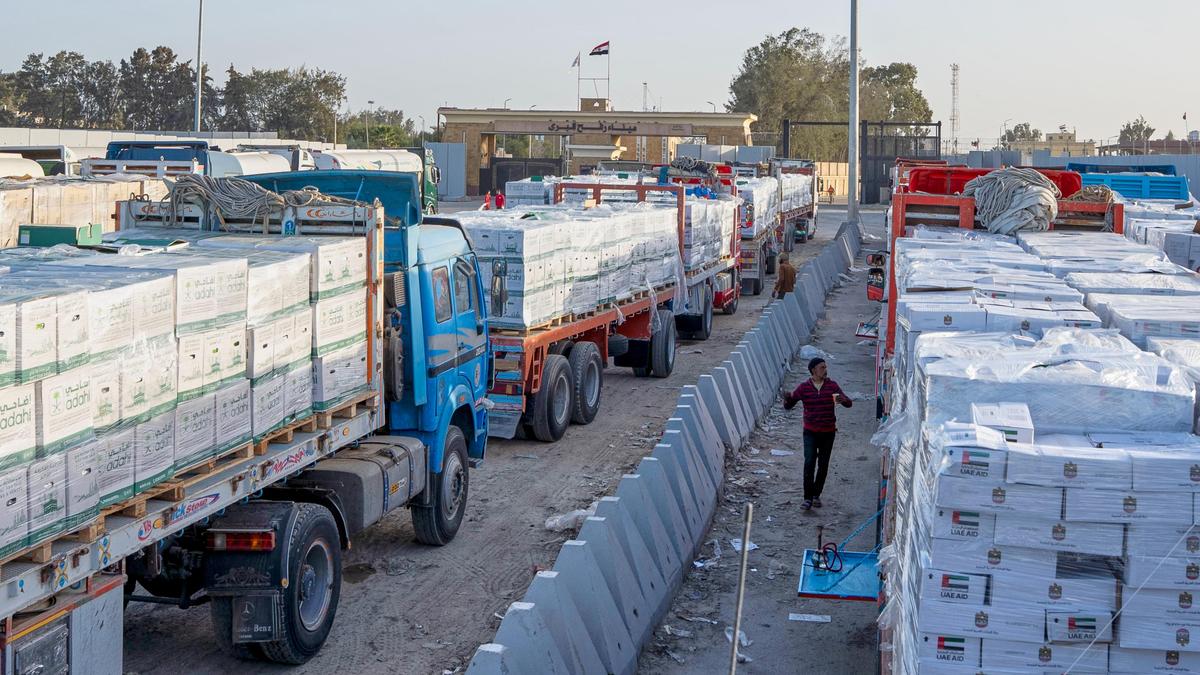
Mon Feb 02 03:57:41 UTC 2026: ### Rafah Crossing Set to Reopen Amidst Tensions and Restrictions
The Story:
On February 2, 2026, the Rafah border crossing between Gaza and Egypt is scheduled to reopen for limited travel, according to Israeli authorities. This follows a ceasefire agreement with Hamas that began on October 10, 2025. While Palestinians express hope, concerns linger regarding the limited number of people allowed to cross and the ongoing restrictions imposed by Israel. The reopening occurs amidst accusations of ceasefire violations and heightened tensions, as evidenced by recent Israeli strikes resulting in significant Palestinian casualties.
The reopening is further complicated by Israel’s decision to terminate the operations of Doctors Without Borders in Gaza by February 28, 2026, citing non-compliance with new registration requirements. This move, along with the suspension of over two dozen other humanitarian organizations, raises concerns about the humanitarian situation within Gaza, already devastated by years of conflict and restrictions on supplies.
Key Points:
- The Rafah crossing is scheduled to reopen on February 2, 2026, following a ceasefire agreement.
- Israel will allow only a small number of people to cross initially, limiting medical evacuations to 50 patients daily, each with two relatives, and 50 returning residents per day.
- Israel accuses Hamas of ceasefire violations, citing recent strikes that killed at least 30 Palestinians.
- Doctors Without Borders is facing termination of its operations in Gaza by February 28, 2026, due to non-compliance with new registration requirements.
- The crossing will be supervised by European Union border patrol agents, with Israel and Egypt vetting travelers.
- Nicolay Mladenov, director-general of U.S. President Donald Trump’s new board of peace in Gaza, urged restraint.
- Israel’s retaliatory offensive has reportedly killed 71,795 Palestinians, including 523 since the ceasefire started, according to Gaza’s Health Ministry.
Critical Analysis:
The events unfolding around the Rafah crossing underscore a pattern of limited access and control imposed by Israel over Gaza. The decision to reopen the crossing, while seemingly positive, is tempered by severe restrictions on the number of people allowed to cross and the ongoing vetting process. This suggests a strategic approach aimed at maintaining control over the movement of people and goods in and out of Gaza. Furthermore, the termination of Doctors Without Borders’ operations, along with similar actions against other humanitarian organizations, indicates a broader strategy to limit external scrutiny and control the flow of aid into Gaza. The timing of these actions, amidst ceasefire negotiations and international pressure, highlights the complex geopolitical dynamics at play.
Key Takeaways:
- The Rafah crossing reopening is a limited step towards easing restrictions on Gaza, not a complete solution.
- Humanitarian organizations face increasing pressure and restrictions from Israel, impacting aid delivery and healthcare access in Gaza.
- Accusations of ceasefire violations and military actions continue to undermine the stability of the ceasefire agreement.
- The involvement of the U.S. and the presence of EU border patrol agents reflect the international efforts to manage the situation in Gaza.
- The control of the Rafah crossing remains a key point of contention in the Israel-Palestine conflict.
Impact Analysis:
The limited reopening of the Rafah crossing will likely exacerbate the humanitarian crisis in Gaza, as only a fraction of those needing medical care or seeking to return home will be able to do so. The termination of Doctors Without Borders’ operations will further strain the already overwhelmed healthcare system, potentially leading to increased mortality rates and suffering. The ongoing tensions and accusations of ceasefire violations risk escalating the conflict, undermining the ceasefire agreement and prolonging the instability in the region. The long-term impact of these events could be a further entrenchment of the humanitarian crisis in Gaza and a deepening of the Israel-Palestine conflict. The international community’s ability to address these challenges effectively will depend on its willingness to hold all parties accountable and to provide sustained support for the Palestinian people.
 First Piper