
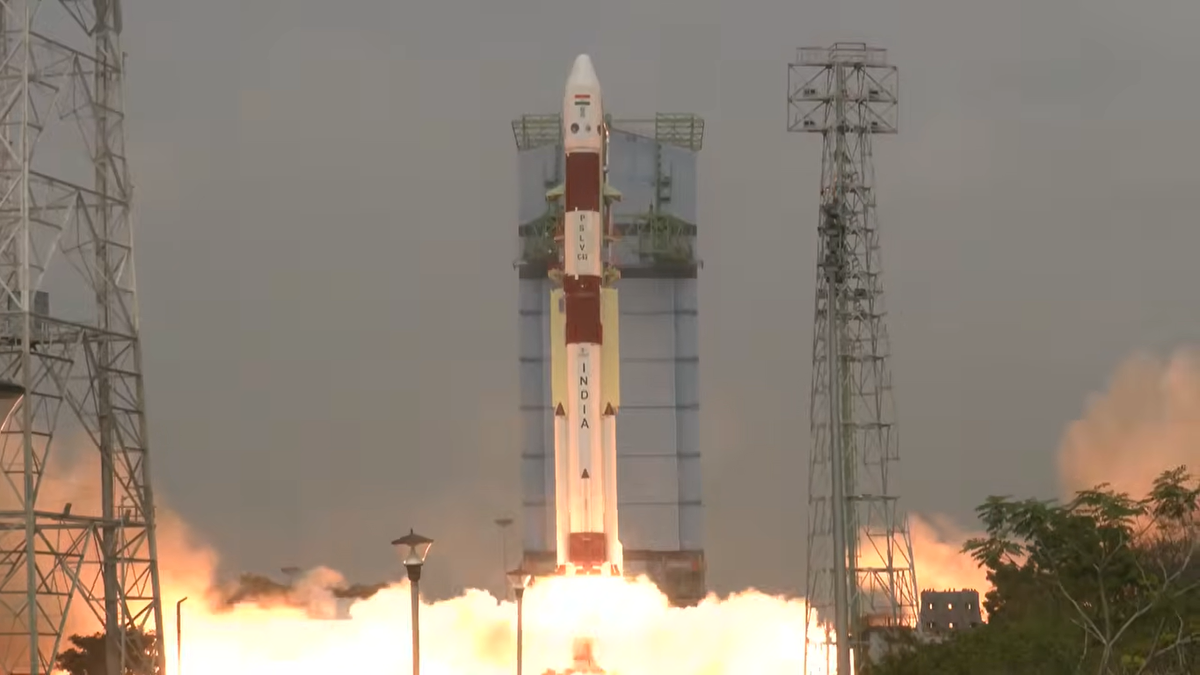
Mon Jan 12 05:00:16 UTC 2026: ### Headline: India’s PSLV-C62 Successfully Launches EOS-N1 and 15 Co-Passenger Satellites
The Story:
On Monday, January 12, 2026, the Indian Space Research Organisation (ISRO) successfully launched the PSLV-C62 mission from the Satish Dhawan Space Centre in Sriharikota. The mission carried the EOS-N1 earth observation satellite, designed for strategic purposes, along with 15 co-passenger satellites. These satellites were developed by startups and academic institutions from India and abroad, marking a significant step in fostering private sector involvement in the Indian space program.
The mission involved injecting the EOS-N1 and other satellites into a Sun Synchronous Orbit, followed by the controlled re-entry of the PS4 stage and a KID Capsule into the South Pacific Ocean. This launch represents the 105th launch from Sriharikota and the 64th flight of the PSLV, as well as the fifth mission of the PSLV-DL variant.
Key Points:
- The PSLV-C62/EOS-N1 mission launched successfully on January 12, 2026, at 10.18 a.m. IST from Sriharikota.
- EOS-N1 is an earth observation satellite intended for strategic purposes and is part of a commercial mission by NewSpace India Limited (NSIL).
- The mission included 15 co-passenger satellites from various Indian and international startups and academic institutions.
- The PS4 stage and KID Capsule were designed for a controlled re-entry into the Earth’s atmosphere, impacting in the South Pacific Ocean.
- The launch was the 105th from Sriharikota, the 64th flight of PSLV, and the fifth mission of the PSLV-DL variant.
Critical Analysis:
The related historical context highlights the increasing emphasis on boosting India’s private space ecosystem. The launch of the EOS-N1 with 15 co-passenger satellites from startups and academia is a concrete manifestation of this strategic objective. This mission signifies a deliberate effort to foster innovation and commercial opportunities within the Indian space sector, with the EOS-N1 (a strategically purposed satellite) potentially providing critical data for national security and resource management while the co-passenger satellites act as a proving ground for new technologies and business models.
Key Takeaways:
- India is actively promoting private sector participation in its space program.
- The EOS-N1 mission is strategically important, likely supporting national security and resource management.
- The mission showcases international collaboration through the inclusion of satellites from multiple countries.
- Controlled re-entry technology demonstrates ISRO’s focus on responsible space activities and debris mitigation.
- The successful launch further solidifies ISRO’s reputation as a reliable and capable space agency.
Impact Analysis:
This event has significant long-term implications for the Indian space program and the global space industry. The increasing involvement of private companies will drive innovation, reduce costs, and create new commercial opportunities. The strategic nature of EOS-N1 also indicates India’s commitment to strengthening its national security capabilities. Furthermore, the successful demonstration of controlled re-entry technology sets a precedent for responsible space operations, potentially influencing international norms and regulations related to space debris management. The mission will likely attract further investment and collaboration, positioning India as a major player in the evolving space landscape.
 First Piper