
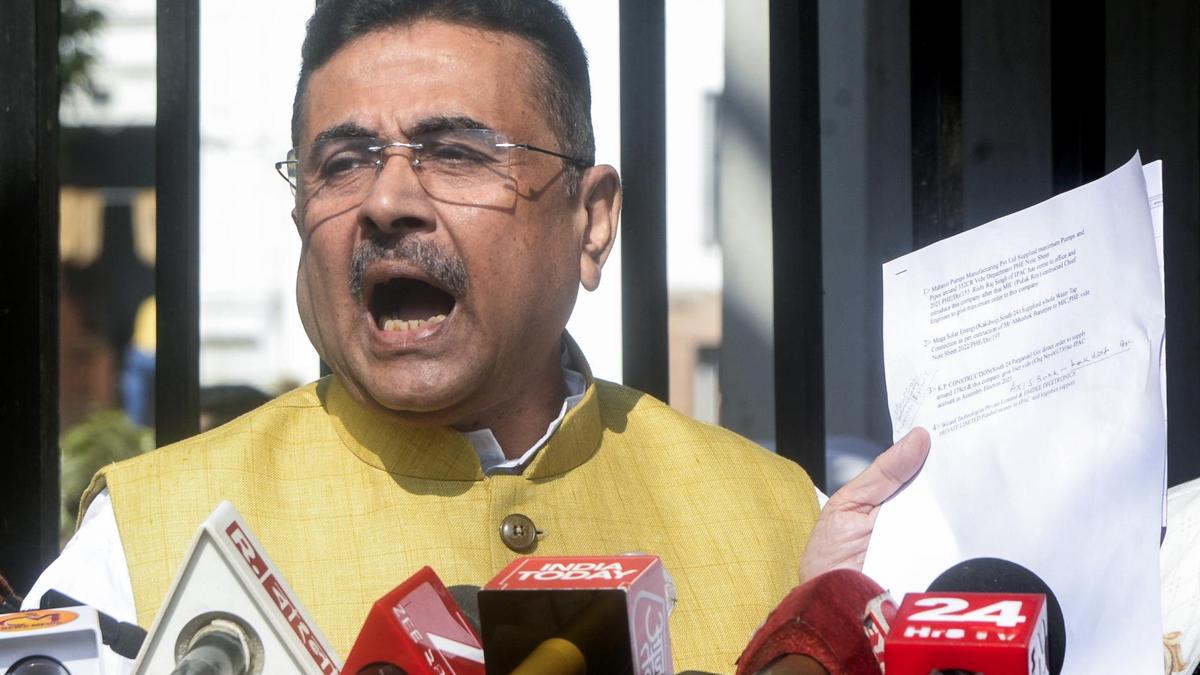
Sun Jan 11 12:50:27 UTC 2026: ### Headline: West Bengal Opposition Leader Accuses Chief Minister of Derailing Electoral Roll Revision
The Story:
West Bengal Leader of Opposition Suvendu Adhikari of the BJP has vehemently refuted Chief Minister Mamata Banerjee’s allegations regarding the ongoing Special Intensive Revision (SIR) of electoral rolls in the state. Adhikari, in a statement on January 11, 2026, accused Banerjee of “baseless and exaggerated” claims and asserted that she is attempting to derail the revision process for political gain. He claims that the SIR is exposing irregularities in the voter lists cultivated during the Trinamool Congress’s (TMC) tenure.
Adhikari has written to Chief Election Commissioner Gyanesh Kumar, asserting that the Chief Minister’s objections are a politically motivated attempt to obstruct a process essential for free, fair, and transparent elections. He contends that Banerjee’s criticism of the SIR is a gross exaggeration intended to create public hysteria and divert attention from her government’s shortcomings.
Key Points:
- Suvendu Adhikari, Leader of the Opposition, accuses Chief Minister Mamata Banerjee of making “baseless and exaggerated” allegations regarding the SIR.
- Adhikari claims Banerjee is trying to derail the SIR to protect the TMC’s electoral prospects.
- He alleges that the SIR is exposing “bogus entries, duplicates, and infiltrators” in the voter lists nurtured under the TMC.
- Banerjee had written to the CEC on January 10, 2026, alleging bias and high-handedness by the Election Commission during the SIR.
- The first phase of the SIR led to the deletion of over 58 lakh names, reducing the electorate from 7.66 crore to 7.08 crore.
- The second phase involves scrutiny of 1.67 crore electors.
Critical Analysis:
The accusations and counter-accusations surrounding the SIR highlight the intense political rivalry between the BJP and the TMC in West Bengal. The timing of these events, preceding upcoming elections (speculated to occur after the SIR exercise), suggests both parties are positioning themselves strategically. The claims of voter list irregularities, if substantiated, could significantly impact the electoral outcome, explaining the urgency and intensity of the political rhetoric. The historical context of alleged attacks on Suvendu Adhikari’s convoy further emphasizes the strained political environment.
Key Takeaways:
- The Special Intensive Revision of electoral rolls in West Bengal has become a major point of contention between the ruling TMC and the opposition BJP.
- Allegations of voter list irregularities are fueling political tensions and accusations of bias.
- The outcome of the SIR could significantly impact the fairness and transparency of future elections in West Bengal.
- The Election Commission’s role is under intense scrutiny amidst claims of political bias from both sides.
- The political climate in West Bengal remains highly charged, characterized by accusations and counter-accusations between the major parties.
Impact Analysis:
The ongoing dispute over the electoral roll revision has the potential for long-term political repercussions in West Bengal.
- Electoral Legitimacy: The credibility of future election results will be heavily scrutinized, potentially leading to challenges and disputes.
- Political Polarization: The accusations of voter list manipulation will likely further deepen the divide between the TMC and BJP supporters.
- Election Commission’s Role: The EC’s handling of the SIR will be critical in maintaining public trust in the electoral process and demonstrating impartiality.
- Legal Challenges: If either party feels aggrieved by the final electoral rolls, legal challenges are likely, prolonging the uncertainty.
- Future Election Outcomes: The revisions could significantly alter the demographic landscape of the electorate, potentially influencing future election outcomes in the state.
 First Piper