
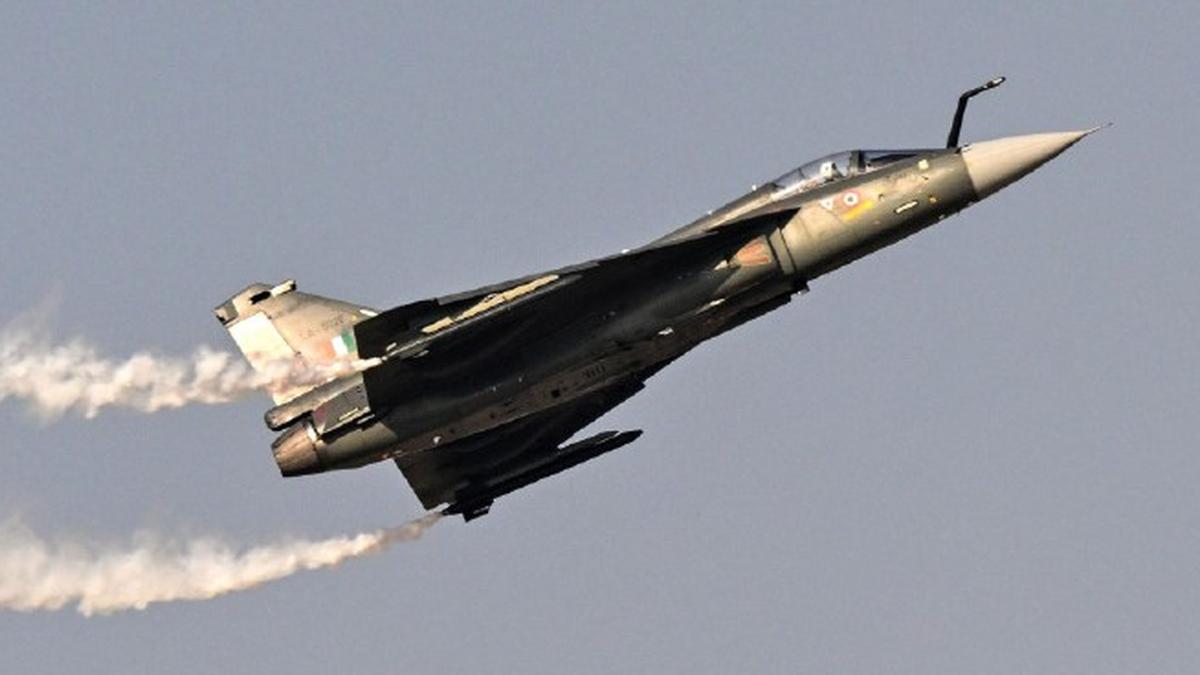
Sat Nov 29 20:24:00 UTC 2025: Summary:
Following the crash of a Tejas Mk-1 LCA at the Dubai Air Show, which resulted in the death of Wing Commander Namansh Syal, questions have been raised regarding the safety of HAL’s Tejas fighter aircraft and the overall success of India’s indigenous defense manufacturing program. HAL officials defend the Tejas as a safe and reliable aircraft, attributing the Dubai crash to an unfortunate incident. Aviation experts agree with the assessment that the crash shouldn’t affect the Tejas’ export potential. Despite the recent incident in Dubai and the earlier Jaisalmer crash in March 2024, HAL and the IAF maintain their confidence in the program, highlighting the Tejas’s technological advancements, various variants, and its critical role in India’s air combat capability. The article also addresses the delays in the Tejas Mk2 development but remains optimistic about the program’s future.
News Article:
Tejas Safety Under Scrutiny After Dubai Air Show Crash
New Delhi – November 30, 2025 – The crash of a Tejas Mk-1 Light Combat Aircraft (LCA) at the Dubai Air Show on November 21st, resulting in the death of Indian Air Force (IAF) pilot Wing Commander Namansh Syal, has ignited a national debate over the safety and reliability of the indigenous fighter jet.
Hindustan Aeronautics Ltd. (HAL), the manufacturer, has strongly defended the Tejas platform, emphasizing its safety record. “There is absolutely no problem with Tejas; it is absolutely safe, and its safety record is the best in the world. What you saw in Dubai was an unfortunate incident,” stated HAL Chairman and Managing Director D.K. Sunil at an event in Delhi.
Aviation experts have cautioned against drawing hasty conclusions from the incident, citing the inherent risks associated with modern fighter operations. They believe the crash is unlikely to derail the Tejas’s growing export potential.
This is the second Tejas accident in less than two years, following a crash in Jaisalmer, Rajasthan, in March 2024 – the first in the aircraft’s 23-year flight history. Prior to that, the Tejas had maintained a clean safety record since its maiden flight in 2001.
The Tejas program, conceived in the early 1980s as a replacement for the aging MiG-21 fleet, has undergone significant development and upgrades. The LCA family now includes the Mk1, Mk1A, the under-development Mk2, and trainer and naval versions.
The Mk1A variant is a significant technological leap, featuring an AESA radar, advanced electronic warfare suite, beyond-visual-range missile capability, mid-air refuelling system, and reduced radar cross-section.
Despite delays in the development of the Tejas Mk2, the program is considered a crucial pillar of India’s aerospace ecosystem. The findings of the Dubai crash investigation will be closely watched in the coming months. In the meantime, HAL and the IAF remain committed to the Tejas as a safe, reliable, and strategically vital asset for India’s air combat capabilities.
 First Piper