
Sun Nov 09 10:11:11 UTC 2025: Here’s a summary of the text, followed by a news article based on the information provided:
Summary:
The Assam government initiated an eviction drive on November 9, 2025, in Goalpara district to clear approximately 376 acres of forest land (Dahikata Reserve Forest) allegedly encroached upon by around 600 families. Authorities claim the eviction is proceeding peacefully following a notice period and is mandated by the Gauhati High Court. Most of those evicted are reportedly Bengali-speaking Muslims. While authorities cite the need to protect an elephant corridor and reduce human-animal conflict, some affected individuals claim long-term residency and possession of valid documents, questioning the eviction’s justification. This eviction is part of a broader series of such actions by the current Assam government targeting alleged encroachments, often impacting Bengali-speaking Muslim communities, whom some identify as “Miyas,” a term with pejorative connotations, associating them with illegal immigration from Bangladesh.
News Article:
Assam Evicts Hundreds from Forest Land in Goalpara District
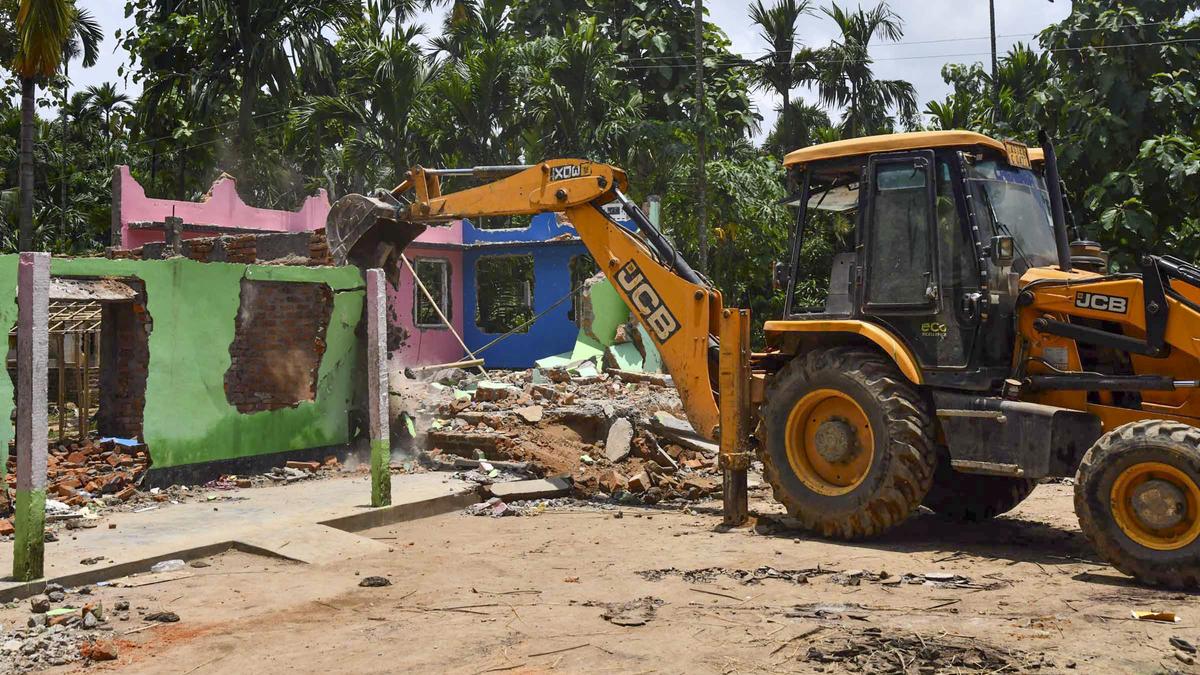
GOALPARA, ASSAM – November 9, 2025 – The Assam government commenced a large-scale eviction drive today in the Goalpara district, displacing an estimated 600 families from 1,140 bighas (over 376 acres) of land within the Dahikata Reserve Forest. District Commissioner Prodip Timung stated the operation is proceeding peacefully, following notices issued to the alleged encroachers over two weeks ago.
“Around 70% of the illegal settlers have already left the area after getting the notices,” Timung told reporters. The district administration utilized excavators and tractors to demolish remaining structures on the land.
Officials cited Gauhati High Court directives as the legal basis for the eviction. Special Chief Secretary (Forest) M.K. Yadava said clearing the land is crucial to protect an elephant corridor and mitigate human-animal conflict.
However, those affected claim long-standing residency and accuse the government of targeting their community. “If we were encroachers, why did the government give us electricity lines, toilets, and other facilities? We have Aadhaar cards and all land documents,” said Abdul Karim, one of the displaced individuals.
Critics argue the evictions disproportionately impact Bengali-speaking Muslim communities, sometimes referred to as “Miyas” – a term often associated with illegal Bangladeshi immigrants. Chief Minister Himanta Biswa Sarma recently affirmed his government’s commitment to continuing eviction drives against illegal encroachments. Sarma recently said that Miyas cannot have peace under his government.
The government reports having cleared over 42,500 acres of encroached land in the last four years, but claims over 950,000 acres remain occupied, allegedly by illegal immigrants and doubtful citizens. The evictions have sparked controversy, raising concerns about due process and the targeting of vulnerable communities.
 First Piper