
Sat Nov 08 03:00:00 UTC 2025: Summary:
A citizen science project called RAD@home, led by University of Mumbai professor Ananda Hota, is making significant contributions to astronomy. The group, comprised of amateur astronomers, analyzes data from telescopes like LOFAR and the Giant Metrewave Radio Telescope (GMRT) to identify rare celestial objects. Their most recent discovery is a “double odd radio circle” (ORC), a pair of faint, circular structures surrounding a distant galaxy. ORCs are poorly understood and may be caused by galactic collisions or supermassive black hole mergers. Dr. Hota believes that the GMRT, a powerful radio telescope in India, is underutilized and hopes to encourage more citizen science projects to drive astronomical research in India.
News Article:
Citizen Scientists in India Help Uncover Rare ‘Double Odd Radio Circle’
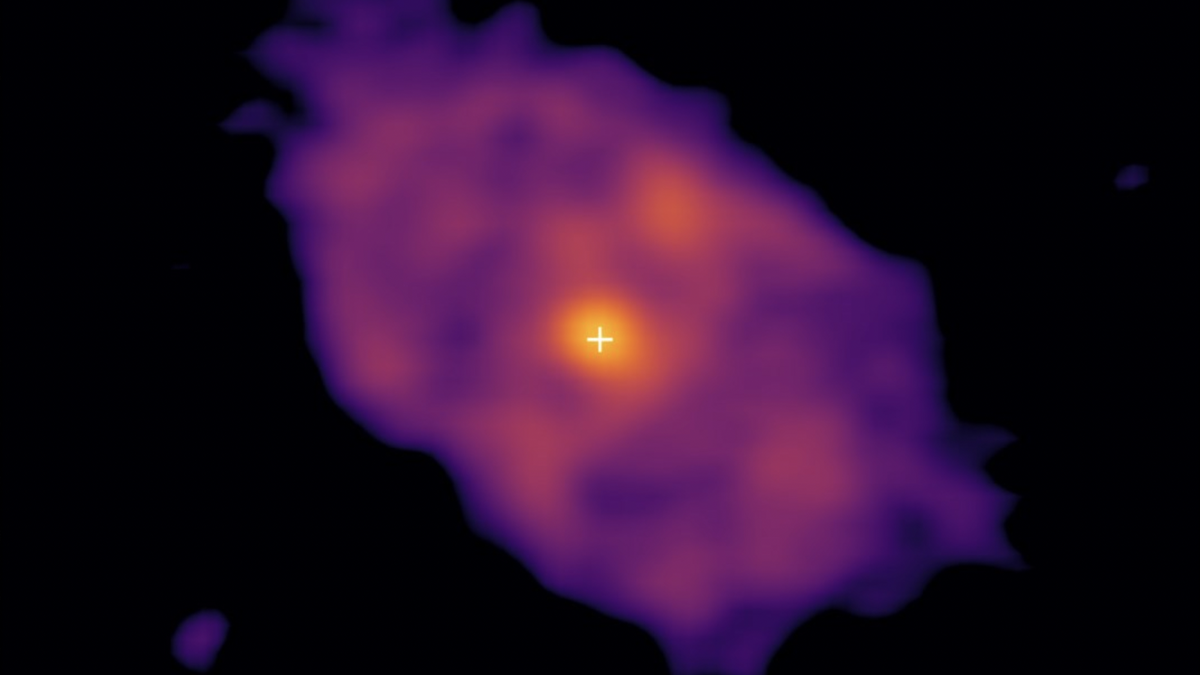
PUNE, India – November 8, 2025 – A team of citizen scientists, part of the RAD@home project led by University of Mumbai professor Ananda Hota, has made a significant astronomical discovery: a rare “double odd radio circle” (ORC). The finding, made using data from the LOFAR telescope network, involves a pair of large, faint circular structures surrounding a distant galaxy.
ORCs are enigmatic objects in deep space, with prevailing theories suggesting they originate from supermassive black hole mergers or powerful galactic shockwaves. This particular discovery, spotted by RAD@home participant Prasun Machado, marks only the second known instance of a twin ORC, making it a valuable opportunity for astronomers to learn more about these mysterious phenomena.
RAD@home, founded in 2013, harnesses the power of citizen science by training amateur astronomers to analyze astronomical data. The project leverages the capabilities of powerful telescopes like the Giant Metrewave Radio Telescope (GMRT) near Pune, India.
Dr. Hota believes that the GMRT, one of the world’s largest and most sensitive low-frequency radio telescopes, is underutilized and that more citizen science projects can accelerate astronomical research in India. He hopes that RAD@home’s success will inspire others to participate in scientific discovery, regardless of their formal background.
“At any stage in your career, you can join research if you find a good mentor and a good project,” Dr. Hota stated. “Once we create this combined model of learning and discovery through various citizen science projects, Indian astronomy will grow faster.”
The discovery highlights the significant contributions that citizen scientists can make to astronomy and underscores the importance of utilizing powerful research facilities like the GMRT. The team’s findings were recently published in the Monthly Notices of the Royal Astronomical Society.
 First Piper