
Sat Oct 11 22:20:00 UTC 2025: **Summary:**
The University of Texas at Austin is a leading institution in space research, with significant recent contributions. These include sending microorganisms to the International Space Station to potentially produce food and medicine, developing guidance algorithms for lunar landings, creating compact satellites for improved navigation, tracking Earth’s surface changes with high precision, developing innovative propulsion systems and heat shields, making deep space discoveries with the James Webb Space Telescope, working to clean up space debris, contributing radar technology to the Europa Clipper mission, and uncovering clues about Mars’ missing water. UT researchers are also having asteroids named after them in honor of their contributions.
**News Article:**
**UT Austin Pioneers New Frontiers in Space Exploration**
AUSTIN, Texas – The University of Texas at Austin continues to cement its position as a powerhouse in space research, racking up a series of groundbreaking achievements in recent years that are shaping the future of space exploration. From developing sustainable solutions for long-duration space missions to uncovering the secrets of distant planets, UT researchers are pushing the boundaries of what’s possible beyond Earth.
In a bid to revolutionize space travel, UT engineers are exploring the potential of using specially engineered microorganisms as miniature “space factories.” Samples of bacteria and yeast were sent to the International Space Station to study their resilience to space radiation. If successful, these microbes could produce essential resources like food, fuel, and medicine on demand, a crucial capability for future missions to Mars.
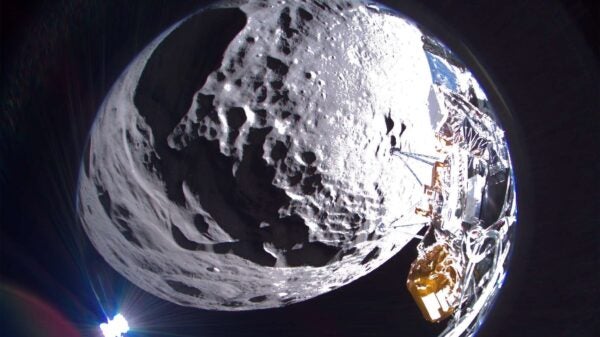
Last year, UT expertise was instrumental in guiding a U.S. spacecraft to a precise landing near the moon’s south pole, a feat not accomplished in half a century. Professor Maruthi Akella and his team developed a sophisticated guidance algorithm that accounted for the lander’s changing mass, allowing for a pinpoint landing in a challenging terrain rich in water ice. Akella’s contributions have earned him the prestigious honor of having an asteroid named after him.
UT researchers are also addressing critical challenges in space, such as space debris. Professor Moriba Jah is leading efforts to track and clean up space pollution, safeguarding vital satellite systems and future space missions.
The university’s contributions extend to planetary exploration, with UTIG researchers playing a key role in NASA’s Europa Clipper mission. Their ice-penetrating radar technology will help scientists explore the vast ocean beneath Europa’s icy shell, potentially uncovering clues about the possibility of life beyond Earth.
Closer to home, UT researchers are helping solve the mystery of Mars’ missing water. Using advanced computer models, they have shown that water likely seeped into the planet’s subsurface aquifers, potentially forming a vast hidden reservoir that could support future human settlements.
With significant allocations on the James Webb Space Telescope, UT astronomers continue to make incredible deep space discoveries.
From tiny microbes to distant galaxies, the University of Texas at Austin is playing a pivotal role in shaping the future of space exploration, paving the way for new discoveries and a deeper understanding of our universe.
 First Piper