
Tue Oct 07 13:13:41 UTC 2025: **Summary:**
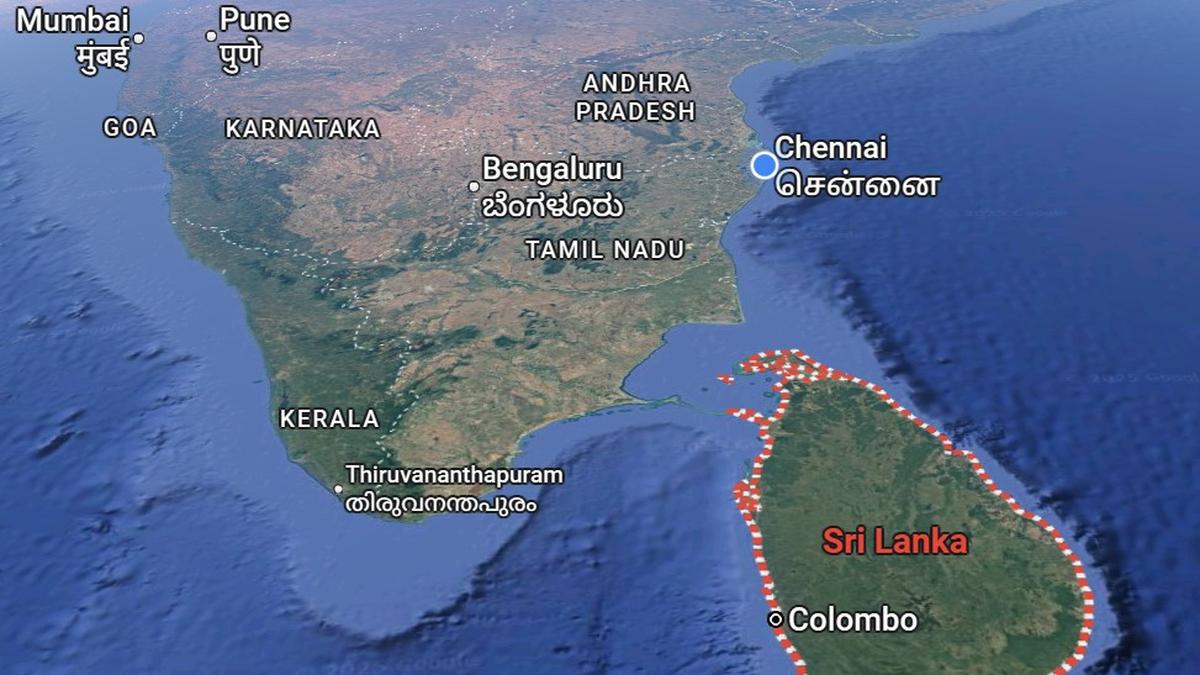
A new study by the Indian National Centre for Ocean Information Services (INCOIS) reveals that Sri Lanka acts as a natural barrier, protecting India’s southeastern coast from long-period swell waves originating in the Southern Ocean. These powerful waves often cause flooding and erosion along India’s southwestern coast. Researchers used real-time data and high-resolution simulations to confirm that Sri Lanka blocks these swells, preventing them from reaching regions north of the island. The study emphasizes the importance of considering natural geographic features in coastal hazard assessments, particularly in the context of climate change and rising sea levels, as even small changes in coastal geography can significantly alter wave propagation paths.
**News Article:**
**Sri Lanka Serves as Natural Shield Against Ocean Swells, Protecting India’s East Coast**
*HYDERABAD – October 8, 2025* – A groundbreaking study from the Indian National Centre for Ocean Information Services (INCOIS) has confirmed that Sri Lanka plays a crucial role in safeguarding India’s southeastern coastline from destructive long-period swell waves originating in the Southern Ocean.
Published in the Journal of Earth System Science, the research demonstrates that the Sri Lankan landmass effectively blocks these powerful waves, preventing them from causing coastal flooding and erosion similar to what is frequently seen along India’s southwestern shores.
“Our analysis shows that in the absence of the SLLM, destructive Southern Ocean swells can reach the Indian southeast coast, including areas north of Sri Lanka up to mid-Andhra Pradesh,” said INCOIS director T.M. Balakrishnan Nair.
Scientists used real-time data from wave rider buoys and high-resolution simulations to reach their conclusions. The results showed that over 96% of long-period swell events observed off the coast of Kollam (Kerala) failed to reach Pondicherry on the eastern coast. Model simulations further confirmed that removing Sri Lanka from the equation allowed the swells to impact the previously protected eastern coast.
The findings hold significant implications for coastal hazard management, particularly in light of rising sea levels and climate change. Researchers emphasize the need to incorporate natural geographic features like islands and landmasses into early warning systems and coastal protection strategies. Minor alterations in coastal geography, such as land submergence, could drastically change wave patterns and expose new regions to marine hazards.
The study was a collaborative effort involving researchers from INCOIS, the Department of Marine Geology at Mangalore University, and the Indian Institute of Tropical Meteorology, Pune.
 First Piper