
Sun Sep 28 01:00:00 UTC 2025: **Summary:**
Tamil Nadu, India, has seen a resurgence in its dugong population, attributed to multi-pronged conservation efforts. These efforts, including the establishment of a Dugong Conservation Reserve, community involvement, and habitat restoration, have garnered international recognition. A recent survey indicates a population of over 200 dugongs in the Palk Bay and Gulf of Mannar region. The success is attributed to government support, scientific research, community participation, and the implementation of innovative restoration techniques. The state plans to establish an International Dugong Conservation Centre to further promote conservation and eco-tourism.
**News Article:**
**Dugong Population Booms in Tamil Nadu, Conservation Efforts Lauded Globally**
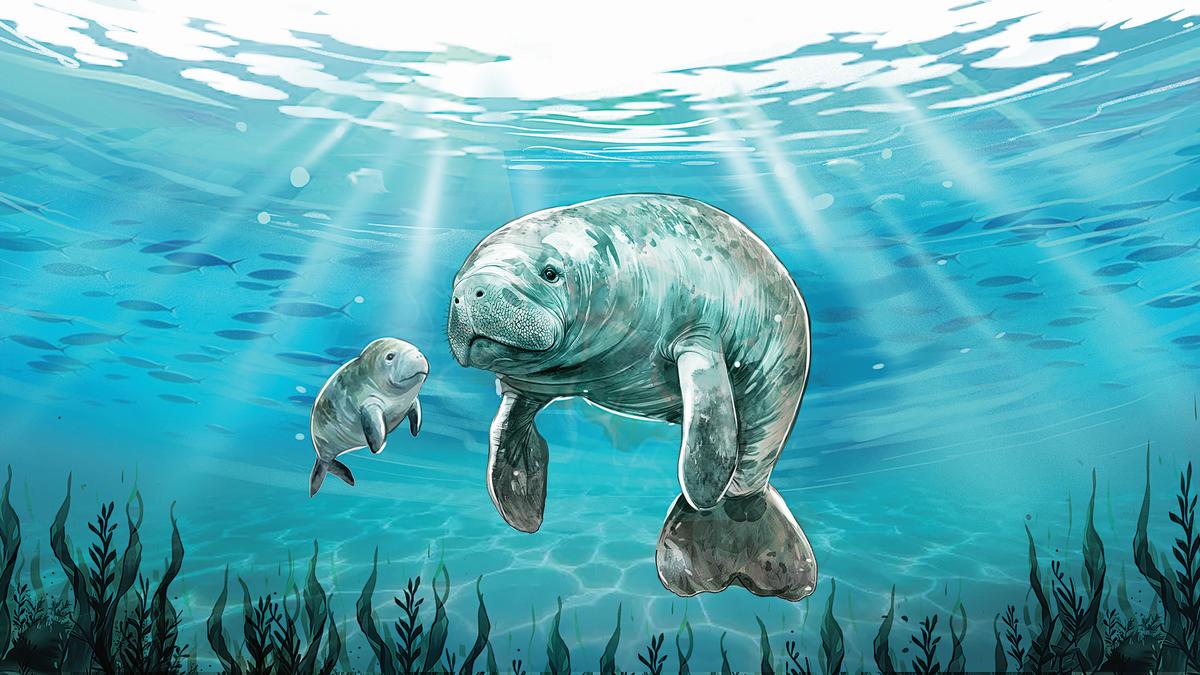
**Chennai, India – September 28, 2025** – A double victory for marine conservation in Tamil Nadu as the state records a significant rise in the dugong population, coupled with international recognition for its exemplary conservation efforts. Once on the brink of extinction in the region, the “sea cows” are making a comeback thanks to a comprehensive strategy implemented by the Tamil Nadu government in collaboration with the Wildlife Institute of India (WII) and local communities.
Key to the success has been the establishment of the Dugong Conservation Reserve in the Palk Bay in 2022, now formally recognized by the IUCN at the World Conservation Congress in Abu Dhabi. The reserve protects vital seagrass meadows, the dugongs’ primary food source. Furthermore, innovative eco-friendly seagrass restoration techniques, using bamboo frames, are proving effective in revitalizing degraded habitats.
“The dugong’s return shows how government action, science and communities can together script a rare species revival,” stated Supriya Sahu, Additional Chief Secretary, Environment, Climate Change and Forests, Tamil Nadu.
A recent drone survey conducted by the WII estimates the dugong population in the Palk Bay and Gulf of Mannar region to be over 200, a significant increase from previous estimates. Poaching has been virtually eliminated through awareness campaigns, and fishermen are now actively involved in rescuing dugongs entangled in fishing nets.
To further bolster conservation efforts, Tamil Nadu will establish an International Dugong Conservation Centre at Manora, serving as a hub for research, education, and eco-tourism. The state has restored 31 acres of seagrass habitat so far. Experts emphasize the need for ongoing efforts to protect seagrass beds from damage and for stronger regional cooperation with Sri Lanka, as dugongs migrate between the two countries’ coastlines. The Tamil Nadu success story provides a model for dugong conservation worldwide, proving that dedicated action can turn the tide for endangered species.
 First Piper