
Fri Sep 26 10:30:00 UTC 2025: **FOR IMMEDIATE RELEASE**
**Ancient Chinese Skull Rewrites Human Family Tree, Suggests Earlier Origins for Key Human Species**
**Yunxian, China** – A groundbreaking new analysis of a million-year-old skull discovered in central China is challenging long-held beliefs about human evolution. The research, published today in the journal *Science*, suggests that our ancestors split into distinct groups much earlier than previously believed, pushing back the emergence of Homo sapiens, Neanderthals, and Denisovans by hundreds of thousands of years.
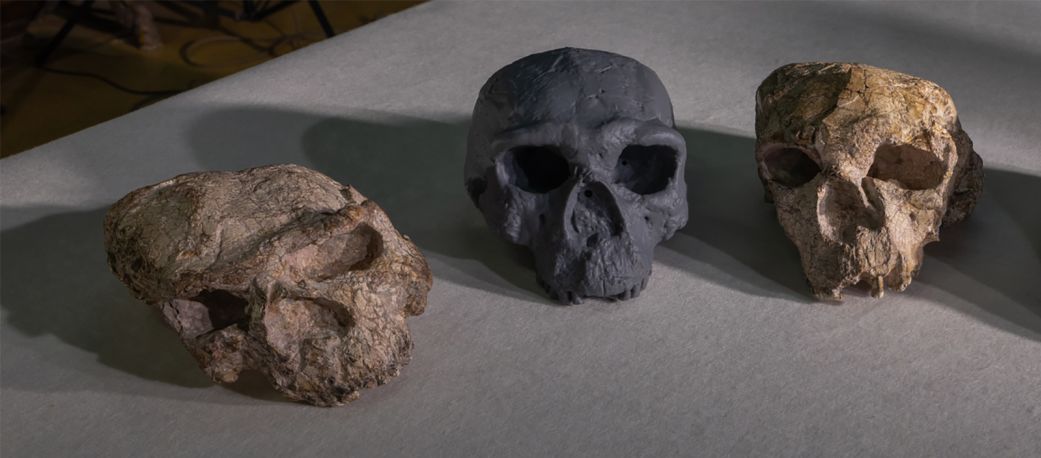
The skull, unearthed decades ago from a riverbank in Yunxian, Hubei province, had long defied classification. Now, through advanced digital reconstruction, scientists have determined that it belongs to the same lineage as the mysterious “Dragon Man” (Homo longi) and the elusive Denisovans, a prehistoric human population known primarily from genetic evidence.
“This changes a lot of thinking because it suggests that by one million years ago, our ancestors had already split into distinct groups, pointing to a much earlier and more complex human evolutionary split than previously believed,” said Chris Stringer, paleoanthropologist at London’s Natural History Museum and co-author of the study.
The reconstructed skull, dubbed Yunxian 2, revealed features that align with Homo longi and Denisovan characteristics, suggesting a potential early origin for the group in Asia. The analysis also re-evaluates other hard-to-classify fossils found in China, potentially grouping them within the same Homo longi/Denisovan lineage.
The new phylogenetic tree, based on the skull reconstruction and data from over 100 other fossils, proposes a significantly older timeline for human evolution. The research suggests that Denisovans and modern humans shared a common ancestor around 1.32 million years ago, while Neanderthals branched off from that line even earlier, around 1.38 million years ago. This challenges the traditional view that these species diverged from a common ancestor around 700,000 to 500,000 years ago.
While the findings are met with cautious optimism from some experts, the study opens new doors for research into the origins and evolution of various human species. The researchers hope to further refine their understanding by studying a third skull discovered nearby in 2022.
The study raises broader questions about where the ancestral populations of Homo sapiens, Neanderthals, and Homo longi lived: inside or outside Africa, which is widely regarded as the cradle of humankind.
 First Piper