
Tue Sep 23 06:03:32 UTC 2025: **Summary of the Text:**
Indonesia and the European Union have finalized the Indonesia-European Union Comprehensive Economic Partnership Agreement (CEPA) after nearly a decade of negotiations. The agreement, signed in Bali, aims to boost trade and investment between the two regions. It will eliminate tariffs on many Indonesian exports to the EU and open up investment in key sectors. Negotiations were spurred by concerns over protectionism and a desire for a stable trade agreement. While the deal faces ratification, it’s expected to be implemented by 2027. Concerns remain about the potential impact on deforestation, particularly regarding palm oil production, despite promises of special treatment on the EU’s deforestation regulations.
**News Article:**
**Indonesia and EU Ink Landmark Trade Deal After Years of Negotiations**
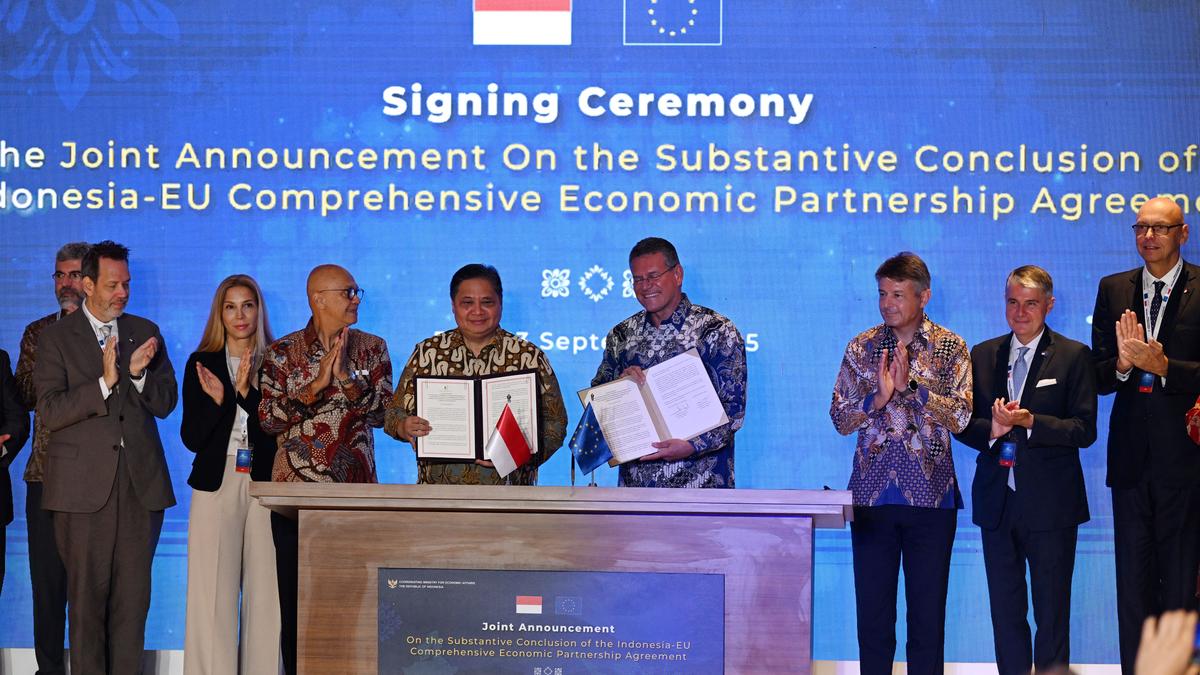
**Denpasar, Indonesia – September 23, 2025** – Indonesia and the European Union officially signed the Indonesia-European Union Comprehensive Economic Partnership Agreement (CEPA) yesterday, marking the culmination of nearly a decade of talks. The agreement, signed in Nusa Dua, Bali, promises to significantly boost trade and investment between the two economic powerhouses.
“By finalizing this agreement, the EU and Indonesia are sending a powerful message to the world that we stand united in our commitment to open rules-based and mutually beneficial international trade,” said EU Trade Commissioner Maros Sefcovic following the signing ceremony.
The CEPA is the third such agreement the EU has forged with a Southeast Asian nation, following similar deals with Singapore and Vietnam. It is expected to open up key investment opportunities in Indonesia’s burgeoning electric vehicle, electronics, and pharmaceutical sectors. EU exporters stand to save an estimated €600 million annually on duties paid on goods entering the Indonesian market.
Indonesia’s Chief Economic Minister Airlangga Hartarto highlighted the importance of the agreement in the face of global economic uncertainty. “This is a ten-year journey that has resulted in a milestone that reflects our commitment and the commitment of stakeholders to an open, fair, and sustainable economic assistance,” he said. He also noted that the uncertainties caused by the “tariff war and protectionism” between major countries pushed the two sides “to seek certainty through a stable bilateral agreement”.
The agreement is projected to provide duty-free access for around 80% of Indonesian exports to the EU, benefiting key industries such as palm oil, footwear, textiles, and fisheries. The EU is currently Indonesia’s fifth-largest trading partner, with bilateral trade reaching $30.1 billion last year.
However, the agreement has raised concerns among environmental groups regarding potential impacts on deforestation. Greenpeace Indonesia expressed fears that the deal will lead to increased demand for palm oil, resulting in further clearing of natural forests. While the EU has pledged “special treatment” regarding its deforestation regulations for countries with trade agreements, details remain scarce.
After the signing, both sides will undertake legal checks and translate official documents before seeking ratification from EU member states, the European Parliament, and Indonesian lawmakers. Implementation is expected by 2027.
 First Piper