
Mon Sep 22 12:46:43 UTC 2025: **Summary:**
Russian President Vladimir Putin announced on September 22, 2025, that Russia will adhere to the nuclear arms limits stipulated in the New START treaty for an additional year after its expiration in February. Putin emphasized the negative consequences of the treaty’s termination on global stability and expressed Russia’s expectation that the U.S. would reciprocate. Although Russia suspended its participation in the treaty in February 2023 due to tensions surrounding the conflict in Ukraine, it has maintained its commitment to the treaty’s weapon limits.
**News Article:**
**Russia Extends Nuclear Arms Treaty Commitment Amid Global Instability Concerns**
**Moscow, September 22, 2025** – Russian President Vladimir Putin announced today that Russia will continue to adhere to the nuclear arms limits outlined in the New START treaty for one year after its expiration in February 2026. The announcement comes amidst growing global tensions and concerns about the future of nuclear arms control.
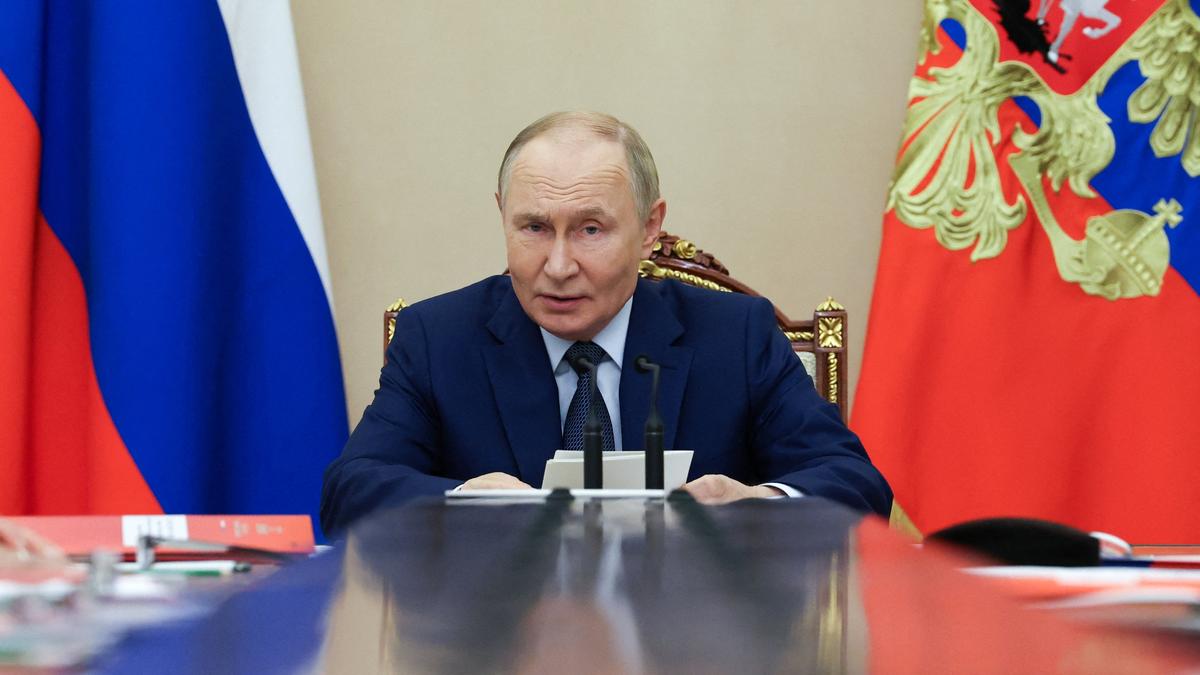
Speaking at a meeting with members of the Russian Security Council, Putin emphasized the importance of maintaining stability and avoiding a potential arms race. “The termination of the 2010 New START would have negative consequences for global stability,” Putin stated.
The New START treaty, signed in 2010 by then-Presidents Barack Obama and Dmitry Medvedev, limits each country to 1,550 deployed nuclear warheads and 700 deployed missiles and bombers. Its expiration has raised concerns among arms control advocates.
While Russia suspended its participation in the treaty in February 2023, citing the conflict in Ukraine and inability of Russian inspections, the Kremlin reiterated that it would continue to respect the treaty’s caps on nuclear weapons. Putin expressed Russia’s expectation that the United States would follow suit and maintain its commitment to the treaty’s limits.
The agreement includes extensive on-site inspections to verify compliance, but these have been on hold since 2020.
The announcement comes at a critical juncture in international relations, with ongoing conflicts and increasing geopolitical uncertainty. The future of arms control remains a significant concern for global security.
 First Piper