
Mon Jun 23 16:50:00 UTC 2025: ## US Strikes Cripple Iranian Nuclear Program, Satellite Imagery Reveals Extensive Damage
**WASHINGTON** – In a dramatic escalation of tensions, the United States launched a major military operation against Iran’s nuclear program Saturday night, targeting three key sites: Fordow, Natanz, and Isfahan. President Trump, after initially pursuing diplomatic solutions, authorized the strikes, claiming the regime’s nuclear facilities were “obliterated.”
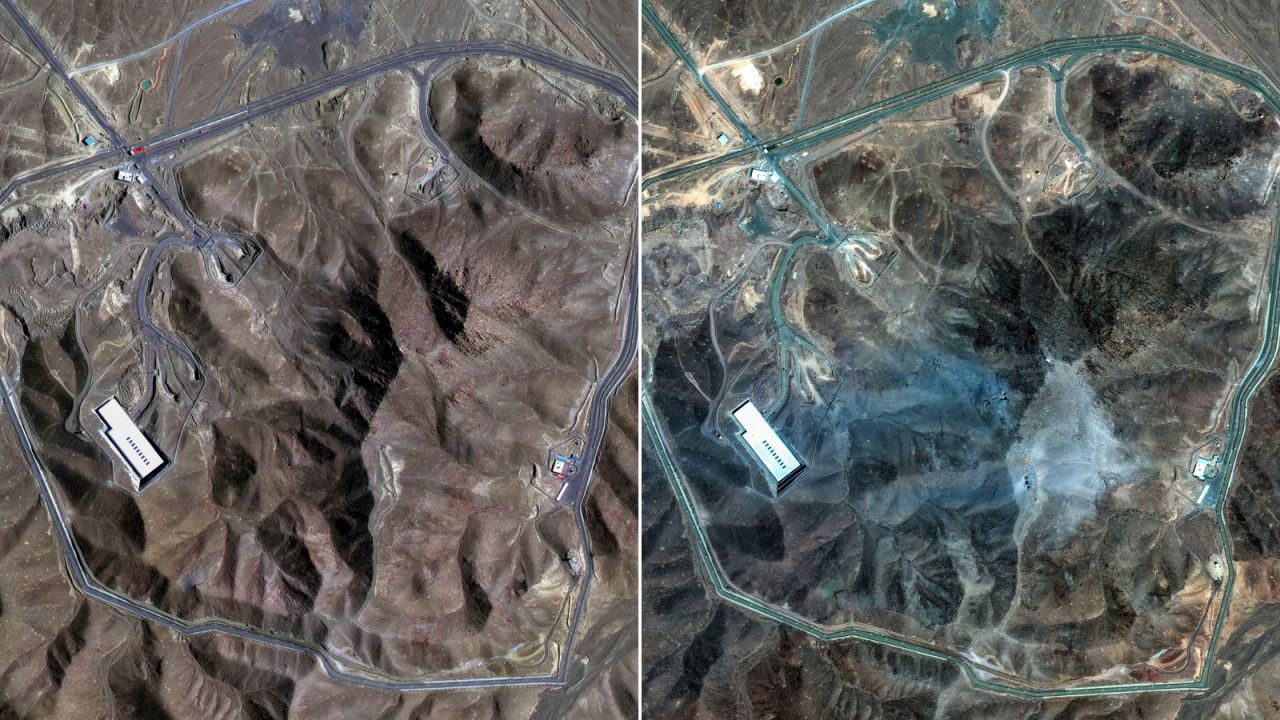
Satellite imagery emerging in the aftermath of the operation paints a picture of widespread destruction. Fordow, Iran’s heavily fortified enrichment facility buried deep within a mountain, was hit with at least 12 GBU-57 “bunker-buster” bombs, delivered by six B-2 bombers. Images show multiple large craters on the mountainside above the underground complex, indicating a direct hit.
Rafael Grossi, head of the IAEA, confirmed a “direct kinetic impact” on Fordow. While the full extent of the damage is still being assessed, Grossi stated, “Given the explosive payload utilized, and the extremely vibration-sensitive nature of centrifuges, very significant damage is expected to have occurred.” Experts suggest total destruction of the underground hall is possible.
Natanz, Iran’s largest nuclear enrichment center, was also targeted. US Navy submarines launched 30 TLAM cruise missiles, and a B-2 bomber dropped two bunker-busting bombs. Satellite imagery reveals two new craters directly above parts of the underground complex. The impact on the underground facilities is currently unknown.
Isfahan, home to Iran’s largest nuclear research complex, sustained heavy damage. Satellite analysis shows at least 18 destroyed or partially destroyed structures, with the site visibly blackened. The facility’s main uranium conversion facility, responsible for converting natural uranium into fuel for centrifuges, was reportedly “severely damaged.” Tunnel entrances leading into the underground complex have also collapsed, potentially trapping hazardous materials.
While Iranian officials initially downplayed the strikes, experts urge skepticism. David Albright, president of the Institute for Science and International Security (ISIS), noted that Iran has historically minimized the impact of previous strikes, only for satellite imagery to reveal more extensive damage.
General Dan Caine, US Chairman of the Joint Chiefs of Staff, confirmed the submarine-launched cruise missile strikes on surface infrastructure targets at Isfahan.
The long-term implications of the strikes remain to be seen, but the operation marks a significant blow to Iran’s nuclear capabilities and further escalates tensions in the region. Further analysis of satellite imagery is ongoing to fully assess the extent of the damage and the long-term impact on Iran’s nuclear ambitions.
 First Piper