
Fri Jun 20 05:15:11 UTC 2025: **Summary:**
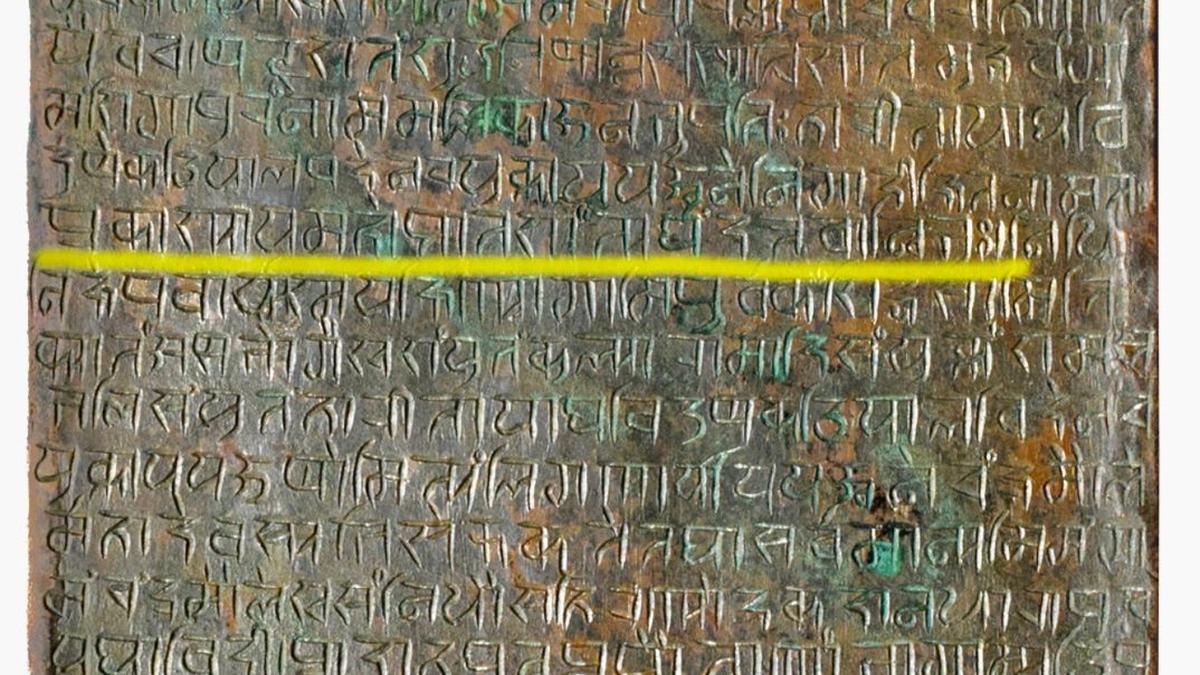
A copper plate inscription from 1456 CE, found at the Srisailam Mallikarjunaswamy temple in Andhra Pradesh, provides the first Indian epigraphical reference to Halley’s Comet. The inscription, written in Sanskrit using the Nagari script, documents a grant made by Vijayanagar ruler Mallikarjuna to a Vedic scholar to avert calamities believed to arise from the comet’s appearance and a subsequent meteor shower. The year and celestial events described match the historically documented appearance of Halley’s Comet in 1456. The inscription highlights the traditional belief that comets and meteor showers were inauspicious omens.
**News Article:**
**Ancient Indian Inscription Confirms Halley’s Comet Sighting in 1456**
**Hyderabad, India – June 20, 2025** – Archaeologists have discovered the first known Indian epigraphical reference to Halley’s Comet in a 15th-century copper plate inscription. The inscription, dated 1456 CE, was found at the Srisailam Mallikarjunaswamy temple in Andhra Pradesh.
Dr. K. Munirathnam Reddy, Director of the Epigraphy Branch of the Archaeological Survey of India (ASI), announced the finding, stating that the Sanskrit inscription, written in the Nagari script, describes the appearance of a comet and a subsequent meteor shower. These events coincide with the documented 1456 appearance of Halley’s Comet.
The inscription details a grant made by Vijayanagar ruler Mallikarjuna to a Vedic scholar, Limgaṇarya, of Kaḍiyalapura, to mitigate the perceived calamities associated with the comet and meteor shower. The king donated the village of Simgapura as an agrahāra to the scholar.
“What makes this particularly significant,” Dr. Reddy explained, “is that the year mentioned in the inscription and the reference to the comet’s appearance matches the year in which Halley’s Comet was later established to have appeared.”
Historically, the appearance of comets and meteor showers were often viewed as inauspicious omens. The inscription reflects this belief, stating that the grant was made “in order to pacify the calamities that may arise due to the illuminating comets and meteor shower upon the king and his kingdom.”
The discovery was made during the editing of a collection of unpublished copper plate charters held by the Srisailam temple authorities. The complete collection will soon be published as a book. This find provides valuable insight into ancient Indian astronomical knowledge and the cultural beliefs surrounding celestial events.
 First Piper